
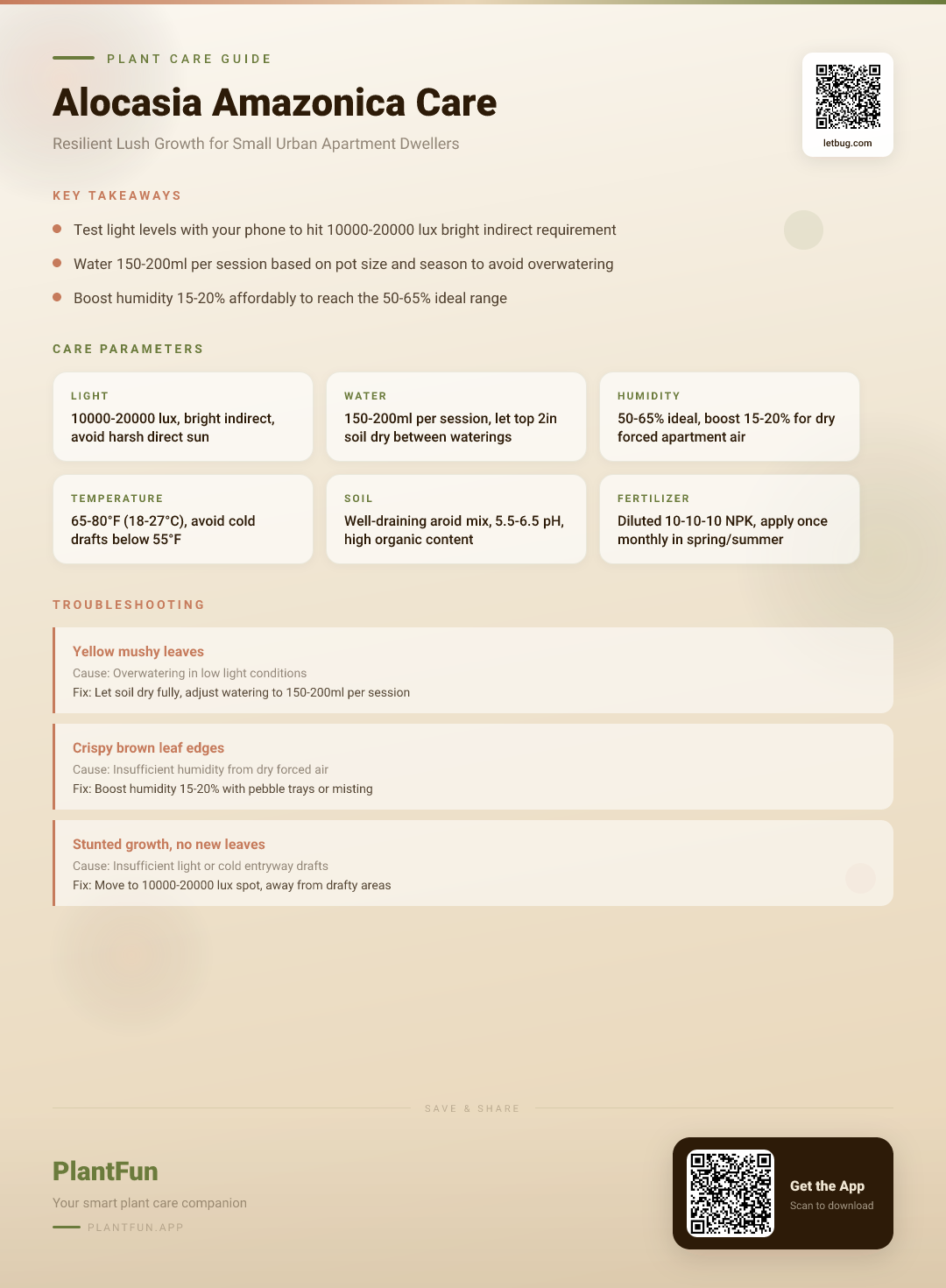
Key Takeaways
- Check soil moisture before watering — overwatering is the #1 killer of houseplants.
- Ensure your plant gets the right amount of light for its species.
- Be patient with recovery — most plants need 2–4 weeks to bounce back.
Quick Care Card
| Parameter | Measurable Threshold for Small Apartments |
|---|---|
| Light | 10,000–20,000 lux bright indirect light (NC State Extension, 2026) |
| Water | 150–200ml for 6-inch pots, only when top 2 inches of soil is completely dry |
| Humidity | 50–65% relative humidity (NC State Extension, 2026) |
| Temperature | 65–80°F (18–27°C), no drops below 60°F for more than 2 hours (Raju et al., 2022) |
| Soil | Well-draining aroid mix: 1 part potting soil, 1 part orchid bark, 1 part perlite |
| Fertilizer | 1/2 strength balanced liquid fertilizer every 4 weeks during growing season (March–August) |
| Toxicity | Toxic to cats, dogs, and humans if ingested (ASPCA, 2026) |
Why Alocasia Amazonica Struggles in Typical Urban Apartments
Generic Alocasia Amazonica care guides rarely account for the unique stressors of small city living, which are the top cause of yellow leaves, drooping, and early dormancy for Alocasia in small apartments. The most common issues include:
- Dry forced air from heating and cooling systems that drops indoor humidity to 20–30% in winter, well below Alocasia humidity requirements (NC State Extension, 2026)
- Fluctuating temperatures near entryways and single-pane windows, which can dip 10–15°F overnight in cold months
- Limited natural light, with many apartments only offering north-facing exposure with levels below 5,000 lux, far less than what Alocasia needs to thrive
- Renter modification restrictions that prevent drilling for grow lights, installing permanent window treatments, or adding whole-home humidifiers
If you’ve struggled to keep this plant alive following generic advice, these apartment-specific barriers are likely the culprit, not your care skills. For more help adapting plant care to rental spaces, check out our renter-friendly plant hacks guide.
7-Point Weekly Alocasia Care Checklist
This printable, no-guesswork checklist is tailored for Alocasia care for beginners and intermediate owners in rental apartments:
- Test soil moisture: Stick your finger 2 inches deep into the soil. Only water if the soil is completely dry to the touch.
- Measure light levels: Use a free light meter app on your phone held at leaf level at midday (12–2PM) to confirm 10,000–20,000 lux, the ideal Alocasia light levels for apartments.
- Top up humidity supports: Add 500ml of water to your pebble tray if empty, or mist leaves with 3–4 sprays per leaf to boost local humidity.
- Check for cold drafts: Hold your hand 6 inches from the nearest window or entryway for 1 minute. If it feels colder than 65°F, move the plant 1 foot further away.
- Wipe leaves: Use a damp microfiber cloth to remove dust from both sides of leaves, which blocks light absorption by up to 30%.
- Inspect for pests: Check the undersides of leaves for tiny spider mites, which thrive in dry forced air.
- Rotate: Turn the pot 1/4 of a full turn to encourage even, symmetric growth on all sides.
Mistake #1: Overwatering in Low-Light Apartments
Yellow, mushy lower leaves and soft, rotting stems are the most common symptoms of overwatering, the top answer to “why is my Alocasia turning yellow” for apartment growers. Excess moisture in low-light conditions creates ideal conditions for soft rot pathogens, which kill Alocasia root systems quickly (Mikiciński et al., 2023).
Exact watering amounts to avoid this issue:
- 6-inch pot: 150ml every 10–14 days in winter, 200ml every 7–10 days in summer
- 8-inch pot: 250ml every 10–14 days in winter, 350ml every 7–10 days in summer
Always test soil moisture before watering, and never leave the pot sitting in standing water in its saucer. If you suspect root rot, follow our guide to fixing root rot in houseplants to rescue your plant.
Mistake #2: Skipping Humidity Boosts for Dry Forced Air
Crispy brown leaf edges and slow growth are signs your Alocasia is not getting enough humidity. Alocasia humidity requirements sit at 50–65% (NC State Extension, 2026), but most urban apartments sit at 20–40% humidity during winter heating months. You don’t need an expensive humidifier to hit the sweet spot: these renter-friendly hacks raise local humidity by 15–20% with no permanent modifications:
- Pebble tray: Fill a shallow tray with 1 inch of pebbles, add water to just below the top of the pebbles, and set your Alocasia pot on top of the pebbles. Evaporation from the tray raises humidity directly around the plant.
- Group plants: Place your Alocasia near other tropical houseplants. Transpiration from neighboring plants raises shared local humidity by 10–15%.
- Targeted misting: Mist the undersides of leaves 2x per week in winter, as this is where the plant’s moisture-absorbing stomata are concentrated.
Myth vs reality: Misting alone only raises humidity for 1–2 hours, but combined with a pebble tray and grouped plants, it maintains consistent 50–60% humidity for Alocasia with no extra equipment needed.
Mistake #3: Exposing Plants to Cold Drafts Near Entryways
Droopy leaves and sudden leaf drop are often caused by exposure to cold drafts near apartment entryways, hallways, or single-pane windows. Alocasia cannot tolerate temperatures below 60°F for more than 2 hours, which triggers stress responses and early dormancy (Raju et al., 2022). Use these renter-friendly fixes to keep temperatures stable between 65–80°F year round:
- Apply removable, no-adhesive window film to single-pane windows to reduce heat loss by 30% in winter
- Place a foam draft stopper at the bottom of exterior doors near your plant to block cold air seepage
- Move your Alocasia 2 feet away from exterior doors and windows during the coldest winter months, placing it in an interior corner with stable temperatures
Mistake #4: Placing Alocasia Too Far From Light Sources
If your Alocasia is producing small, pale leaves or growing long, leggy stems, it’s likely not getting enough light. The exact Alocasia light requirement is 10,000–20,000 lux of bright indirect light (NC State Extension, 2026). You don’t need a professional light meter to test levels: use a free light meter app on your phone, held at leaf level at midday.
If your reading is below 10,000 lux, move the plant 1 foot closer to the nearest window. If it’s above 20,000 lux, hang a sheer curtain with command hooks (no drilling required) to filter direct sun and prevent leaf burn.
Seasonal Care Calendar for Apartment Dwellers
Adjust your care routine monthly to match changing apartment conditions:
- December–February (Winter): Alocasia winter care for indoor plants: Cut watering amounts by 50%, stop fertilizing completely, and check humidity levels twice weekly to prevent dormancy. Avoid placing plants near heaters, which dry out air rapidly.
- March–May (Spring): Resume fertilizing every 4 weeks with 1/2 strength balanced liquid fertilizer, gradually increase watering to summer levels, and acclimate plants to longer daylight hours by moving them 6 inches closer to windows over 2 weeks.
- June–August (Summer): Follow the Alocasia summer watering schedule: Water every 7–10 days, check soil moisture twice weekly, and mist leaves more frequently if indoor temperatures exceed 80°F.
- September–November (Fall): Reduce fertilizing to once every 8 weeks, gradually cut back watering amounts, and move plants away from windows as overnight temperatures start to drop below 60°F.
Low-Light Apartment Modifications
One of the most common questions we get is “can I keep Alocasia in a north-facing apartment?” The answer is yes, with these simple adjustments (no grow lights required):
- Place the plant within 1 foot of your north-facing window, with no curtains, furniture, or other obstructions blocking light.
- Reduce watering amounts by 20%: Lower light levels mean slower transpiration, so the plant uses less water, reducing risk of overwatering.
- Wipe leaves weekly to remove dust, which maximizes light absorption by up to 30%.
- Skip fertilizing in winter, as growth slows significantly in low-light conditions during cold months.
Use a well-draining Alocasia soil mix for apartments (1 part potting soil, 1 part orchid bark, 1 part perlite) to further reduce overwatering risk in low-light spaces. For more tips on mixing your own aroid soil, check out our DIY aroid soil guide for apartments.
Voice Search FAQ
Why is my Alocasia turning yellow?
The most common cause is overwatering in low-light apartment conditions, which leads to root rot and soft rot pathogens (Mikiciński et al., 2023). Check if the top 2 inches of soil are wet, and if so, stop watering until the soil is completely dry. If mushy roots are present, repot in fresh, well-draining soil.
How to fix droopy Alocasia leaves?
First, check for cold drafts: if the plant is near an exterior door or window, move it to a warmer spot with stable temperatures between 65–80°F. Next, test soil moisture: if the soil is bone dry, water with the recommended amount for your pot size; if it’s soaking wet, let it dry out completely before watering again.
How often to water Alocasia Amazonica?
For a 6-inch pot in average apartment light (10,000–20,000 lux), water 150ml every 10–14 days in winter, and 200ml every 7–10 days in summer. Always test the top 2 inches of soil first, and only water if it’s completely dry to the touch.
Can I keep my Alocasia in a bathroom without windows?
Only if you use a grow light, as light levels in windowless bathrooms are typically below 2,000 lux, far less than what Alocasia needs to thrive. Excess humidity without enough light also increases risk of root rot and fungal disease.
Long-Term Growth Tips
Follow these steps to encourage consistent new leaf growth and Alocasia dormancy prevention in your apartment:
- Keep environmental conditions as stable as possible: Avoid moving the plant frequently, and maintain temperature and humidity within the recommended ranges year round.
- Fertilize with 1/2 strength balanced liquid fertilizer every 4 weeks during the growing season (March–August) to support large, healthy leaf growth.
- Repot every 2 years in fresh Alocasia soil mix for apartments, choosing a pot only 1 inch larger than the current pot to avoid excess soil that holds unnecessary moisture.
- Remove yellow or dead leaves promptly with clean, sharp scissors to redirect the plant’s energy to new growth.
Note: Alocasia is toxic to cats, dogs, and humans if ingested (ASPCA, 2026), so place it out of reach of small children and pets when choosing a spot for optimal light.
References
- NC State Extension. (2026). The Complete Alocasia Amazonica — NC State Extension Gardener Plant Toolbox. https://plants.ces.ncsu.edu/plants/amazonica-care/. Accessed 2026-02-25.
- Mikiciński, A.; Warabieda, M.; Nowak, J. (2023). First report on Pectobacterium aroidearum, a new pathogen causing soft rot on alocasia (Alocasia amazonica) in Poland. Journal of Plant Pathology. https://doi.org/10.1007/s42161-023-01369-2. Accessed 2026-02-25.
- Raju, R.; Hashi, A.; Jazib, A. (2022). Micropropagation of Alocasia amazonica through Indirect Shoot Organogenesis. Plant Tissue Culture and Biotechnology. https://doi.org/10.3329/ptcb.v32i1.60468. Accessed 2026-02-25.
- ASPCA. (2026). Toxic and Non-Toxic Plants List — ASPCA. https://www.aspca.org/pet-care/animal-poison-control/toxic-and-non-toxic-plants. Accessed 2026-02-25.
Optional Helper: Plantfun.App
Plantfun.App identifies your plants by photo, diagnoses pests and diseases with clear fixes, and creates personalised watering and light schedules that adapt to your home conditions — a handy companion for putting this guide into daily practice.
Found an error or have suggestions? We'd love your feedback.
Need help identifying this problem?
Get instant identification, personalized care schedules, and effective pest treatment plans directly on your phone.
Sponsored • We may earn a commission from app downloads
Related Guides
The Complete Alocasia Amazonica Care Guide for Small Urban Apartments: Proven Tips for Lush Resilient Growth
Grow a lush Alocasia Amazonica even in a tiny urban apartment. Get exact light, humidity, watering parameters and space-saving tips to keep your plant thriving year-round.
Care GuideAlocasia in Low-Humidity Apartments: The Essential Guide to Keeping Leaves Healthy and Vibrant
Stop your Alocasia leaves from browning. Discover the exact 60% humidity target, precise light ranges, and a step-by-step recovery plan for lush apartment growth.
Care GuideThe Complete Alocasia Polly Care Checklist for Resilient Growth in Urban Apartments
Grow a lush, happy Alocasia Polly even in a small, drafty apartment. Get exact light levels, watering amounts, and a seasonal care calendar to prevent yellow leaves and encourage new growth.
Pest ControlAnts on Plants: What They Mean and What to Do
Ants usually aren't eating your plant. They are farming other pests.