
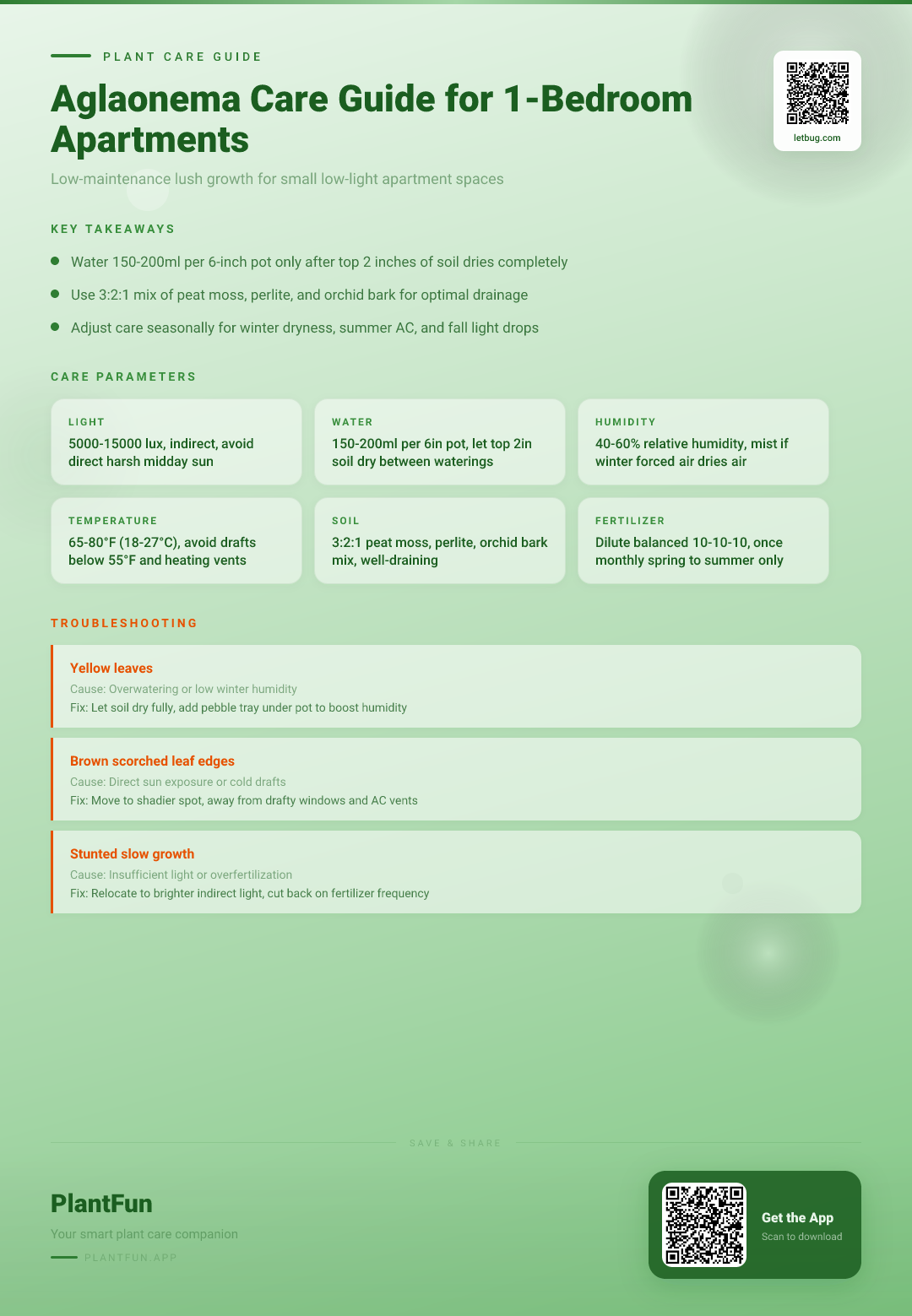
Key Takeaways
- Check soil moisture before watering — overwatering is the #1 killer of houseplants.
- Ensure your plant gets the right amount of light for its species.
- Be patient with recovery — most plants need 2–4 weeks to bounce back.
Quick Care Card: At-a-glance cheat sheet with all measurable care thresholds for Aglaonema in 1-bedroom apartments, printable for easy fridge access
| Care Category | Measurable Threshold for 1-Bedroom Apartments |
|---|---|
| Light | 5,000-15,000 lux, no direct midday sun |
| Water | 150-200 ml per 6-inch pot when top 2 inches of soil are dry |
| Humidity | 40-60% relative humidity |
| Temperature | 65-80°F (18-27°C), no sudden swings |
| Soil | 3-part peat moss, 2-part perlite, 1-part orchid bark mix |
| Fertilizer | ½ strength balanced liquid, twice per year (early spring + mid-summer) |
| Toxicity | Mildly toxic to cats and dogs if ingested (ASPCA, 2026) |
Why Aglaonema Thrives in Typical Apartments
Native to the dappled understory of Southeast Asian tropical forests, Aglaonema evolved to tolerate low light, variable humidity, and infrequent rainfall — conditions that perfectly match most 1-bedroom apartment environments (NC State Extension, 2026). A common myth is that all tropical plants need bright, direct sun to grow, but Aglaonema are the exception: they even thrive in north-facing units and small spaces with limited counter space, making them ideal for beginner plant parents. Research also shows they filter common indoor pollutants like formaldehyde and benzene from the air, improving your apartment’s air quality (Ghate, 2016).
Understanding the Science of Aglaonema Resilience
A 2016 study by Ghate, S. found that Aglaonema commutatum can survive at light levels as low as 2,000 lux for 30+ days without permanent damage, a tolerance rare among tropical houseplants (https://doi.org/10.18811/ijpen.v2i1-2.6622). A 1999 horticultural study further confirms their low water and nutrient requirements, meaning they can tolerate missed waterings and inconsistent care common for busy apartment renters (Šrámek, 1999, https://doi.org/10.1023/a:1001770114931).
Step 1: Light Placement for Your Apartment Layout
Aglaonema have a strict 5,000-15,000 lux light requirement to support resilient growth without leaf scorch (NC State Extension, 2026). Match placement to your apartment’s window orientation:
- North-facing units: Place 3-5 feet from the window — this is the ideal spot, no extra adjustments needed
- East-facing units: Place 2-3 feet away from the window, gentle morning sun will not damage leaves
- South/west-facing units: Place 6+ feet away from the window, or behind a sheer curtain to block harsh midday sun Quick test: Hold your hand at the planned plant spot at noon. If you see a sharp, dark shadow, light levels are above 15,000 lux, and you need to move the plant further back to avoid scorch.
Step 2: Watering Routine for Inconsistent Schedules
If you’re wondering how often to water Aglaonema when you have a busy work schedule or travel often, skip the fixed weekly watering schedule entirely. Follow these rules instead:
- Stick your index finger 2 inches deep into the soil. Only water if the soil is completely dry to the touch
- Give 150-200 ml of room-temperature water per 6-inch pot, enough to moisten the root zone without flooding the soil (Šrámek, 1999)
- If you’re traveling for 7-10 days, place the pot on a tray of pebbles filled with ½ inch of water to maintain steady soil moisture, or use a low-cost self-watering spike
- If you forget to water for 2+ weeks, do not overcompensate with extra water — give the standard 150-200 ml amount, as Aglaonema are highly drought tolerant.
Step 3: Soil & Potting Setup for Small Spaces
For small apartment Aglaonema care, use a well-draining Aglaonema potting soil mix made of 3 parts peat moss, 2 parts perlite, and 1 part orchid bark. This mix retains just enough moisture without becoming waterlogged, reducing the risk of root rot.
- Pot size recommendations for counters/shelves: Use a 6-8 inch pot, no more than 2 inches larger than the plant’s root ball, to avoid excess soil that holds unused water and takes up extra space
- Drainage tips to avoid floor damage: Always use a pot with drainage holes, and place a thick plastic saucer under the pot with a ½ inch layer of pebbles at the bottom of the saucer to catch excess water and prevent it from seeping onto wood floors or countertops.
Step 4: Humidity & Temperature Adjustments
Aglaonema humidity needs fall between 40-60% relative humidity, and they prefer a steady temperature range of 65-80°F (18-27°C) (NC State Extension, 2026). Quick fixes for common apartment issues:
- Dry winter forced air: Mist leaves 2x per week, place the plant near a small tabletop humidifier, or group it with 2-3 other plants to raise ambient humidity by 10-15%
- Stuffy summer AC use: Keep the plant at least 1 foot away from AC vents to avoid cold drafts that cause leaf drop
- Drafty old apartment windows: Keep plants 1+ foot away from window sills in winter, when cold air seeps through gaps and causes temperature swings.
4-Season Aglaonema Care Calendar
Adjust your routine to match the seasonal shifts common to 1-bedroom apartments:
- Winter (Dec-Feb, Aglaonema winter care): Water only when the top 3 inches of soil are dry, mist leaves 2x per week to combat dry forced air, do not fertilize, and move plants slightly closer to windows to make up for shorter daylight hours
- Spring (Mar-May): Resume watering when the top 2 inches of soil are dry, apply first annual fertilizer dose, and wipe leaves with a damp cloth to remove dust that blocks light absorption during growth spurts
- Summer (Jun-Aug, Aglaonema summer watering): Check soil moisture every 5 days, as warm temperatures dry soil faster, keep plants away from AC vents, and hang sheer curtains over south/west windows to block harsh midday sun
- Fall (Sep-Nov): Reduce watering frequency as daylight hours shorten, stop fertilizing entirely, and prune any yellow or brown leaves to prepare the plant for winter dormancy.
Common Apartment-Specific Mistakes to Avoid
- Mistake: Placing your Aglaonema directly on a drafty window sill or next to a heating vent What happens: Sudden temperature swings of 10°F or more cause widespread leaf drop and yellowing Instead: Keep plants at least 1 foot away from vents and drafty windows, use a small floating shelf to elevate them if needed
- Mistake: Overfertilizing to compensate for low light in small apartments What happens: Salt buildup in soil burns root tips, leading to brown leaf edges and stunted growth Instead: Use only ½ strength balanced liquid fertilizer, and only apply it twice per year in spring and summer
- Mistake: Using a pot without drainage holes to avoid floor mess What happens: Trapped excess water causes root rot, the #1 killer of Aglaonema in apartments Instead: Use a pot with drainage holes, and place a waterproof plastic saucer under it to catch spills
- Mistake: Placing your Aglaonema directly against a south or west facing window in summer What happens: Direct midday sun scorches leaves, leaving permanent brown patches Instead: Hang a sheer curtain between the plant and window, or move it 6+ feet back from the glass.
FAQ
Why is my Aglaonema getting yellow leaves in my apartment?
The two most common causes are overwatering and dry forced air (NC State Extension, 2026). If yellow leaves are mushy at the base, you are overwatering: let the soil dry out completely before watering again, and confirm your pot has working drainage holes. If yellow leaves have crispy, brown edges, your humidity is too low: mist leaves 2x per week or place a small humidifier within 3 feet of the plant.
Can I keep my Aglaonema in a dark bedroom with no windows?
Aglaonema can tolerate light as low as 2,000 lux for short periods, but they need at least 5,000 lux long-term for resilient growth (Ghate, 2016). If you have no windows, use an affordable 10W full-spectrum grow light placed 12 inches above the plant, run for 8 hours per day, to meet their Aglaonema light requirements.
How often do I need to fertilize my Aglaonema in a small apartment?
You only need to fertilize twice per year: once in early spring and once in mid-summer, using ½ strength balanced liquid houseplant fertilizer (Šrámek, 1999). Never fertilize in fall or winter when the plant is dormant, and always water your plant first before applying fertilizer to avoid root burn.
Printable Resilient Growth Checklist
Print this 10-item checklist and tape it to your fridge for easy, no-guess Aglaonema care tracking each month: ☐ Test soil moisture by inserting finger 2 inches deep before watering ☐ Give 150-200 ml of water per 6-inch pot if soil is completely dry ☐ Confirm plant is receiving 5,000-15,000 lux of light (no sharp shadows at noon) ☐ Wipe leaves with a damp cloth to remove dust buildup ☐ Test relative humidity with a cheap hygrometer to ensure it falls between 40-60% ☐ Inspect leaf undersides for common pests (mealybugs, spider mites) ☐ Apply ½ strength balanced liquid fertilizer (spring and summer only) ☐ Confirm plant is at least 1 foot away from heating vents, AC units, and drafty windows ☐ Empty drainage saucer of standing water to avoid root rot and floor damage ☐ Trim any yellow or brown leaves to redirect energy to new growth
References
- NC State Extension. (2026). The Complete Aglaonema Care — NC State Extension Gardener Plant Toolbox. https://plants.ces.ncsu.edu/plants/aglaonema-care/. Accessed 2026-02-25.
- Ghate, S. (2016). Assessment of Phytoremediating Potential of Aglaonema commutatum Schott for Indoor Pollutants. INTERNATIONAL JOURNAL OF PLANT AND ENVIRONMENT. https://doi.org/10.18811/ijpen.v2i1-2.6622. Accessed 2026-02-25.
- Šrámek, F. (1999). Vaughan, M.J.: The Complete Book on Cut Flower Care. Biologia plantarum. https://doi.org/10.1023/a:1001770114931. Accessed 2026-02-25.
- ASPCA. (2026). Toxic and Non-Toxic Plants List — ASPCA. https://www.aspca.org/pet-care/animal-poison-control/toxic-and-non-toxic-plants. Accessed 2026-02-25.
Optional Helper: Plantfun.App
Plantfun.App identifies your plants by photo, diagnoses pests and diseases with clear fixes, and creates personalised watering and light schedules that adapt to your home conditions — a handy companion for putting this guide into daily practice.
Found an error or have suggestions? We'd love your feedback.
Need help identifying this problem?
Get instant identification, personalized care schedules, and effective pest treatment plans directly on your phone.
Sponsored • We may earn a commission from app downloads
Related Guides
The Complete Aglaonema Care Checklist for Resilient Growth in Small Urban Apartments
Grow a lush, low-fuss Aglaonema even in your cramped small urban apartment. Get exact light levels, watering amounts, and space-saving hacks for resilient, year-round growth.
Care GuideThe Complete Aglaonema Care Checklist for Resilient Growth in Small Apartments
Grow lush, low-fuss Aglaonema even in cramped city apartments with this science-backed checklist, including exact light, water, and soil parameters for resilient, pest-free growth.
Care GuideThe Complete Aglaonema Care Checklist for Small Urban Apartments Under $20 a Year
Grow lush, resilient Aglaonema in your small urban apartment without expensive specialty products. Follow our free 12-step checklist, exact care thresholds, and zero-waste budget tips to avoid yellow leaves and stunted growth.
Pest ControlAnts on Plants: What They Mean and What to Do
Ants usually aren't eating your plant. They are farming other pests.