
Key Takeaways
- Check soil moisture before watering — overwatering is the #1 killer of houseplants.
- Ensure your plant gets the right amount of light for its species.
- Be patient with recovery — most plants need 2–4 weeks to bounce back.
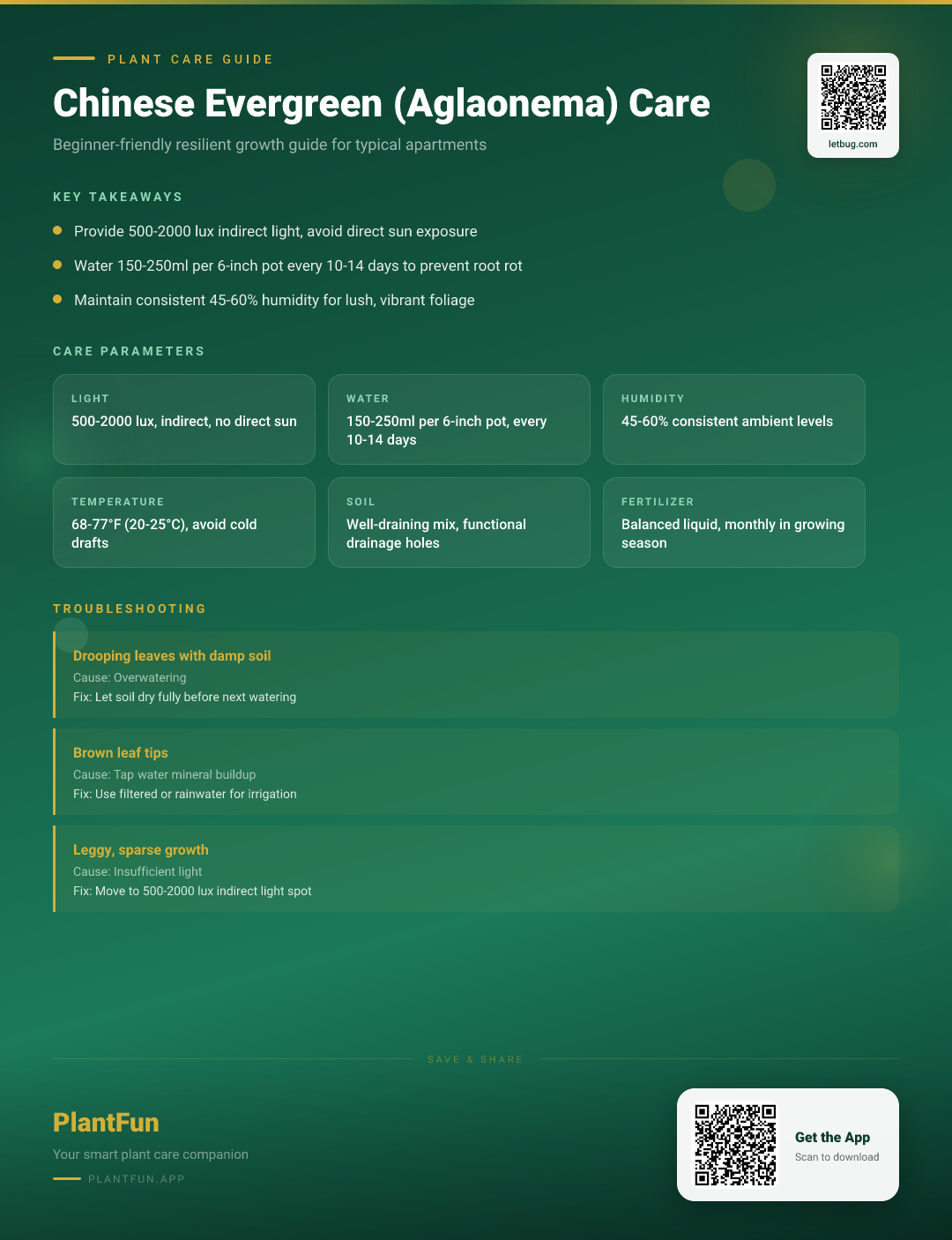
Quick Care Card: Essential Thresholds for Aglaonema
| Feature | Threshold |
|---|---|
| Light | 500–2,000 lux (Bright, indirect) |
| Water | 150–250ml per 6-inch pot every 10-14 days |
| Humidity | 45–60% |
| Temperature | 68–77°F (20–25°C) |
| Soil | Well-draining, peat-based mix |
| Fertilizer | Balanced liquid feed, monthly in spring/summer |
| Toxicity | Toxic to cats and dogs (ASPCA, 2026) |
TL;DR: The Apartment dweller’s shortcut to a healthy Chinese Evergreen
Keep your Aglaonema happy by placing it in moderate, indirect light and watering only when the top 2 inches of soil are dry. Avoid direct sun, which scorches leaves, and keep temperatures above 65°F. Remember that this plant is toxic if ingested (ASPCA, 2026).
Why your Chinese Evergreen is the ultimate apartment survivor: Understanding its tropical genetics
When I first started collecting plants, I assumed every species needed a sunny windowsill. My early Aglaonemas suffered because I didn’t respect their understory origins. As NC State Extension (2026) notes, these plants are adapted to the forest floor, meaning they thrive in the dappled light and consistent humidity of tropical environments. In an apartment, this translates to stable, filtered light rather than the harsh rays of a south-facing window.
Diagnostic Breakdown: Identifying common stressors in indoor environments
Yellowing Leaves
Symptom: Lower leaves turning yellow or mushy at the base.
Likely cause: Overwatering leading to saturated root zones.
Fix:
- Check for root rot by gently removing the plant from its pot.
- Trim away blackened, slimy roots and repot in fresh, chunky substrate.
Brown Leaf Tips
Symptom: Dry, crispy edges on the tips of the leaves.
Likely cause: Low humidity or salt buildup from tap water.
Fix:
- Increase ambient humidity using a pebble tray or humidifier.
- Flush the soil with distilled water to remove mineral deposits.
Drooping Stems
Symptom: The plant looks limp despite appearing to have moisture.
Likely cause: Cold drafts or root death from water stagnation.
Fix:
- Move the plant away from AC vents or drafty windows.
- Ensure the pot has drainage holes to prevent “wet feet.”
Light Requirements: Balancing aesthetics with 500-2,000 lux (avoiding direct sun)
While Aglaonema is famous for its tolerance of low light, it grows significantly faster with at least 500–2,000 lux. I find that placing my plants about 3-5 feet away from a north or east-facing window keeps the variegation vibrant without risking sun scald.
The Irrigation Strategy: Why 150-250ml every 10-14 days keeps roots rot-free
I use a graduated measuring cup to apply 150-250ml of water to my 6-inch pots. This prevents the common mistake of “drowning” the plant. Always stick your finger 2 inches into the soil; if it feels damp, wait another 3 days. Overwatering is the most frequent cause of indoor plant decline.
Humidity & Temperature Control: Maintaining a consistent 45-60% environment
Apartments are notorious for dry air, especially in winter. I maintain a 45-60% humidity level to mimic the plant’s native habitat (NC State Extension, 2026). If the air feels dry, a simple humidifier nearby does wonders.
Seasonal Adjustments: Managing the 68-77°F range through winter heating
Temperature fluctuations are lethal. I avoid placing my Aglaonema near radiators or heaters, which can cause heat stress. Keeping the plant within the 68–77°F range is vital for sustained physiological health (Stone, 2010).
Voice Search FAQ
Why is my Chinese Evergreen drooping despite the soil feeling damp?
This usually indicates root rot; the roots have become too damaged to intake water, causing the plant to droop as if it were thirsty.
How do I know when my Chinese Evergreen needs more light?
If the plant starts “stretching” (long gaps between leaves) or loses its variegation, it is searching for more light. Move it closer to a brighter light source, but never direct sun.
Can I use tap water for my Aglaonema or will it cause leaf tip burn?
Tap water is generally okay, but if you notice brown tips, your water may contain high levels of chlorine or fluoride. Try using filtered or distilled water for a month to see if the symptoms improve.
Common Mistakes: The dangers of over-potting and poor drainage
- Mistake: Using a pot without a drainage hole.
- What happens: Water accumulates at the bottom, rotting the root system.
- Instead: Always use a nursery pot inside a decorative cachepot.
- Mistake: Over-potting into a container that is too large.
- What happens: Excess soil holds too much moisture, leading to fungal issues.
- Instead: Choose a pot only 1-2 inches larger than the current root ball.
Optional Helper: Plantfun.App
Plantfun.App identifies your plants by photo, diagnoses pests and diseases with clear fixes, and creates personalised watering and light schedules that adapt to your home conditions — a handy companion for putting this guide into daily practice.
Summary Checklist: Your weekly 5-minute apartment maintenance routine
- Check: Probe the top 2 inches of soil.
- Clean: Wipe leaves with a damp cloth to remove dust (improves photosynthesis).
- Rotate: Give the pot a 90-degree turn to ensure even growth.
- Inspect: Check the undersides of leaves for pests.
References
- Elderly Care. (1995). Indoor-outdoor wheelchair. https://doi.org/10.7748/eldc.7.5.32.s47. Accessed 2026-03-11.
- Stone, T. (2010). Indoor gardening. https://doi.org/10.12968/chca.2010.7.2.46139. Accessed 2026-03-11.
- ASPCA. (2026). Toxic and Non-Toxic Plants List — ASPCA. https://www.aspca.org/pet-care/animal-poison-control/toxic-and-non-toxic-plants. Accessed 2026-03-11.
- NC State Extension. (2026). Chinese Evergreen Care — NC State Extension Gardener Plant Toolbox. https://plants.ces.ncsu.edu/plants/evergreen-care/. Accessed 2026-03-11.
Found an error or have suggestions? We'd love your feedback.
Need help identifying this problem?
Get instant identification, personalized care schedules, and effective pest treatment plans directly on your phone.
Sponsored • We may earn a commission from app downloads
Related Guides
Chinese Evergreen in a Low-Light Apartment: The Only Care Guide You’ll Ever Need
Master your Aglaonema’s growth with specific lux requirements and a 3-step watering schedule. Stop the leaf yellowing and build a thriving urban jungle today.
Care GuideThe Complete Chinese Evergreen Care Checklist for Budget-Friendly Resilient Growth in Small Urban Apartments
Grow a lush, hardy Chinese Evergreen even in a dim small apartment with zero fancy supplies. Get our free 7-step budget checklist, exact care thresholds, and mistake fixes to avoid yellow leaves.
Care GuideAglaonema Chinese Evergreen in Low-Light Apartments: A Budget-Friendly Care Strategy for Vibrant Growth
Transform your dim studio into a jungle. Master Aglaonema care with exact light lux, watering schedules, and 3 budget hacks to keep your Chinese Evergreen lush.
Pest ControlAnts on Plants: What They Mean and What to Do
Ants usually aren't eating your plant. They are farming other pests.