
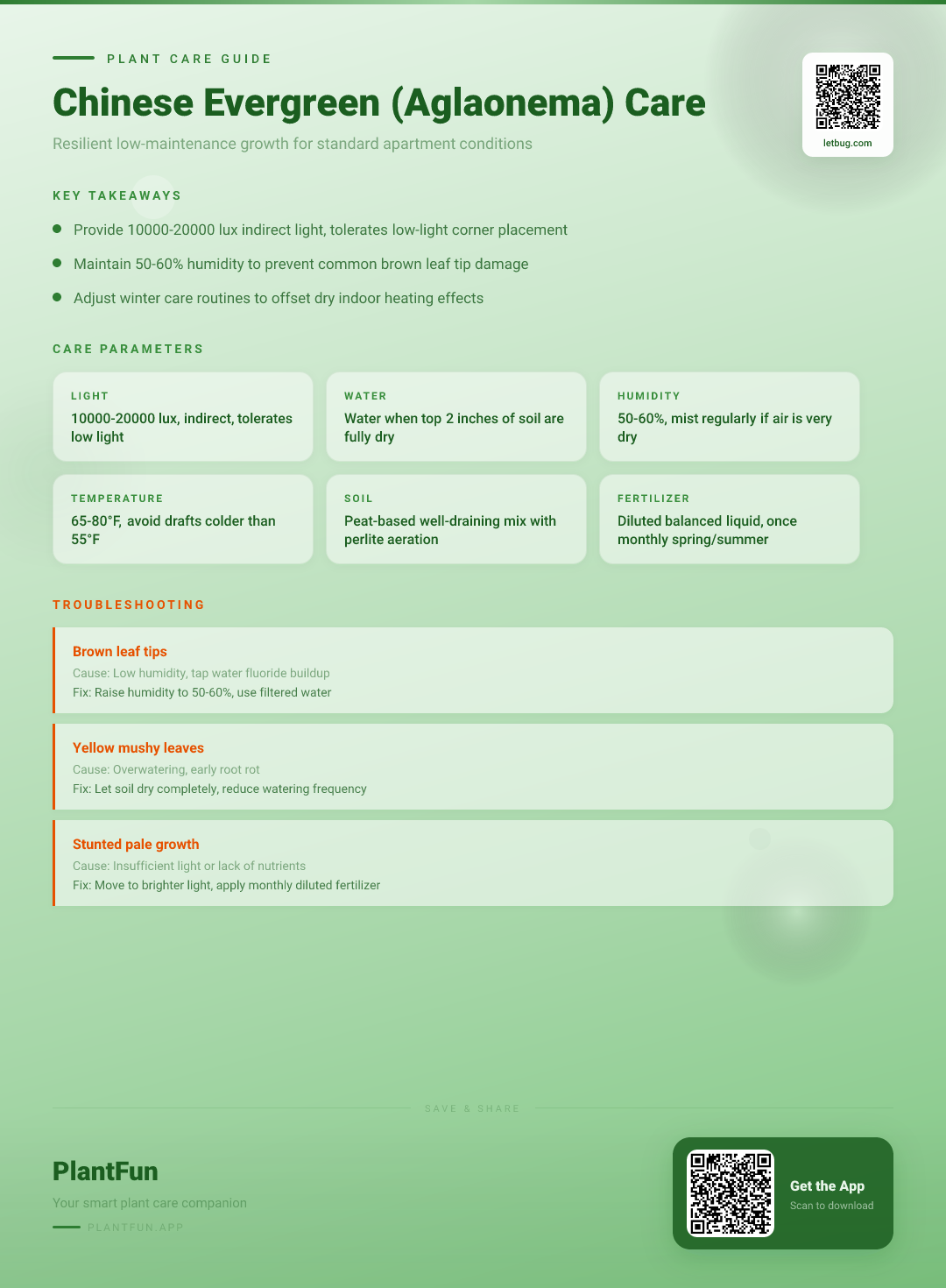
Key Takeaways
- Check soil moisture before watering — overwatering is the #1 killer of houseplants.
- Ensure your plant gets the right amount of light for its species.
- Be patient with recovery — most plants need 2–4 weeks to bounce back.
TL;DR: Chinese Evergreens (Aglaonema) thrive in apartments with bright, indirect light (10,000–20,000 lux) and consistent moisture. Allow the top 2 inches of soil to dry before watering. Maintain 50–60% humidity to prevent brown leaf tips and keep temperatures between 65°F and 80°F. Always wash your hands after handling, as they are toxic to pets (ASPCA, 2026).
When I first started my collection, I treated my Chinese Evergreen like a succulent, letting it dry out completely. I quickly learned that while they are resilient, they aren’t cacti. My plant began dropping leaves in protest. Once I shifted to a more consistent moisture routine, the growth rate doubled. Mastering this plant is about balancing tropical origins with the dry reality of apartment living.
Quick Care Card: The Essential Aglaonema Metrics
| Feature | Requirement |
|---|---|
| Light | 10,000–20,000 lux (Bright, indirect) |
| Watering | When top 2 inches of soil are dry |
| Humidity | 50%–60% (Moderate to high) |
| Temperature | 65°F–80°F (18°C–27°C) |
| Soil | Well-draining, peat-based mix |
| Fertilizer | Balanced liquid, monthly in spring/summer |
| Toxicity | Toxic to cats and dogs (ASPCA, 2026) |
Why Chinese Evergreens are the Ultimate Apartment Survivors
Aglaonemas are the gold standard for apartment dwellers because they tolerate fluctuating indoor conditions better than most tropicals. Their ability to adapt to varying light levels makes them perfect for the “nooks and crannies” of urban spaces (NC State Extension, 2026). Unlike finicky ferns, they forgive the occasional missed watering, though consistent care leads to a much faster growth rate.
Understanding Your Light: 10,000-20,000 Lux Requirements
While often labeled as “low-light” plants, Aglaonemas perform best in moderate, filtered light. Think of a spot near a window with sheer curtains. If your plant is stretching or losing its variegated color, it is signaling a lack of intensity. Aim for 10,000 to 20,000 lux for optimal health (Stone, 2010). Avoid direct, harsh afternoon sun, which can scorch the foliage.
Hydration Science: When to Water vs. When to Wait
I always tell beginners: don’t water on a schedule; water based on the soil state. Use your finger to check the top 2 inches of the potting medium. If it’s dry, it’s time to hydrate. Overwatering is the number one cause of root rot in apartment settings where airflow might be lower than in a greenhouse.
Mastering Humidity: Keeping Levels at 50-60% in Dry Apartments
Apartment air, especially in winter, is often desert-dry. Aglaonemas hail from tropical floors where humidity is high. To maintain 50–60% humidity, I suggest grouping plants together to create a microclimate or using a humidifier nearby. This prevents the edges of the leaves from crisping up (NC State Extension, 2026).
Temperature Control: Avoiding Drafts and Maintaining 65-80°F
Keep your plant away from A/C vents or radiators. Sudden temperature swings cause cellular stress. A steady 65°F to 80°F range keeps them metabolically active (Elderly Care, 1995).
Diagnostic Step-by-Step: Is Your Plant Stressed or Thriving?
Yellowing Leaves
Symptom: Lower leaves turning yellow.
Likely cause: Overwatering leading to root suffocation.
Fix:
- Check the soil for sogginess.
- Ensure the pot has proper drainage holes.
- Allow the plant to dry out completely before next watering.
Brown Leaf Tips
Symptom: Dry, crispy brown edges on otherwise green leaves.
Likely cause: Low humidity or mineral buildup.
Fix:
- Increase humidity via a pebble tray or humidifier.
- Use filtered water to avoid salt accumulation from tap water.
Can I keep my Chinese Evergreen in a low-light corner?
Yes, but expect a slower growth rate and potentially less vibrant variegation. If you notice the plant leaning heavily, rotate it weekly for balanced growth.
Why are the tips of my Aglaonema leaves turning brown?
This is almost always a humidity issue in modern apartments. Aim for at least 50% relative humidity. If the problem persists, check for mineral salts from tap water.
How often do I need to fertilize to see real growth?
Apply a balanced, water-soluble houseplant fertilizer once a month during the growing season (spring and summer). Do not fertilize in winter when growth naturally slows.
Seasonal Care Calendar: Adjusting for Winter Heating
- Spring/Summer: Increase watering and start monthly fertilizer.
- Autumn: Gradually decrease watering as light levels drop.
- Winter: Prioritize humidity; heating systems dry out the air rapidly. Keep away from direct heat sources.
Common Apartment Pitfalls to Avoid
- Mistake: Using a pot without drainage. What happens: Water pools at the bottom, rotting the roots. Instead: Always use a pot with drainage holes.
- Mistake: Placing it in a dark hallway. What happens: The plant fails to photosynthesize effectively, leading to leaf drop. Instead: Move it to a spot that receives indirect light.
References
- ASPCA. (2026). Toxic and Non-Toxic Plants List — ASPCA. https://www.aspca.org/pet-care/animal-poison-control/toxic-and-non-toxic-plants. Accessed 2026-03-17.
- NC State Extension. (2026). Chinese Evergreen Care — NC State Extension Gardener Plant Toolbox. https://plants.ces.ncsu.edu/plants/evergreen-care/. Accessed 2026-03-17.
- Stone, T. (2010). Indoor gardening. Child Care. https://doi.org/10.12968/chca.2010.7.2.46139. Accessed 2026-03-17.
- Elderly Care. (1995). Indoor-outdoor wheelchair. Elderly Care. https://doi.org/10.7748/eldc.7.5.32.s47. Accessed 2026-03-17.
Optional Helper: Plantfun.App
Plantfun.App identifies your plants by photo, diagnoses pests and diseases with clear fixes, and creates personalised watering and light schedules that adapt to your home conditions — a handy companion for putting this guide into daily practice.
Found an error or have suggestions? We'd love your feedback.
Need help identifying this problem?
Get instant identification, personalized care schedules, and effective pest treatment plans directly on your phone.
Sponsored • We may earn a commission from app downloads
Related Guides
Aglaonema in Low-Light Apartments: A Resilient Growth Guide for Beginners and Beyond
Transform your dim apartment into an indoor jungle. Master Aglaonema care with precise light, watering, and soil metrics designed to keep your foliage vibrant.
Care GuideAglaonema in Low-Light Apartments: A Budget-Friendly Guide to Resilient Year-Round Foliage
Transform your dim apartment into a lush oasis with Aglaonema. Learn the exact 10k lux levels, watering intervals, and simple fertilizer tips for resilient growth.
Care GuideThe Complete Aglaonema Care Checklist for Resilient Growth in Small Apartments
Grow lush, low-fuss Aglaonema even in cramped city apartments with this science-backed checklist, including exact light, water, and soil parameters for resilient, pest-free growth.
Pest ControlAnts on Plants: What They Mean and What to Do
Ants usually aren't eating your plant. They are farming other pests.