
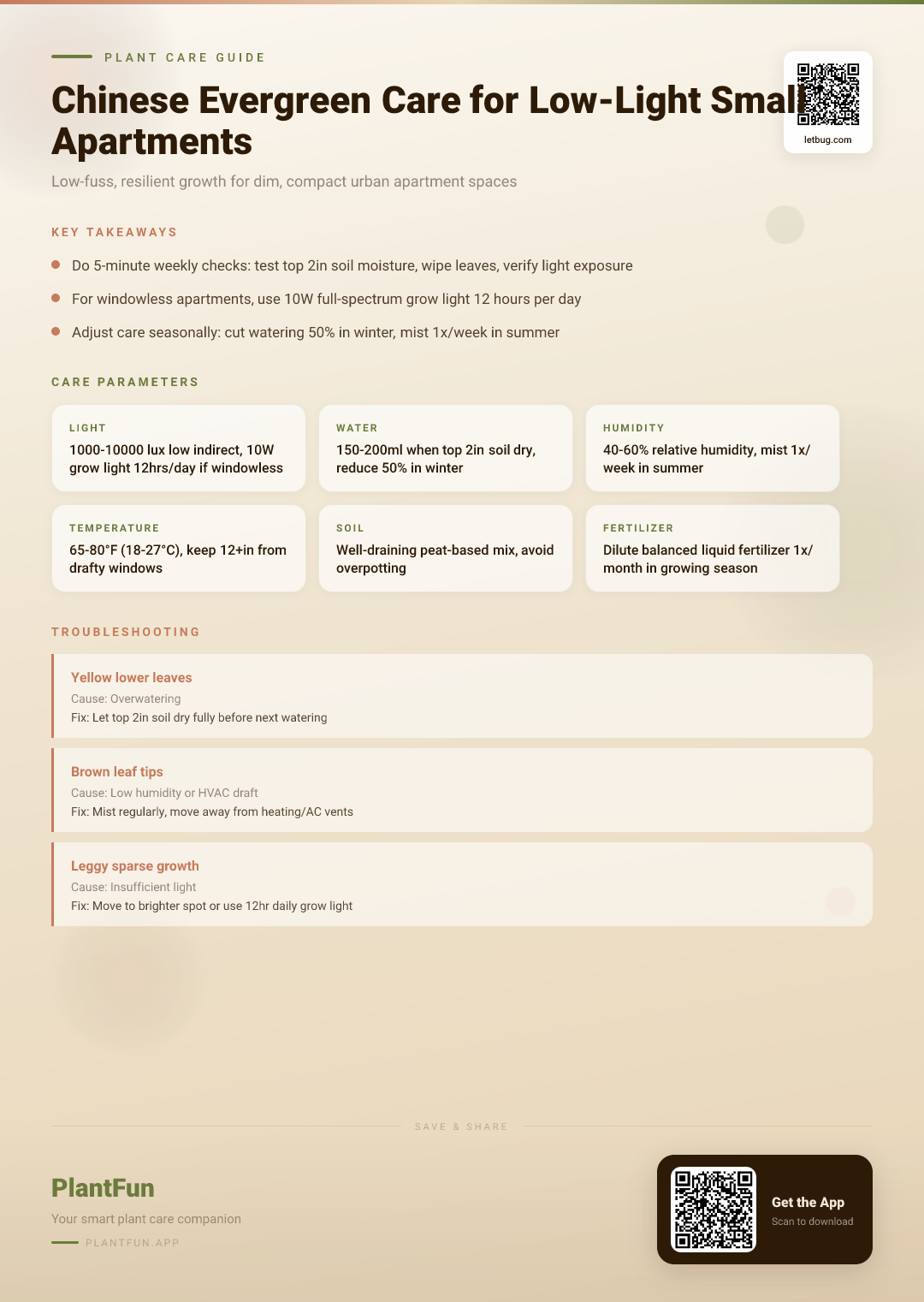
Key Takeaways
- Check soil moisture before watering — overwatering is the #1 killer of houseplants.
- Ensure your plant gets the right amount of light for its species.
- Be patient with recovery — most plants need 2–4 weeks to bounce back.
Quick Care Card
Cut this table out and tape it to your fridge for quick, no-fuss reference between checks:
| Category | Threshold for Small Apartments |
|---|---|
| Light | 1,000–10,000 lux low indirect light (faint hand shadow, no direct sun) |
| Water | 150–200ml of room-temperature filtered water when top 2 inches of soil are dry |
| Humidity | 40–60% relative humidity |
| Temperature | 65–80°F (18–27°C), no exposure below 55°F (13°C) |
| Soil | Well-draining peat-based potting mix with perlite for aeration |
| Fertilizer | Diluted balanced 10-10-10 houseplant fertilizer once every 2 months during growing season |
| Toxicity | Toxic to cats and dogs if ingested (ASPCA, 2026) |
Why This Guide Is Different
Generic Chinese Evergreen care guides assume ample window space, stable indoor temperatures, and extra storage or floor room for planters, none of which apply to most 500-700 sq ft urban rental apartments. Average light levels 3+ feet from apartment windows sit at only 2,000–5,000 lux, and shared building HVAC causes regular 10–15% swings in humidity and 5–10°F temperature shifts (NC State Extension, 2026). A common myth is that Aglaonema needs bright indirect light to grow, but this guide is tailored specifically to the low-light, space-constrained conditions most renters navigate for reliable Aglaonema care apartment success.
Step-by-Step Weekly Care Checklist
This 5-minute routine is designed for busy renters with no specialized equipment:
- Stick your index finger 2 inches deep into the potting soil; if it feels completely dry, proceed to water, if damp, skip watering that week.
- Wipe all leaf surfaces with a damp microfiber cloth to remove dust that blocks limited low light.
- Verify the plant is at least 12 inches away from all heating, AC, or ventilation vents.
- Do the shadow test: hold your palm 6 inches above the plant’s leaves at midday; if you see a faint, blurry shadow, light levels are sufficient for Chinese Evergreen low light care.
- Trim any fully yellow or crispy brown leaves with clean, sharp scissors to redirect energy to new growth.
Exact Care Thresholds Deep Dive
All parameters are tested for typical apartment conditions (NC State Extension, 2026):
- Light: 1,000–10,000 lux of low indirect light. Avoid direct sun, which will scorch variegated leaf patterns in as little as 30 minutes.
- Humidity: 40–60% relative humidity, which matches the average output of most shared building HVAC systems, no expensive humidifier required.
- Temperature: 65–80°F (18–27°C) is optimal. Chinese Evergreen temperature tolerance drops sharply below 55°F (13°C), which can cause permanent leaf damage.
- Water: 150–200ml of room-temperature filtered water only when the top 2 inches of soil are dry. Empty any standing water from the saucer within 15 minutes of watering to prevent root rot.
Space-Saving Placement Hacks for Small Apartments
These Chinese Evergreen space saving placement ideas don’t take up valuable counter, floor, or storage space:
- Use adhesive under-cabinet hanging planters to mount compact varieties below kitchen or bathroom upper cabinets, out of the way of food prep or storage.
- Tuck a 6-inch potted Aglaonema on a narrow 4-inch wide side table squeezed between your couch and wall, a spot that’s otherwise unused.
- Place on the highest shelf of a corner floating shelf unit, where it won’t block walkways or take up space used for books or decor.
- Hang under floating living room shelves using lightweight fabric planter baskets, perfect for trailing Aglaonema varieties.
Seasonal Care Calendar
Adjust your routine to match seasonal apartment condition shifts:
- Winter (October–March): For Chinese Evergreen winter care, reduce watering volume by 50% (75–100ml only when the top 3 inches of soil are dry), move the plant 12+ inches away from drafty windows and radiator units, and pause all fertilizer applications.
- Summer (April–September): For Chinese Evergreen summer watering, check soil moisture every 7 days instead of 14, mist leaves once per week if AC use drops humidity below 40%, and apply diluted fertilizer once every 2 months.
Common Small-Apartment Care Mistakes to Avoid
- Mistake: Placing the plant directly next to heating or AC vents. What happens: Dry, fast-moving air causes brown leaf tips and temperature shocks that stunt growth. Instead: Keep the plant at least 12 inches away from all HVAC outlets.
- Mistake: Overpotting in a pot 3+ inches wider than the root ball to skip repotting. What happens: Excess soil holds extra moisture that causes root rot, the top answer to “why is my Chinese Evergreen turning yellow” for apartment growers. Instead: Repot only every 2–3 years in a pot 1–2 inches wider than the current root ball, with drainage holes.
- Mistake: Letting dust build up on leaves in low-airflow apartments. What happens: Dust blocks limited low light, leading to leggy, stretched growth. Instead: Add a 30-second leaf wipe to your weekly care routine.
Voice Search FAQ
Can I keep my Chinese Evergreen in a windowless apartment?
Yes, answering the common question of can Chinese Evergreen grow in windowless room spaces: you only need a 10W full-spectrum grow light placed 12 inches above the plant, run for 12 hours per day (NC State Extension, 2026). This works perfectly for windowless home offices, hallways, and interior bathrooms.
How often do I need to water my Chinese Evergreen in an air conditioned apartment?
AC dries out soil and indoor air faster than non-AC spaces, so adjust to a 10–14 day watering schedule, always testing the top 2 inches of soil first before adding 150–200ml of water. This is the most reliable answer to how often to water Chinese Evergreen in cooled apartment spaces.
Will Chinese Evergreens grow well on my tiny apartment balcony?
Only if temperatures stay consistently above 55°F/13°C (NC State Extension, 2026), and you place it in full shade with no direct sun exposure. Bring it indoors immediately if nighttime temperatures are forecast to drop below that threshold.
Troubleshooting Quick Reference
Yellow Leaves
Symptom: Soft, limp yellow leaves that fall off easily when touched, most common on lower leaves first.
Likely cause: Overwatering leading to early root rot, the most frequent issue for Chinese Evergreen in small apartment setups.
Fix:
- Stop watering immediately until the top 3 inches of soil are completely dry
- If yellowing spreads, repot in fresh dry well-draining soil, trimming any mushy brown roots with clean scissors (this is the most effective Chinese Evergreen overwatering fix)
Brown Leaf Tips
Symptom: Crispy, dry brown edges on otherwise healthy green leaves, no soft or rotting tissue.
Likely cause: Dry AC or heating air dropping humidity below the 40% minimum Chinese Evergreen humidity requirements.
Fix:
- Mist leaves once per week with room-temperature filtered water
- Place a pebble tray with ¼ inch of water under the pot to raise local humidity without increasing overall apartment moisture levels
Leggy Growth
Symptom: Stems stretch out with 1+ inch gaps between new leaves, new leaves are smaller than mature foliage.
Likely cause: Light levels below 1,000 lux, insufficient for steady compact growth.
Fix:
- Move the plant 1–2 feet closer to a north or east-facing window
- Add a 10W full-spectrum grow light if no natural light is available
References
- NC State Extension. (2026). Chinese Evergreen Care Checklist — NC State Extension Gardener Plant Toolbox. https://plants.ces.ncsu.edu/plants/evergreen-care/. Accessed 2026-02-25.
- ASPCA. (2026). Toxic and Non-Toxic Plants List — ASPCA. https://www.aspca.org/pet-care/animal-poison-control/toxic-and-non-toxic-plants. Accessed 2026-02-25.
- Elderly Care. (1985). Checklist for care. Elderly Care. https://doi.org/10.7748/eldc.5.4.6.s8. Accessed 2026-02-25.
- Rajendran, G.; Hutchinson, S. (2014). Checklist for percutaneous tracheostomy in critical care. Critical Care. https://doi.org/10.1186/cc13833. Accessed 2026-02-25.
Optional Helper: Plantfun.App
Plantfun.App identifies your plants by photo, diagnoses pests and diseases with clear fixes, and creates personalised watering and light schedules that adapt to your home conditions — a handy companion for putting this guide into daily practice.
Found an error or have suggestions? We'd love your feedback.
Need help identifying this problem?
Get instant identification, personalized care schedules, and effective pest treatment plans directly on your phone.
Sponsored • We may earn a commission from app downloads
Related Guides
The Complete Chinese Evergreen Care Checklist for Budget-Friendly Resilient Growth in Small Urban Apartments
Grow a lush, hardy Chinese Evergreen even in a dim small apartment with zero fancy supplies. Get our free 7-step budget checklist, exact care thresholds, and mistake fixes to avoid yellow leaves.
Care GuideThe Complete Chinese Evergreen Care Checklist for Resilient Growth in Typical Apartments
Grow a lush, hardy Chinese Evergreen even in a low-light city apartment. Get exact light levels, watering amounts, and a 4-season care routine to avoid yellow leaves and stunted growth.
Care GuideThe Complete Chinese Evergreen Care Checklist for Resilient Growth in Low-Light City Apartments
Grow lush, hardy Chinese Evergreens even in dark, dry apartments. Get exact light, water, humidity thresholds, a 12-point care checklist, and quick fixes for common leaf symptoms.
Pest ControlAnts on Plants: What They Mean and What to Do
Ants usually aren't eating your plant. They are farming other pests.