
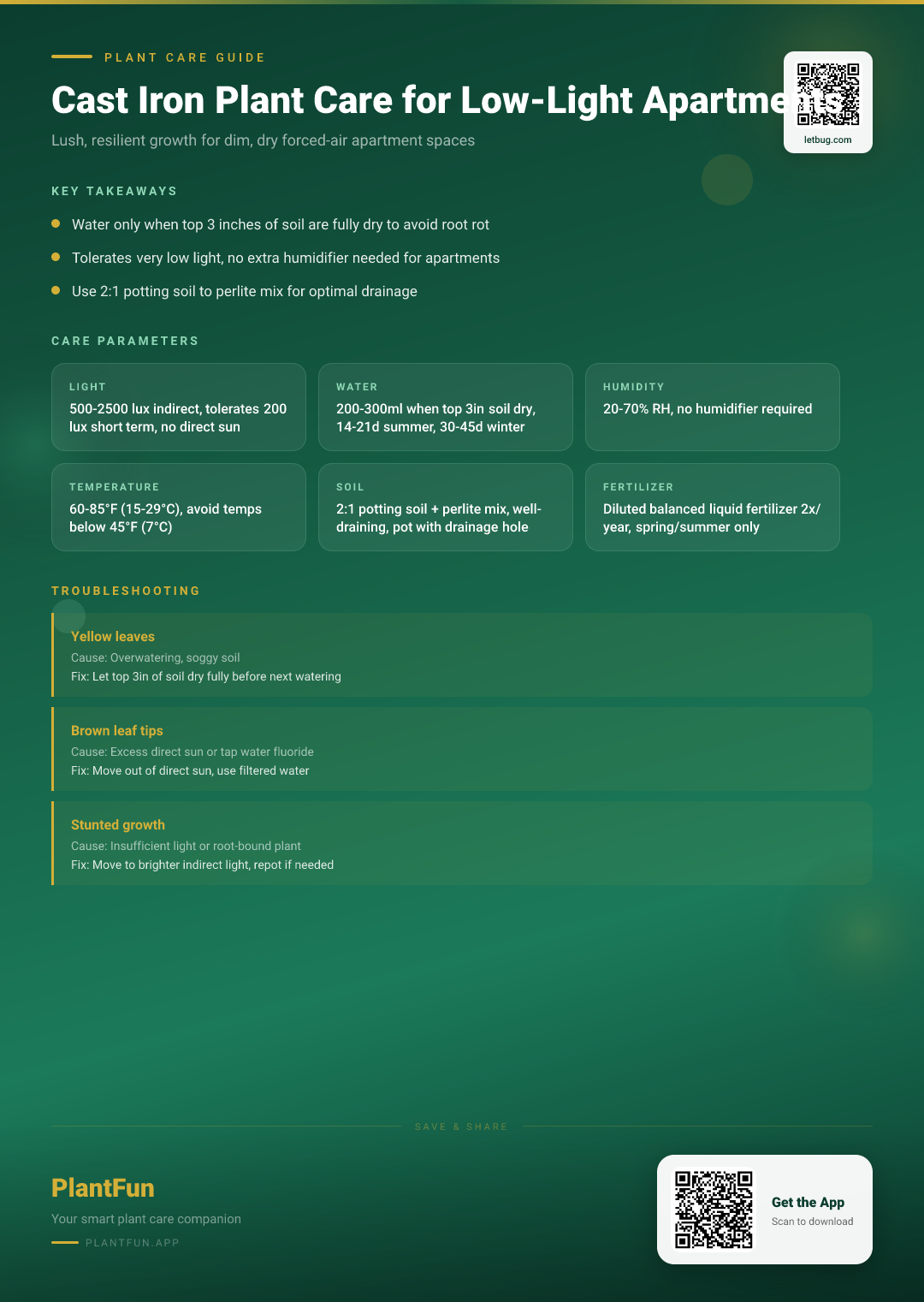
Key Takeaways
- Check soil moisture before watering — overwatering is the #1 killer of houseplants.
- Ensure your plant gets the right amount of light for its species.
- Be patient with recovery — most plants need 2–4 weeks to bounce back.
Quick Care Card
| Care Parameter | Apartment-Specific Threshold for Cast Iron Plants |
|---|---|
| Light | 500-2,500 lux (low to medium indirect light), tolerates 200 lux for up to 3 months, no direct south-facing sun |
| Water | 200-300 ml room-temperature water only when top 3 inches of soil are completely dry; 14-21 days in summer, 30-45 days in winter |
| Humidity | 20-70% relative humidity, no humidifier required |
| Temperature | 60-85°F (15-29°C), never below 45°F (7°C) |
| Soil | 2:1 mix of all-purpose potting soil and perlite, pot with 1+ drainage hole |
| Fertilizer | 1x annually in spring, 10-10-10 liquid fertilizer diluted to half strength |
| Toxicity | Non-toxic to cats, dogs, and humans (ASPCA, 2026) |
Why This Guide Is Built For Typical Apartment Conditions
Generic cast iron plant care guides are often written for greenhouse or outdoor growing conditions, which rarely match the reality of North American apartments: dim north-facing light, dry forced-air heating and cooling, and inconsistent watering schedules from busy work and travel routines. Aspidistra elatior is naturally adapted to shaded understory habitats (Gilman, 2014), making it ideal for apartment living, but it has specific limits for common apartment stressors that generic guides fail to address. This guide eliminates the need for expensive grow lights or humidifiers, and is tailored for cast iron plant care for beginners and intermediate owners alike.
Symptom-to-Action Quick Reference Table
| Visible Symptom | Root Cause | Immediate Actionable Fix |
|---|---|---|
| Yellow lower leaves, mushy stems | Overwatering / root rot | Stop watering immediately, let soil dry completely for 2-4 weeks, trim mushy roots and repot in fresh dry soil if needed |
| Brown crispy leaf tips | Forced air draft / tap water salt buildup | Move plant 1+ feet away from HVAC vents, leach soil with 3x the pot volume of room-temperature water |
| No new leaf growth for 6+ months | Too little light / root bound | Move to a spot with bright indirect north or east-facing light, check if roots are growing out of the drainage hole to assess repotting need |
| Sudden widespread leaf drop | Extreme temperature swing / severe underwatering | Move away from drafty exterior doors or windows, water with 250 ml of water if top 4 inches of soil are bone dry |
| Pale, bleached patches on leaves | Direct south-facing sun exposure | Move 3+ feet away from unobstructed south windows, trim damaged foliage |
Step-by-Step Weekly Care Checklist (Free Printable)
Print this 10-point checklist and stick it to your fridge for no-fuss cast iron plant apartment care:
Weekly Tasks
- Visually scan foliage for yellow or brown leaves, trim damaged growth with clean, sharp scissors
- Confirm the plant is not within 1 foot of heating, AC, or drafty exterior doors
Monthly Tasks
- Stick your index finger 3 inches into the soil to test moisture; only water if completely dry
- Wipe leaves with a damp microfiber cloth to remove dust, which improves light absorption in low-light spaces
- Inspect undersides of leaves for rare pests (mealybugs, spider mites) and wipe with rubbing alcohol if spotted
- Rotate the pot ¼ turn to encourage even, symmetrical growth
Quarterly Tasks
- Check the pot drainage hole for protruding roots to assess if repotting is needed
- Leach soil by running 3x the pot volume of water through the drainage hole to flush salt buildup from tap water
Annual (Spring) Tasks
- Feed with half-strength 10-10-10 liquid fertilizer only if you see new leaf growth
- Check if potting mix is compacted or water runs straight through the pot to decide if repotting is required
Light Requirements for Apartment Cast Iron Plants
Cast iron plants thrive in 500-2,500 lux of low to medium indirect light, which is exactly the light level 1-3 feet away from an unobstructed north-facing window, or behind a sheer curtain on an east-facing window (Gilman, 2014). They tolerate as low as 200 lux for up to 3 months, making them perfect for cast iron plant low light apartment setups. Avoid placing them in direct unobstructed south-facing sun, which will scorch their leaves permanently. Quick light test: If you can read a book comfortably in the plant’s spot during midday without turning on a lamp, it has enough light to thrive.
Watering Guidelines for Inconsistent Apartment Schedules
If you’re wondering how often to water cast iron plants when you travel or forget watering days, follow this measurable rule: only water with 200-300 ml of room-temperature water when the top 3 inches of soil are completely dry. This works out to every 14-21 days during cast iron plant summer watering, and every 30-45 days during cast iron plant winter care, when the plant goes dormant and uses far less moisture. Overwatering is the #1 cause of cast iron plant death, so err on the side of underwatering if you’re unsure. Quick moisture test: Stick a wooden chopstick 3 inches into the soil; if it comes out completely clean with no damp soil clinging to it, it’s time to water.
Soil & Potting Specs for Apartment Cast Iron Plants
Cast iron plant soil requirements are simple: use a 2:1 mix of all-purpose potting soil and perlite for fast drainage, and plant in a pot with at least one drainage hole to prevent standing water. You don’t need self-watering pots or fancy soil amendments. Cast iron plants prefer being root bound, so you only need to repot every 3-5 years, when roots are visibly growing out of the drainage hole. This is a huge benefit for small apartment dwellers who don’t want to deal with frequent repotting mess.
Temperature & Humidity Thresholds for Forced-Air Apartments
Cast iron plant humidity needs are perfectly matched to typical forced-air apartment conditions: they tolerate 20-70% relative humidity with no humidifier required (Gilman, 2014). Maintain temperatures between 60-85°F (15-29°C), and never let the plant be exposed to temperatures below 45°F (7°C), which can cause permanent leaf damage. Keep the plant at least 1 foot away from heating vents in winter and AC vents in summer to avoid dry air blasts that cause cast iron plant brown tips.
Seasonal Care Calendar for Apartment Dwellers
Adjust your care routine by season to support healthy growth:
- March-May (Spring): Apply 1x half-strength 10-10-10 liquid fertilizer if you see new leaf growth, assess if repotting is needed
- June-August (Summer): Check soil moisture every 10 days for cast iron plant summer watering, move away from AC vents if needed
- September-November (Fall): Gradually reduce watering frequency, stop fertilizing, wipe leaves before turning on your heating system for the season
- December-February (Winter): Follow cast iron plant winter care rules: water only every 30-45 days, keep away from cold drafty windows and heating vents If you want to know how to make cast iron plant grow faster, stick to this seasonal routine and ensure it gets at least 500 lux of light daily; expect a cast iron plant growth rate indoors of 2-3 new leaves per year, which is normal for this slow-growing species.
Common Apartment Care Mistakes to Avoid
- Mistake: Watering on a fixed calendar schedule without testing soil moisture first What happens: Overwatering leads to root rot, which is the top cause of yellow leaves and plant death Instead: Only water when the top 3 inches of soil are completely dry, regardless of the date
- Mistake: Overfertilizing to speed up growth What happens: Salt buildup in the soil burns leaf tips and stunts growth Instead: Fertilize only once per year in spring at half strength, or skip entirely if your plant is already growing well
- Mistake: Repotting every year to give roots more space What happens: Root shock slows growth for 1-2 years and increases risk of overwatering Instead: Repot only every 3-5 years, when roots are visibly growing out of the drainage hole
- Mistake: Placing near unobstructed south-facing windows What happens: Direct sun scorches leaves, leaving permanent pale bleached patches Instead: Keep 3+ feet away from unshaded south windows, or use a sheer curtain to filter light
Voice Search FAQ Section
FAQ 1: Why is my cast iron plant turning yellow in my apartment?
The most common cause of yellow cast iron plant leaves is overwatering (Gilman, 2014). First, test the top 3 inches of soil: if it feels damp, stop watering immediately and let the soil dry completely for 2-4 weeks before watering again. If yellow leaves are accompanied by mushy stems, gently remove the plant from its pot, trim any brown mushy roots, and repot in fresh dry 2:1 potting soil and perlite mix.
FAQ 2: Can cast iron plant survive in windowless room?
Yes, it can survive in a windowless apartment office for up to 3 months at a time, as long as overhead fluorescent or LED lights are on for at least 8 hours per day (this provides ~200 lux, the minimum light threshold) (Gilman, 2014). If you notice pale leaves or no new growth after 3 months, move it to a spot with natural light for 1 month to help it recover.
FAQ 3: How often do I need to fertilize my cast iron plant if I forget most months?
You only need to fertilize once per year in spring, if at all. Cast iron plants have extremely low nutrient needs, and they will grow perfectly well without any fertilizer, especially in low-light apartments. Forgetting to fertilize will not harm your plant; you may just see slightly slower growth, which is normal for this species.
Final Quick Growth Check Routine
Add this 2-minute check to your monthly apartment cleaning routine to catch issues early before they cause permanent damage:
- Stick your finger 3 inches into the soil to test moisture, water only if completely dry
- Scan foliage for yellow leaves or brown tips, trim any damaged growth
- Confirm the plant is not within 1 foot of vents or drafty doors
- Wipe any dusty leaves with a damp cloth
References
- Gilman, E. (2014). Aspidistra elatior Cast Iron Plant. EDIS. https://doi.org/10.32473/edis-fp053-1999. Accessed 2026-02-28.
- Banfield, R.; Gaskell, D. (1966). Cast Iron Failures in Sulphuric Acid Plant. Anti-Corrosion Manual. https://doi.org/10.1108/eb006715. Accessed 2026-02-28.
- ASPCA. (2026). Toxic and Non-Toxic Plants List — ASPCA. American Society for the Prevention of Cruelty to Animals. https://www.aspca.org/pet-care/animal-poison-control/toxic-and-non-toxic-plants. Accessed 2026-02-28.
Optional Helper: Plantfun.App
Plantfun.App identifies your plants by photo, diagnoses pests and diseases with clear fixes, and creates personalised watering and light schedules that adapt to your home conditions — a handy companion for putting this guide into daily practice.
Found an error or have suggestions? We'd love your feedback.
Need help identifying this problem?
Get instant identification, personalized care schedules, and effective pest treatment plans directly on your phone.
Sponsored • We may earn a commission from app downloads
Related Guides
The Complete Cast Iron Plant Care Checklist for Resilient Growth in Low-Light Apartments
Keep your Cast Iron Plant thriving even in dim apartment corners. Get exact light, water, and humidity thresholds plus a 12-month care calendar to avoid stress and boost lush growth.
Care GuideCast Iron Plant in Low-Light Apartment Hallways: The Only Seasonal Care Guide You’ll Ever Need
Stop letting your low-light apartment hallway kill your houseplants. Get exact light, water, and seasonal care thresholds to keep your cast iron plant lush and resilient all year long, no green thumb required.
Care GuideAspidistra Elatior (Cast Iron Plant) Care Checklist for Apartments: Grow Lush, Resilient Leaves Easily
Stop accidentally harming your nearly indestructible Cast Iron Plant. Get exact light, water, humidity thresholds, 7 common apartment care mistakes, and a free printable checklist for lush, year-round growth.
Pest ControlAnts on Plants: What They Mean and What to Do
Ants usually aren't eating your plant. They are farming other pests.