
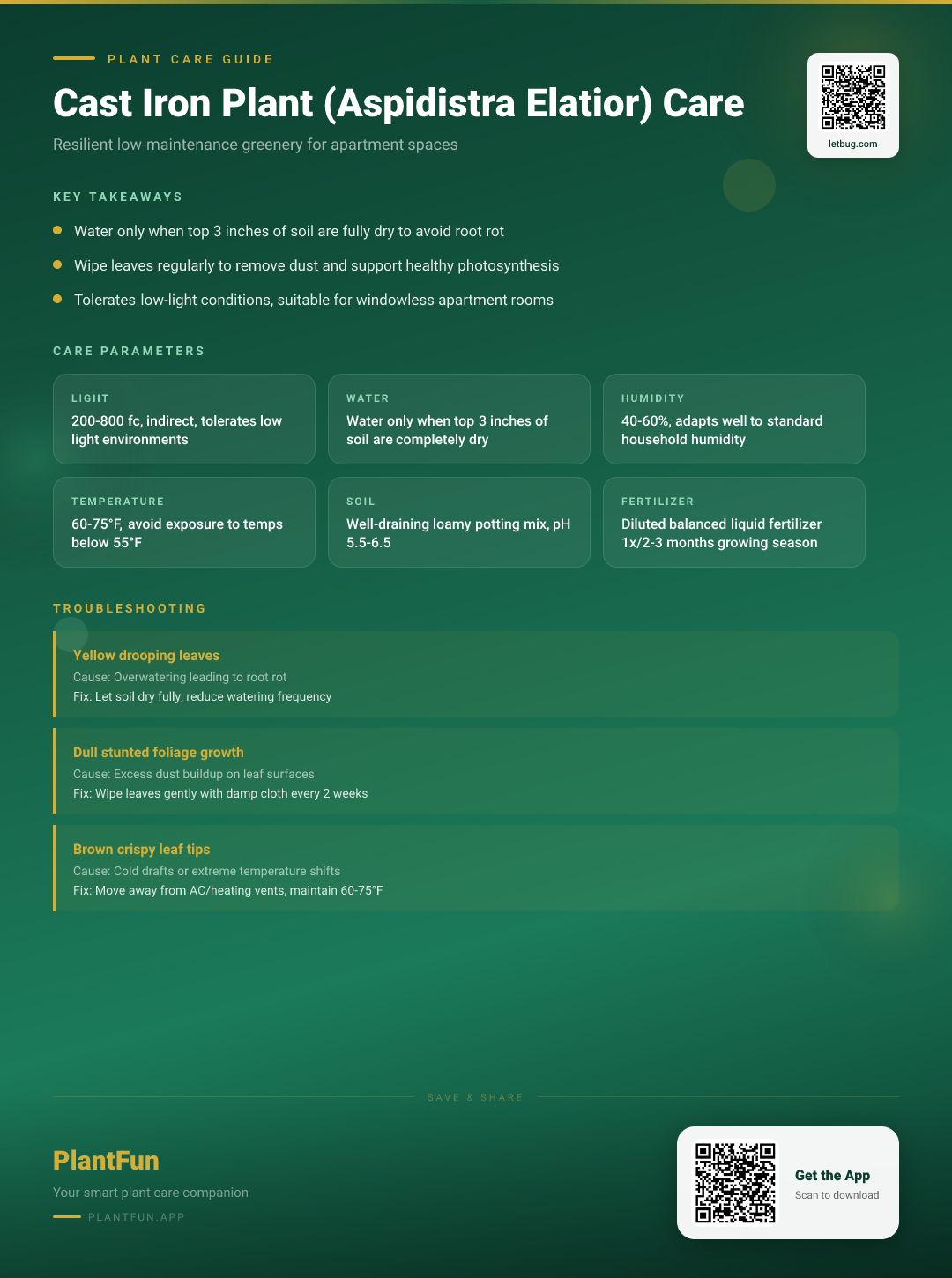
Key Takeaways
- Check soil moisture before watering — overwatering is the #1 killer of houseplants.
- Ensure your plant gets the right amount of light for its species.
- Be patient with recovery — most plants need 2–4 weeks to bounce back.
Quick Care Card: The Essential Metrics for Aspidistra Elatior
| Feature | Requirement |
|---|---|
| Light | Low to Moderate (200–800 foot-candles) |
| Water | When top 3 inches of soil are dry |
| Humidity | 40–60% |
| Temperature | 60–75°F (15–24°C) |
| Soil | Well-draining, peat-based mix |
| Fertilizer | Balanced liquid (10-10-10) monthly in growing season |
| Toxicity | Non-toxic to cats and dogs |
TL;DR: The Minimalist Approach to Cast Iron Plant Success
The Aspidistra elatior is the ultimate apartment survivor. To help it thrive rather than just survive, keep it away from direct sun, water only when the top 3 inches of soil are dry, and wipe the leaves monthly. Use a well-draining soil mix to prevent root rot, and avoid over-fertilizing. It is a slow grower, so patience is your best tool.
Why the Cast Iron Plant is the Ultimate Apartment Companion
When I first moved into my city apartment with north-facing windows, I struggled to keep anything alive. I made the mistake of assuming the Cast Iron plant was truly “indestructible” and neglected it entirely. I found that while it is remarkably resilient, it performs best when treated as a living entity rather than a piece of furniture. According to the (NC State Extension, 2026), this plant is prized for its tolerance of low light and irregular care, making it a staple for those of us with limited natural light.
Understanding Your Apartment Micro-Climate: Light and Airflow
Apartments are notorious for fluctuating temperatures and stagnant air. The Cast Iron plant prefers steady conditions between 60–75°F (15–24°C). While it handles lower light, I recommend aiming for 200–800 foot-candles to encourage steady, albeit slow, growth (Gilman, 2014). If your space has poor airflow, be extra cautious with watering, as damp soil in cool, still rooms is a recipe for fungal issues.
Step-by-Step Care Guide: Watering, Soil, and Fertilizer
- Watering: Insert your finger 3 inches into the soil. If it feels dry, irrigate until water drains from the base. Never let it sit in a saucer of water.
- Soil Selection: Use a high-quality potting mix amended with perlite to ensure excellent drainage.
- Fertilizing: Apply a balanced, water-soluble fertilizer at half-strength once a month during spring and summer (NC State Extension, 2026).
Seasonal Routine: Adjusting Your Care Calendar
- Spring/Summer: This is the growing season. Increase your monitoring; the plant may need water every 10–14 days depending on heat.
- Autumn/Winter: Growth slows significantly. Reduce watering frequency. Do not fertilize between November and February.
Measurable Thresholds
- Light: 200–800 foot-candles. If you can read a book comfortably without a lamp, the plant is likely satisfied.
- Humidity: 40–60% is ideal; avoid placing it directly in front of radiator vents.
- Temperature: 60–75°F (15–24°C).
- Watering: Check weekly, but only water when the top 3 inches feel dry.
Common Mistakes: Avoiding Root Rot and Dust Accumulation
- Mistake: Overwatering. What happens: The roots suffocate and rot. Instead: Always check soil depth before adding water.
- Mistake: Leaving dust on leaves. What happens: Dust blocks light intake, slowing photosynthesis. Instead: Wipe leaves with a damp cloth every few weeks.
Yellowing Leaves
Symptom: Leaves turn yellow and lose their deep green luster.
Likely cause: Overwatering or poor drainage leading to root stress.
Fix:
- Stop watering immediately.
- Inspect the drainage holes for blockage.
FAQ: Why is my Cast Iron plant leaf turning yellow and drooping?
This is usually a sign that the soil remains too wet for too long, restricting oxygen to the roots (Gilman, 2014). Ensure your pot has drainage and allow the soil to dry out further between waterings.
FAQ: Can I keep my Cast Iron plant in a windowless bathroom?
While it tolerates low light, it still requires some ambient light to maintain health. A completely windowless bathroom will eventually cause the plant to decline. Place it near a source of indirect light for optimal results.
FAQ: How often should I wipe the leaves to keep the plant healthy?
I aim for a gentle wipe once a month. This keeps the stomata clear and ensures the plant can “breathe” effectively, which is vital in indoor environments where dust accumulates quickly.
Expert Tips for Long-Term Growth and Repotting
Aspidistra elatior resents frequent root disturbance. I only repot my plants every 2–3 years when the roots become visibly pot-bound. When you do repot, choose a container only 1–2 inches wider than the current one to prevent excess soil from retaining too much moisture (NC State Extension, 2026).
References
- Gilman, E. (2014). Aspidistra elatior Cast Iron Plant. https://doi.org/10.32473/edis-fp053-1999. Accessed 2026-03-14.
- Banfield, R.; Gaskell, D. (1966). Cast Iron Failures in Sulphuric Acid Plant. https://doi.org/10.1108/eb006715. Accessed 2026-03-14.
- ASPCA. (2026). Toxic and Non-Toxic Plants List — ASPCA. https://www.aspca.org/pet-care/animal-poison-control/toxic-and-non-toxic-plants. Accessed 2026-03-14.
- NC State Extension. (2026). Cast Iron Plant Care — NC State Extension Gardener Plant Toolbox. https://plants.ces.ncsu.edu/plants/iron-plant/. Accessed 2026-03-14.
Optional Helper: Plantfun.App
Plantfun.App identifies your plants by photo, diagnoses pests and diseases with clear fixes, and creates personalised watering and light schedules that adapt to your home conditions — a handy companion for putting this guide into daily practice.
Found an error or have suggestions? We'd love your feedback.
Need help identifying this problem?
Get instant identification, personalized care schedules, and effective pest treatment plans directly on your phone.
Sponsored • We may earn a commission from app downloads
Related Guides
The Complete Cast Iron Plant Care Checklist for Resilient Growth in Low-Light Apartments
Keep your Cast Iron Plant thriving even in dim apartment corners. Get exact light, water, and humidity thresholds plus a 12-month care calendar to avoid stress and boost lush growth.
Care GuideCast Iron Plant Care Checklist for Low-Light Apartments: Tips for Lush, Resilient Growth
Keep your cast iron plant thriving even in dim, dry typical apartments. Grab our free printable checklist, exact light, water, and soil parameters, plus quick fixes for yellow leaves and stunted growth.
Care GuideThe Complete Cast Iron Plant Care Guide for Low-Light Apartments: Budget-Friendly Tips For Resilient Growth
Grow a lush Cast Iron Plant in your dark apartment without spending extra on fancy gear. Get exact light, water, and soil thresholds plus a free printable care checklist for no-fuss growth.
Pest ControlAnts on Plants: What They Mean and What to Do
Ants usually aren't eating your plant. They are farming other pests.