
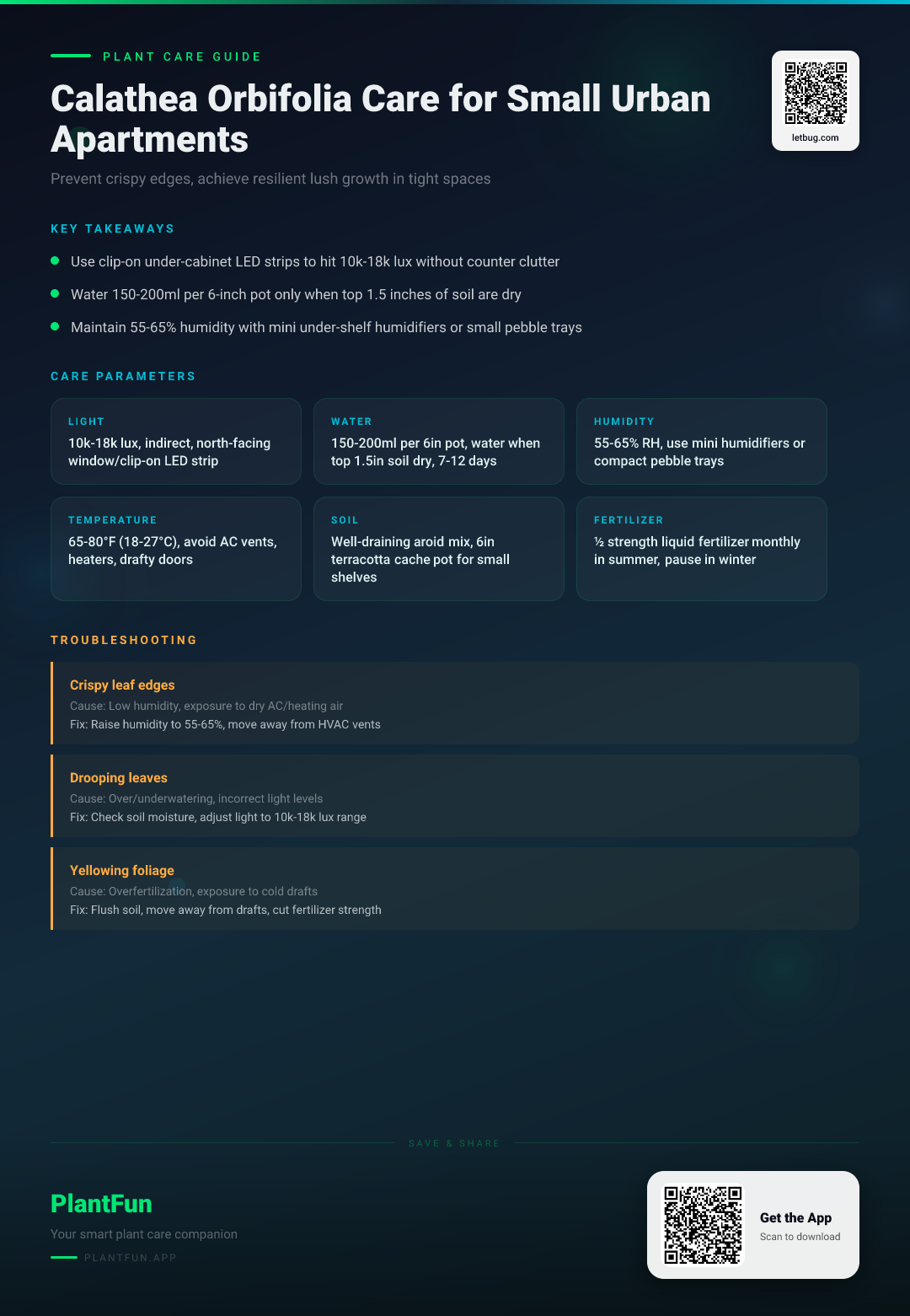
Key Takeaways
- Check soil moisture before watering — overwatering is the #1 killer of houseplants.
- Ensure your plant gets the right amount of light for its species.
- Be patient with recovery — most plants need 2–4 weeks to bounce back.
Quick Care Card
| Care Factor | Small Apartment Rule |
|---|---|
| Light | 10,000-18,000 lux of bright indirect light, no direct midday sun (NC State Extension, 2026) |
| Water | 150-200ml per 6-inch pot when top 1.5 inches of soil are dry (every 7-12 days season-dependent) (NC State Extension, 2026) |
| Humidity | 55-65% relative humidity, avoid drops below 50% (NC State Extension, 2026) |
| Temperature | 65-80°F (18-27°C), no exposure to drafts or extreme temperature swings |
| Soil | Well-draining aroid mix with perlite and orchid bark for aeration |
| Fertilizer | ½ strength liquid houseplant fertilizer once monthly in spring and summer only |
| Toxicity | Non-toxic to cats, dogs, and humans (ASPCA, 2026) |
Grab our free printable Calathea orbifolia apartment care checklist at the end of this guide to stick to your routine without guesswork.
Why Calathea Orbifolia Struggles in Typical Small Apartments
Native to the understory of South American tropical rainforests, Calathea orbifolia evolved to thrive in consistent, gentle light, high humidity, and stable temperatures — conditions that are rare in 400-600 sqft urban studios. The most common studio pitfalls that cause stress, crispy edges, and drooping leaves include:
- Low, inconsistent light: Most studios have only 1-2 windows, often north-facing, that deliver light levels below the 10,000 lux minimum this species needs for healthy growth
- Dry HVAC air: Sealed apartment buildings run AC in summer and heating in winter, dropping ambient humidity to 30-40% — far below the 55% minimum threshold for Calathea health
- Limited surface space: Many plant parents cram their Calathea on crowded windowsills to save counter space, exposing it to direct sun burn or cold drafts from old window frames
- Drafty hot/cold spots: Studio apartments often have HVAC vents, space heaters, or drafty entry doors within a few feet of all available plant placement spots, causing rapid temperature swings that stress leaves
Small-Space Optimized Light Setup Guide
Calathea orbifolia light requirements fall exactly between 10,000-18,000 lux of bright indirect light, with no exposure to direct midday sun (NC State Extension, 2026). For small apartments, these space-saving hacks deliver the right light without taking up valuable floor or counter space:
- Clip-on LED grow strips: Mount 12-inch full-spectrum LED grow strips under upper kitchen or living room cabinets, 12 inches above your plant, set to a 12-hour on/off timer. These strips are less than 1 inch thick, so they’re completely out of sight and don’t take any usable surface space. Check out our guide to the best space-saving grow lights for small apartments to pick the right model for your setup.
- North-facing window placement: A Calathea orbifolia north facing window setup is ideal for studios, as north-facing glass delivers consistent gentle light with no direct UV rays. Place the plant 2-3 feet away from the glass to avoid cold winter drafts, and you won’t need any supplemental light for most of the year.
Quick test: Hold your hand palm down at the plant’s leaf level at midday. If you see a faint, soft shadow, the light level is perfect. If you see a sharp, dark shadow, the light is too bright and will burn leaves. If you see no shadow at all, add a clip-on grow light to raise levels to the 10,000 lux minimum.
Watering Routine Checklist
Figuring out how often to water Calathea orbifolia is one of the most common pain points for small apartment plant parents, but the rule is simple and measurable:
- For a standard 6-inch potted Calathea, water 150-200ml of room-temperature filtered or rainwater only when the top 1.5 inches of soil are completely dry (NC State Extension, 2026). This works out to every 7-12 days, depending on the season and your apartment’s HVAC settings.
- Quick test: Stick your index finger 1.5 inches into the soil, down to your first knuckle. If the soil is completely dry with no moisture, it’s time to water. If there’s any dampness, wait 2-3 days and check again.
- Space-saving hack for busy renters: Use slim 4-inch self-watering spikes that insert directly into the pot soil, connected to a small water reservoir that fits under the pot’s cache pot. These spikes deliver consistent small amounts of water for 7-10 days, so you don’t have to worry about over or underwatering while you’re traveling for work.
Myth vs Reality: Myth: You need to water your Calathea on a strict weekly schedule. Reality: Apartment humidity and temperature fluctuate drastically between seasons and even between units in the same building, so checking soil moisture is the only accurate way to avoid overwatering.
Humidity Hacks That Don’t Clutter Your Space
Calathea orbifolia humidity needs sit at a strict 55-65% relative humidity, with drops below 50% almost guaranteed to cause crispy leaf edges (NC State Extension, 2026). These space-saving hacks hit the right humidity level without taking up counter or floor space:
- Under-shelf mini humidifiers: Mount 2-inch wide USB-powered mini humidifiers to the bottom of the floating shelf holding your Calathea. These small units run for 8-12 hours on a single fill, and deliver targeted humidity directly to your plant without taking up any usable surface space.
- Slim pebble trays: Use a 7-inch wide, 2-inch deep pebble tray that fits directly under your Calathea’s pot stand. Fill the tray with pebbles and water up to the top of the pebbles, so the pot sits on top of the pebbles (not in the water, which causes root rot). The evaporating water raises local humidity around the plant by 5-10% naturally.
- Group with small plants: Place your Calathea on the same shelf as other small moisture-loving plants like pothos, peperomia, or ferns. The combined transpiration from all the plants raises ambient humidity on the shelf by up to 10% with no extra equipment needed.
Ideal Temperature Parameters for Apartment Living
Calathea orbifolia thrives in consistent temperatures between 65-80°F (18-27°C) (NC State Extension, 2026). In small apartments, the key to avoiding temperature stress is to skip placement in high-traffic drafty spots, even if that means tucking your plant in a less obvious spot:
- Avoid placing your Calathea within 3 feet of AC vents, space heaters, radiators, or drafty entry doors. Rapid temperature swings of more than 10°F in an hour cause leaf stress that leads to crispy edges and drooping leaves.
- Narrow 8-inch wide floating shelves mounted on interior walls (not exterior walls with drafty windows) are the perfect placement spot, as they’re far from HVAC vents and deliver consistent stable temperatures.
Small-Space Soil & Potting Tips
The right soil and pot size make a huge difference in how easy it is to care for your Calathea in a small apartment, while also saving you valuable space:
- Soil mix: Use a well-draining aroid mix made of 1 part perlite, 1 part orchid bark, 1 part coco coir, and ½ part worm castings. This mix drains quickly to avoid root rot, while retaining enough moisture to keep your plant hydrated between waterings. Check out our full guide to aroid soil mixes for indoor plants for a step-by-step recipe.
- Pot size: The ideal Calathea orbifolia pot size for small spaces is a 6-inch terracotta cache pot with drainage holes, which fits perfectly on standard 8-inch wide floating shelves. Skip oversized 10+ inch pots that take up floor space — Calatheas have small, compact root systems and only need to be repotted once every 2-3 years, when roots are visibly growing out of the drainage holes.
Seasonal Care Calendar
Adjust your care routine for apartment seasonal conditions to keep your Calathea healthy year-round:
Winter (October-February)
- Reduce watering to every 10-12 days, as lower light and cooler temperatures slow soil drying
- Pause fertilizing completely, as the plant enters a semi-dormant state
- Move your Calathea 1 foot further from exterior windows to avoid cold draft exposure
- Run your under-shelf humidifier for 12 hours a day to counteract dry heating air (this is a core part of successful Calathea orbifolia winter care for studio apartments)
Summer (June-August)
- Check soil moisture every 5-7 days for Calathea orbifolia summer watering, as higher temperatures and more light dry soil out faster
- Mist the leaves with room-temperature filtered water 2x per week to boost humidity
- Fertilize once monthly with ½ strength liquid houseplant fertilizer, to support new leaf growth
- Wipe leaves with a damp microfiber cloth once every 2 weeks to remove dust that blocks light absorption
Common Small-Apartment Care Mistakes to Avoid
- Mistake: Placing your Calathea on a crowded windowsill with direct midday sun to save shelf space What happens: Direct UV rays burn leaf tissue, leading to unsightly Calathea orbifolia crispy edges within 2-3 days Instead: Mount a low-profile clip-on grow light under upper cabinets or place the plant 2-3 feet away from a north-facing window for ideal bright indirect light
- Mistake: Overwatering your plant to compensate for dry apartment air, instead of adjusting humidity levels What happens: Soggy soil causes root rot, which is the top cause of why is my Calathea orbifolia drooping questions we get from small space plant parents Instead: Use an under-shelf mini humidifier to hit the 55-65% RH threshold, and only water when the top 1.5 inches of soil are completely dry
- Mistake: Buying a bulky countertop humidifier that takes up 1+ sqft of valuable kitchen or living room space What happens: You’ll likely move the humidifier away from your plant to free up space, leaving it exposed to dry air that stunts growth Instead: Opt for 2-inch wide under-shelf mini humidifiers that mount out of sight under your plant shelf, or use a slim pebble tray that fits directly under your pot stand
- Mistake: Repotting into a 10+ inch oversized pot to “give your plant room to grow” and avoid repotting often What happens: Excess unused soil holds stagnant water, leading to root rot, and the large pot takes up precious floor or counter space you can’t spare in a small studio Instead: Stick to a 6-inch terracotta cache pot (the ideal Calathea orbifolia pot size for small spaces) that fits perfectly on 8-inch wide floating shelves, and only repot once every 2-3 years when roots are visibly growing out of drainage holes
FAQ (Voice Search Optimized)
Why is my Calathea orbifolia getting crispy edges in my apartment?
The top three causes of crispy edges in studio apartments are humidity levels below 50%, direct sun burn, or consistent exposure to cold or hot drafts from AC vents, space heaters, or drafty window sills (NC State Extension, 2026). Test your ambient humidity with an affordable $10 hygrometer, move the plant at least 3 feet away from HVAC vents, and add an under-shelf humidifier if needed to hit the 55-65% RH target.
Can I keep a Calathea orbifolia in a north-facing studio apartment?
Absolutely! North-facing windows provide the gentle bright indirect light that matches this species’ native understory habitat, making a Calathea orbifolia north facing window setup one of the easiest low-effort options for small apartments (Yang & Yeh, 2008). Place the plant 2-3 feet away from the glass to avoid cold winter drafts, and add a clip-on grow light if your light levels fall below 10,000 lux in the winter months.
How often do I need to water my Calathea orbifolia in a small apartment?
For a standard 6-inch potted Calathea, water 150-200ml when the top 1.5 inches of soil are completely dry, which works out to every 7-12 days in spring and fall, every 5-7 days for Calathea orbifolia summer watering, and every 10-12 days for Calathea orbifolia winter care (NC State Extension, 2026). Use a slim self-watering spike if you travel often for work to avoid over or underwatering while you’re gone.
As a bonus note for Calathea orbifolia care for beginners: this species is non-toxic to cats, dogs, and kids per the ASPCA (2026), so it’s a safe pick for even the most cramped pet-friendly studios. Check out our full list of pet-safe non-toxic indoor plants for small apartments for more low-risk picks.
Printable Care Checklist Download
Grab our free 1-page Calathea orbifolia apartment care checklist, optimized exclusively for 400-600 sqft urban studio renters. The checklist includes weekly, monthly, and seasonal care reminders, space to track light and humidity levels, and quick troubleshooting tips for common issues like crispy edges and drooping leaves. It fits perfectly on fridge doors, inside plant cabinet doors, or taped to the side of a shelf, so you can stick to your routine without extra clutter. Download the free checklist here
Understanding the Science
A 2008 study of Calathea orbifolia photosynthetic behavior found that the species evolved to thrive in low to moderate indirect light (10,000-18,000 lux) and consistent high humidity, which explains why it struggles in the dry, fluctuating conditions of most urban apartments (Yang & Yeh, 2008). A 2025 plant disease study also notes that stressed plants (from low humidity or extreme temperature swings) are more susceptible to leaf anthracnose, a fungal infection that presents as brown, crispy spots on leaf edges (Khuna et al., 2025). Following the small-space optimized care tips in this guide reduces stress on your plant, lowering disease risk and encouraging lush, full growth.
References
- NC State Extension. (2026). Calathea Orbifolia Care Checklist — NC State Extension Gardener Plant Toolbox. https://plants.ces.ncsu.edu/plants/calathea-orbifolia/. Accessed 2026-03-01.
- ASPCA. (2026). Toxic and Non-Toxic Plants List — ASPCA. https://www.aspca.org/pet-care/animal-poison-control/toxic-and-non-toxic-plants. Accessed 2026-03-01.
- Yang, S.; Yeh, D. (2008). In vitro leaf anatomy, ex vitro photosynthetic behaviors and growth of Calathea orbifolia (Linden) Kennedy plants obtained from semi-solid medium and temporary immersion systems. Plant Cell, Tissue and Organ Culture. https://doi.org/10.1007/s11240-008-9363-3. Accessed 2026-03-01.
- Khuna, S.; Hongsanan, S.; Thitla, T. (2025). First Report of Leaf Anthracnose Caused by Colletotrichum fructicola on Calathea orbifolia in China. Plant Disease. https://doi.org/10.1094/pdis-03-25-0501-pdn. Accessed 2026-03-01.
Optional Helper: Plantfun.App
Plantfun.App identifies your plants by photo, diagnoses pests and diseases with clear fixes, and creates personalised watering and light schedules that adapt to your home conditions — a handy companion for putting this guide into daily practice.
Found an error or have suggestions? We'd love your feedback.
Need help identifying this problem?
Get instant identification, personalized care schedules, and effective pest treatment plans directly on your phone.
Sponsored • We may earn a commission from app downloads
Related Guides
The Complete Calathea Orbifolia Care Guide for Standard Urban Apartments: Lush, Crisp Leaves Year-Round
Keep your Calathea orbifolia thriving in your standard urban apartment. Get exact light levels, watering amounts, and a seasonal routine to avoid crispy edges and droopy leaves all year.
Care GuideThe Complete Calathea Orbifolia Care Checklist for Resilient Growth in Typical Central AC Apartments
Skip expensive plant gadgets to grow a lush Calathea orbifolia. Get exact light levels, watering amounts, and a free printable checklist for resilient growth in your typical apartment.
Care GuideThe Budget Calathea Orbifolia Care Checklist for Resilient Growth in Small Urban Apartments
Skip pricy calathea care gadgets. Get 8 budget-friendly, renter-approved steps to grow lush Calathea orbifolia in small urban apartments without crispy leaves or faded patterns.
Pest ControlAnts on Plants: What They Mean and What to Do
Ants usually aren't eating your plant. They are farming other pests.