
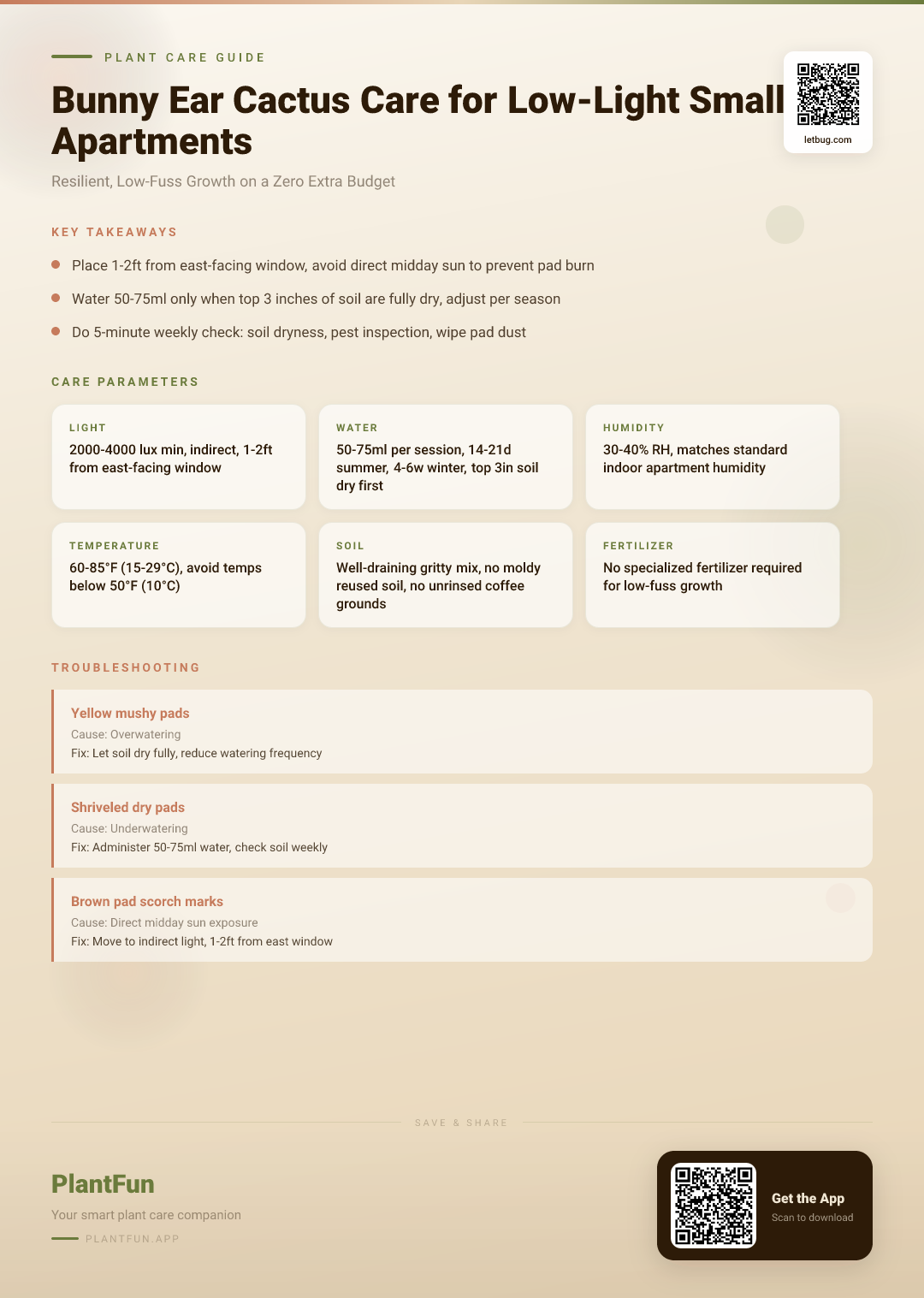
Key Takeaways
- Check soil moisture before watering — overwatering is the #1 killer of houseplants.
- Ensure your plant gets the right amount of light for its species.
- Be patient with recovery — most plants need 2–4 weeks to bounce back.
Quick Care Card
| Parameter | Exact Threshold |
|---|---|
| Light | 2,000-4,000 lux minimum, 1-2 feet from east-facing window, no direct midday sun |
| Water | 50-75 ml only when top 3 inches of soil are completely dry; 14-21 days (summer), 4-6 weeks (winter) |
| Humidity | 30-40% (typical apartment humidity, no adjustments needed) |
| Temperature | 60-85°F (15-29°C), never below 50°F (10°C) |
| Soil | pH 6.0-7.5, 50% organic matter / 50% mineral drainage amendments |
| Fertilizer | No mandatory feeding; optional diluted 10-10-10 once yearly in spring |
| Toxicity | Non-toxic to humans; mild stomach irritation for pets if ingested, glochids cause skin irritation (ASPCA, 2026) |
Why This Guide Is Different
Generic bunny ear cactus care guides assume you have full south-facing sun, budget for specialty cactus soil, and extra cash for grow lights. This guide is built explicitly for renters in small, low-light, low-humidity apartments with $0 to spare for plant supplies. No fancy products, no guesswork, only measurable, actionable steps tailored to the constraints most people live with.
Myth vs Reality: You may have heard bunny ear cacti need 6+ hours of direct sun to survive. In reality, they thrive in the indirect low light common in most apartments with proper placement (NC State Extension, 2026).
Step-by-Step Budget Care Setup
- Soil mix (free): Combine 50% leftover potting soil from other houseplants, 25% rinsed, crushed eggshells from your kitchen scraps, and 25% perlite sifted from old potting mix you already own. No specialty cactus soil purchase required for a functional bunny ear cactus soil mix budget solution.
- Pot ($1 max): Use any thrifted plastic or terracotta pot with a minimum ½-inch drainage hole. If your pot has no hole, add 1 inch of crushed gravel from your driveway or sidewalk to the bottom first to prevent root rot.
- Placement: Position your cactus 1-2 feet from an east-facing window for optimal light, at least 3 feet away from radiators, AC vents, and drafty window sills. This is the ideal bunny ear cactus placement in apartment spaces with limited light.
Exact Light Requirements for Apartment Living
Bunny ear cactus low light care only requires a minimum of 2,000-4,000 lux of indirect light (NC State Extension, 2026). You don’t need south-facing windows to grow a healthy plant.
To measure light for free: Download a free light meter app on your phone, hold it at cactus pad height for 10 seconds between 10am and 2pm (peak daylight hours). If you hit 2,000 lux or higher, your spot works. For north-facing windows, place the cactus 1 foot from the glass with no curtains or furniture blocking light to hit the minimum lux threshold, no grow lights required.
Watering Schedule You Can Stick To
Wondering how often to water bunny ear cactus? Follow these exact, no-fuss rules: Only give 50-75 ml of room-temperature tap water when the top 3 inches of soil are completely dry. Quick test: Stick your index finger all the way into the soil; if no dirt sticks to your finger past the second knuckle, it’s time to water.
- Bunny ear cactus summer watering: Every 14-21 days, depending on how hot your apartment gets
- Bunny ear cactus winter care watering: Every 4-6 weeks during dormancy, when growth slows
If you notice shriveled, wrinkly pads, that is a clear sign your plant needs more water (the answer to the common question “why is my bunny ear cactus shriveling”). If pads are mushy or yellow, you have overwatered: Let the soil dry completely for 2 weeks before watering again to learn how to save overwatered bunny ear cactus plants easily.
Humidity & Temperature Tolerance Guide
Bunny ear cactus humidity requirements align perfectly with the 30-40% humidity level of most apartments with forced-air heating or AC (NC State Extension, 2026). You never need to buy a humidifier or mist your cactus to keep it healthy.
Keep temperatures between 60-85°F (15-29°C) year round. Never let your cactus sit in temperatures below 50°F (10°C), which can happen on drafty window sills in winter. The tiny glochid spines are extra sensitive to cold damage, so move it away from windows if outdoor temperatures drop below freezing.
Seasonal Care Calendar
No extra work required, just small adjustments to match your apartment’s seasonal conditions:
- January-February (dormancy): Water once every 6 weeks, no fertilizing, keep 3+ feet away from radiators
- March-April (waking period): Increase watering to every 4 weeks, move to a brighter spot if you open windows regularly
- May-August (growing season): Water every 14-21 days, keep 3+ feet away from AC vents
- September-October (cool down): Reduce watering to every 3 weeks, bring indoors immediately if you kept it on a balcony
- November-December (pre-dormancy): Cut back watering to every 5 weeks, avoid placement near drafty holiday windows
5-Minute Weekly Care Checklist
Print this simple checklist to make consistent bunny ear cactus care for beginners foolproof:
- Check soil dryness: Stick your finger 3 inches into the soil to confirm if it is time to water
- Inspect for pests: Check the undersides of pads for tiny white fuzzy mealybugs; wipe off with a rubbing alcohol-soaked cotton swab if found
- Wipe dust off pads: Use a dry microfiber cloth to gently wipe dust off pads to improve light absorption, no expensive leaf shine products needed
Common Budget Care Mistakes to Avoid
- Mistake: Using unrinsed leftover coffee grounds as a soil amendment What happens: Excess acid burns the cactus roots, causing yellowing, drooping pads Instead: Rinse coffee grounds thoroughly before adding, only mix in 1 tbsp per pot once a year at most
- Mistake: Reusing moldy old soil from dead plants without treating it first What happens: Mold spreads to your cactus roots, causing fast root rot Instead: Bake old soil on a cookie sheet at 200°F for 30 minutes to kill mold and pathogens before use, for free
- Mistake: Placing your cactus directly on top of a radiator or next to a space heater in winter What happens: Pads dry out and shrivel faster than you can water them Instead: Place the cactus on a shelf 3+ feet away from heat sources, or set a tray of water next to the radiator to add small amounts of ambient humidity if needed
- Mistake: Watering on a fixed schedule without checking soil dryness first What happens: Overwatering is the #1 cause of bunny ear cactus death for new plant owners Instead: Always use the 3-inch finger test before watering, and adjust your schedule based on your apartment’s temperature and humidity levels
FAQ
Can I grow a bunny ear cactus in my apartment with no south-facing windows?
Yes! Can bunny ear cactus survive in apartments with only east or north-facing light? Absolutely, as long as you hit the minimum 2,000 lux light threshold (NC State Extension, 2026). Use a free light meter app to confirm levels: Place your cactus 1-2 feet from an east-facing window, or 1 foot from a bright unobstructed north-facing window, and you will have enough light for healthy growth, no grow lights required.
How often do I need to water my bunny ear cactus if I forget to check it?
If you miss your weekly soil check, default to watering once every 2 weeks in summer, and once every 5 weeks in winter, and always do the 3-inch finger test when you remember to confirm. Signs of underwatering include shriveled, wrinkly pads; signs of overwatering include mushy, yellow or brown pads. If you overwater, let the soil dry completely for 2 weeks before watering again to reverse damage easily.
What cheap supplies can I use for bunny ear cactus soil?
All cheap cactus care supplies for your soil mix can be free or under $1 total: Use leftover potting soil from other houseplants as the base, add rinsed crushed eggshells from your kitchen scraps for drainage and calcium, and sift perlite from old potting mix you already own to improve drainage. You never need to buy specialty cactus soil to grow a thriving plant.
References
- NC State Extension. (2026). Bunny Ear Cactus Care — NC State Extension Gardener Plant Toolbox. https://plants.ces.ncsu.edu/plants/bunny-ear/. Accessed 2026-02-24.
- ASPCA. (2026). Toxic and Non-Toxic Plants List — ASPCA. https://www.aspca.org/pet-care/animal-poison-control/toxic-and-non-toxic-plants. Accessed 2026-02-24.
- Hammond, P.; Lillie, S. (2010). Bunny fun! Child Care. https://doi.org/10.12968/chca.2010.7.7.48746. Accessed 2026-02-24.
- WAGNER, D. (2007). LITHOPS from seed to scanner bed. Cactus and Succulent Journal. https://doi.org/10.2985/0007-9367(2007)79[264:lfstsb]2.0.co;2. Accessed 2026-02-24.
Optional Helper: Plantfun.App
Plantfun.App identifies your plants by photo, diagnoses pests and diseases with clear fixes, and creates personalised watering and light schedules that adapt to your home conditions — a handy companion for putting this guide into daily practice.
Found an error or have suggestions? We'd love your feedback.
Need help identifying this problem?
Get instant identification, personalized care schedules, and effective pest treatment plans directly on your phone.
Sponsored • We may earn a commission from app downloads
Related Guides
Bunny Ear Cactus Apartment Care Checklist: Budget Tips for Resilient Year-Round Growth
Keep your bunny ear cactus thriving in your apartment for under $10 a year. Get exact light, water, and soil thresholds plus a printable care checklist to avoid common growing mistakes.
Care GuideBunny Ear Cactus Care for South-Facing Apartment Windowsills: 7 Tips for Resilient Growth
Stop accidentally killing your Bunny Ear Cactus on your apartment windowsill. Get 7 measurable care tips, common mistake fixes, and a seasonal watering schedule for resilient, lush growth.
Care GuideThe Complete Bunny Ear Cactus Care Guide for Small City Studio Apartments: Grow Lush Resilient Pads
Stop killing your bunny ear cactus in your small apartment. Get exact light levels, water amounts, and space-saving hacks to grow lush, resilient pads year-round without extra clutter.
Pest ControlAnts on Plants: What They Mean and What to Do
Ants usually aren't eating your plant. They are farming other pests.