
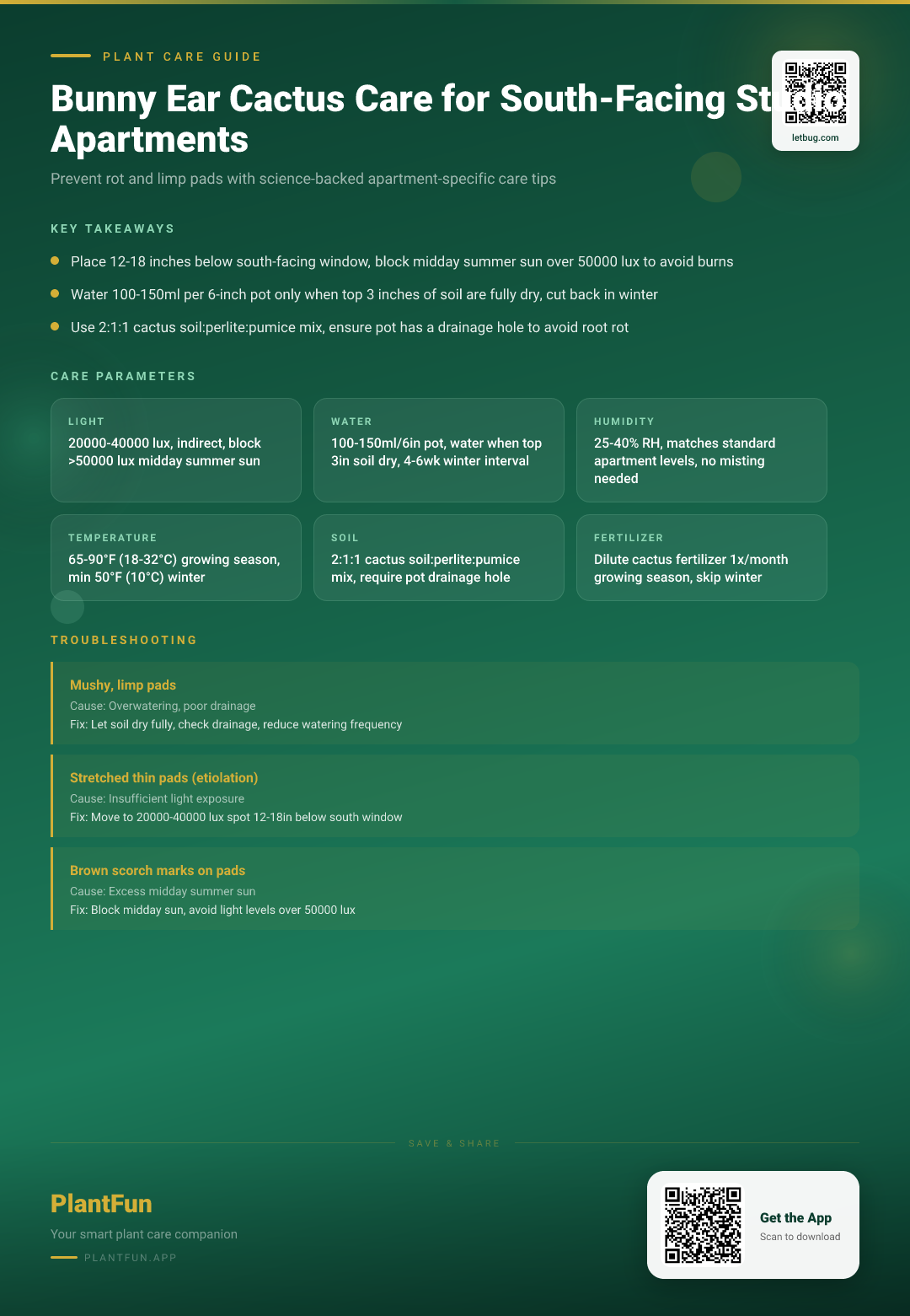
Key Takeaways
- Check soil moisture before watering — overwatering is the #1 killer of houseplants.
- Ensure your plant gets the right amount of light for its species.
- Be patient with recovery — most plants need 2–4 weeks to bounce back.
Quick Care Card
| Parameter | Requirement |
|---|---|
| Light | 20,000-40,000 lux, 12-18 inches below south-facing window, block midday summer sun over 50,000 lux |
| Water | 100-150ml per 6-inch pot, only when top 3 inches of soil are fully dry; 14-21 day summer intervals, 4-6 week winter intervals |
| Humidity | 25-40% (matches standard apartment levels, no misting needed) |
| Temperature | 65-90°F (18-32°C) growing season, 50°F (10°C) minimum winter temperature |
| Soil | 2:1:1 cactus soil : perlite : pumice mix, mandatory drainage hole |
| Fertilizer | ½ strength cactus fertilizer, once monthly only in spring and summer |
| Toxicity | Non-toxic to humans, mild mouth/skin irritation to pets if chewed (ASPCA, 2026) |
Why This Guide Exists
Generic cactus care advice often assumes outdoor growing conditions or large, well-ventilated homes, which fails apartment dwellers dealing with the unique constraints of south-facing studios: intense midday sun, consistent 30-40% ambient humidity, and limited placement space. Bunny ear cacti (Opuntia microdasys) are uniquely suited to these layouts, as they tolerate low humidity, bright light, and occasional missed waterings (NC State Extension, 2026). A common myth we debunk here: all cacti need unfiltered full sun all day. The reality is that unfiltered south-facing summer sun can exceed 50,000 lux, which burns bunny ear cactus pads. This checklist skips the fluff and gives measurable, actionable steps tailored exactly to your studio environment. For general cactus care tips for small spaces, check out our beginner’s guide to apartment cactus care.
Symptom-to-Action Cheat Sheet
If you notice any of these common issues, use the immediate 1-step fix below to resolve it before it worsens:
Mushy Limp Pads
Symptom: Soft, discolored pads that fall off easily when touched, sometimes oozing clear liquid.
Likely cause: Overwatering leading to root rot, the #1 issue for apartment bunny ear cacti (NC State Extension, 2026).
Fix:
- Tip the pot to drain all excess standing water immediately, then move to a sunnier spot to speed soil drying.
- If pads are still mushy after 7 days, unpot, trim rotted roots, and repot in fresh dry bunny ear cactus soil mix.
Etiolation (Long Thin Pads)
Symptom: New pads grow stretched, pale, and thinner than mature pads, often leaning toward the window.
Likely cause: Insufficient light below the 20,000 lux minimum requirement for healthy growth.
Fix:
- Move the cactus to a shelf 12-18 inches directly below your south-facing window to hit the optimal light range.
Brown Scorch Spots
Symptom: Crispy, tan, flat spots on the side of the cactus facing the window, no softness.
Likely cause: Exposure to midday summer sun over 50,000 lux, leading to sunburn.
Fix:
- Hang a sheer curtain over the south-facing window between 10am and 3pm in summer to filter excess light.
No New Growth
Symptom: No new tiny fuzzy pads appear during spring and summer growing months.
Likely cause: Underfertilization, or extended dormancy from winter temperatures that are too warm.
Fix:
- Apply ½ strength cactus fertilizer once per month during spring and summer, and ensure winter temperatures stay between 50-60°F for 8-10 weeks.
Mealybug Infestations
Symptom: Small white cottony clusters on the joints between pads, sticky honeydew residue on pads or surrounding surfaces.
Likely cause: Cross-contamination from other new plants brought into the apartment.
Fix:
- Dab all visible mealybugs with a cotton swab dipped in 70% isopropyl alcohol, repeat every 3 days for 2 weeks until gone. For persistent infestations, follow our complete mealybug removal guide.
Step 1: Light Setup for Resilient Growth
Bunny ear cactus light requirements fall between 20,000 and 40,000 lux (NC State Extension, 2026), which is perfectly matched to south-facing window light if positioned correctly. To test your light levels, download a free lux meter app on your phone, hold it at cactus height between 10am and 3pm, and take a reading. The ideal placement is a shelf 12-18 inches below the south-facing window sill: this avoids the super-intense 50,000+ lux light directly on the sill that causes burn, while still hitting the optimal light range. If your midday reading exceeds 50,000 lux in summer, hang a sheer curtain to filter the light. Learn more about measuring light for houseplants in our lux meter guide for beginners.
Step 2: Exact Watering Schedule & Amounts
Wondering how often to water bunny ear cactus in a dry studio? Follow this measurable rule: only water when the top 3 inches of soil are completely bone dry (test by sticking your index finger 3 inches into the soil — no moisture, no clumping means it’s time to water). For a standard 6-inch pot, pour 100-150ml of room temperature water directly onto the soil (avoid pouring on pads to prevent rot), stopping when you see 2-3 drops come out the drainage hole. Adjust intervals based on season: 14-21 days for bunny ear cactus summer watering, and 4-6 weeks in winter when the plant is dormant. Occasional missed waterings are completely fine — this cactus is highly drought tolerant. Always empty the saucer under the pot 10 minutes after watering to avoid standing water that causes root rot.
Step 3: Soil & Pot Setup to Prevent Rot
The #1 way to prevent cactus rot in apartments is to use a fast-draining bunny ear cactus soil mix: 2 parts commercial cactus soil, 1 part perlite, 1 part pumice (Wagner, 2007). This mix drains 3x faster than regular potting soil, which is critical for 30-40% apartment humidity where soil dries much slower than outdoor conditions. A drainage hole is non-negotiable — never plant your bunny ear cactus in a pot without one, even if you add a layer of rocks at the bottom. The best pot materials for studios are unglazed terracotta, which breathes and wicks excess moisture away from roots, reducing rot risk. Plastic pots work too, but you will need to extend your watering intervals by 3-5 days to account for slower evaporation.
Step 4: Humidity & Temperature Tuning
Wondering if bunny ear cactus can survive low humidity? Yes — their optimal humidity range is 25-40%, which exactly matches the average ambient humidity of heated and cooled studio apartments. No misting, humidifiers, or pebble trays are needed for this plant, making it extremely low maintenance for apartment dwellers. For growing seasons (spring and summer), keep temperatures between 65-90°F (18-32°C). In winter, maintain a minimum temperature of 50°F (10°C) to avoid cold damage (NC State Extension, 2026). If your window sill gets colder than this on winter nights, move the cactus 12 inches back from the window to avoid cold drafts.
Seasonal Care Calendar
Follow this 12-month breakdown to adjust care as studio conditions change:
- January (Winter Dormancy): Water once every 5-6 weeks, no fertilizer, keep temps 50-60°F, ensure 6+ hours of light daily.
- February: Maintain dormancy conditions, start checking soil moisture more frequently as days lengthen.
- March (Spring New Growth): Gradually increase watering to every 3 weeks, apply first dose of ½ strength cactus fertilizer when tiny new fuzzy pads appear.
- April: Confirm light levels stay between 20,000-40,000 lux, remove any dead or damaged mature pads.
- May: Start testing midday sun intensity, add a sheer curtain if readings exceed 50,000 lux.
- June-August (Summer Heat Stress): Water every 14-18 days, empty saucers immediately after watering, no misting required.
- September (Fall Acclimation): Gradually reduce watering to every 3-4 weeks, stop fertilizing entirely.
- October: Remove the sheer curtain as sun intensity drops, move cactus closer to the window if light levels fall below 20,000 lux.
- November-December: Enter dormancy, reduce watering to every 4-6 weeks, keep temps above 50°F, no fertilizer.
Common Mistakes to Avoid
-
Mistake: Overwatering on a fixed schedule without checking soil moisture first.
What happens: Root rot, mushy limp pads, eventual plant death (NC State Extension, 2026).
Instead: Only water when the top 3 inches of soil are completely bone dry, adjust frequency based on season and apartment temperature. -
Mistake: Touching or picking the fuzzy glochids (tiny spines) on the pads with bare hands.
What happens: The tiny barbed spines get stuck in your skin, causing mild irritation for hours.
Instead: Use tongs or thick gardening gloves when handling the cactus for repotting or moving. -
Mistake: Using regular potting soil instead of a well-draining cactus mix.
What happens: Soil retains too much moisture, leading to root rot even if you water infrequently.
Instead: Use the 2:1:1 bunny ear cactus soil mix (cactus soil, perlite, pumice) for fast drainage. -
Mistake: Skipping winter dormancy by keeping the cactus in warm, overly humid conditions year round.
What happens: Stunted growth, no new pads in spring, increased risk of pest infestations.
Instead: Keep the cactus in a cooler spot (50-60°F) near the south window in winter, reduce watering to encourage dormancy.
FAQ 1: Why is my bunny ear cactus growing long, thin pads?
Long, thin pads are a sign of etiolation, which occurs when your cactus is getting less than the 20,000 lux minimum light requirement (NC State Extension, 2026). Even if it’s near a south-facing window, it may be too far away, or blocked by furniture or other plants. Move it to a shelf 12-18 inches directly below the south-facing window, and you should see new pads grow thick and healthy within 4-6 weeks.
FAQ 2: Can I keep my bunny ear cactus on my south-facing window ledge in winter?
It depends on the temperature of the ledge. If the ledge stays above 50°F (10°C) even on the coldest nights, it’s perfectly fine, and the extra winter light will benefit the cactus. If the ledge gets colder than that (test with a cheap thermometer left on the ledge overnight), move the cactus 12-18 inches back from the window to avoid cold damage, which shows up as black, water-soaked spots on pads.
FAQ 3: How often should I fertilize my bunny ear cactus in a small apartment?
Only fertilize during the spring and summer growing season, once per month, using a ½ strength cactus fertilizer. Never fertilize in fall or winter, when the cactus is dormant, as this will cause salt buildup in the soil and burn the roots. This low fertilization schedule is perfect for small apartments, as you don’t have to worry about strong fertilizer smells or frequent applications, making it ideal for bunny ear cactus for beginners.
References
- NC State Extension. (2026). Bunny Ear Cactus Care — NC State Extension Gardener Plant Toolbox. https://plants.ces.ncsu.edu/plants/opuntia-microdasys/. Accessed 2026-03-06.
- Wagner, D. (2007). LITHOPS from seed to scanner bed. Cactus and Succulent Journal. https://doi.org/10.2985/0007-9367(2007)79[264:lfstsb]2.0.co;2. Accessed 2026-03-06.
- Hammond, P.; Lillie, S. (2010). Bunny fun!. Child Care. https://doi.org/10.12968/chca.2010.7.7.48746. Accessed 2026-03-06.
- ASPCA. (2026). Toxic and Non-Toxic Plants List — ASPCA. https://www.aspca.org/pet-care/animal-poison-control/toxic-and-non-toxic-plants. Accessed 2026-03-06.
Optional Helper: Plantfun.App
Plantfun.App identifies your plants by photo, diagnoses pests and diseases with clear fixes, and creates personalised watering and light schedules that adapt to your home conditions — a handy companion for putting this guide into daily practice.
Found an error or have suggestions? We'd love your feedback.
Need help identifying this problem?
Get instant identification, personalized care schedules, and effective pest treatment plans directly on your phone.
Sponsored • We may earn a commission from app downloads
Related Guides
The Complete Bunny Ear Cactus Care Guide for Small City Studio Apartments: Grow Lush Resilient Pads
Stop killing your bunny ear cactus in your small apartment. Get exact light levels, water amounts, and space-saving hacks to grow lush, resilient pads year-round without extra clutter.
Care GuideBunny Ear Cactus Care Checklist for East-Facing Studio Apartments: Grow Lush, Resilient Pads Year-Round
Stop letting your apartment cactus turn pale or mushy. Grab our 8-step care checklist with exact light, water, and soil specs to grow lush, resilient bunny ear cactus pads all year.
Care GuideBunny Ear Cactus Apartment Care Checklist: Budget Tips for Resilient Year-Round Growth
Keep your bunny ear cactus thriving in your apartment for under $10 a year. Get exact light, water, and soil thresholds plus a printable care checklist to avoid common growing mistakes.
Pest ControlAnts on Plants: What They Mean and What to Do
Ants usually aren't eating your plant. They are farming other pests.