
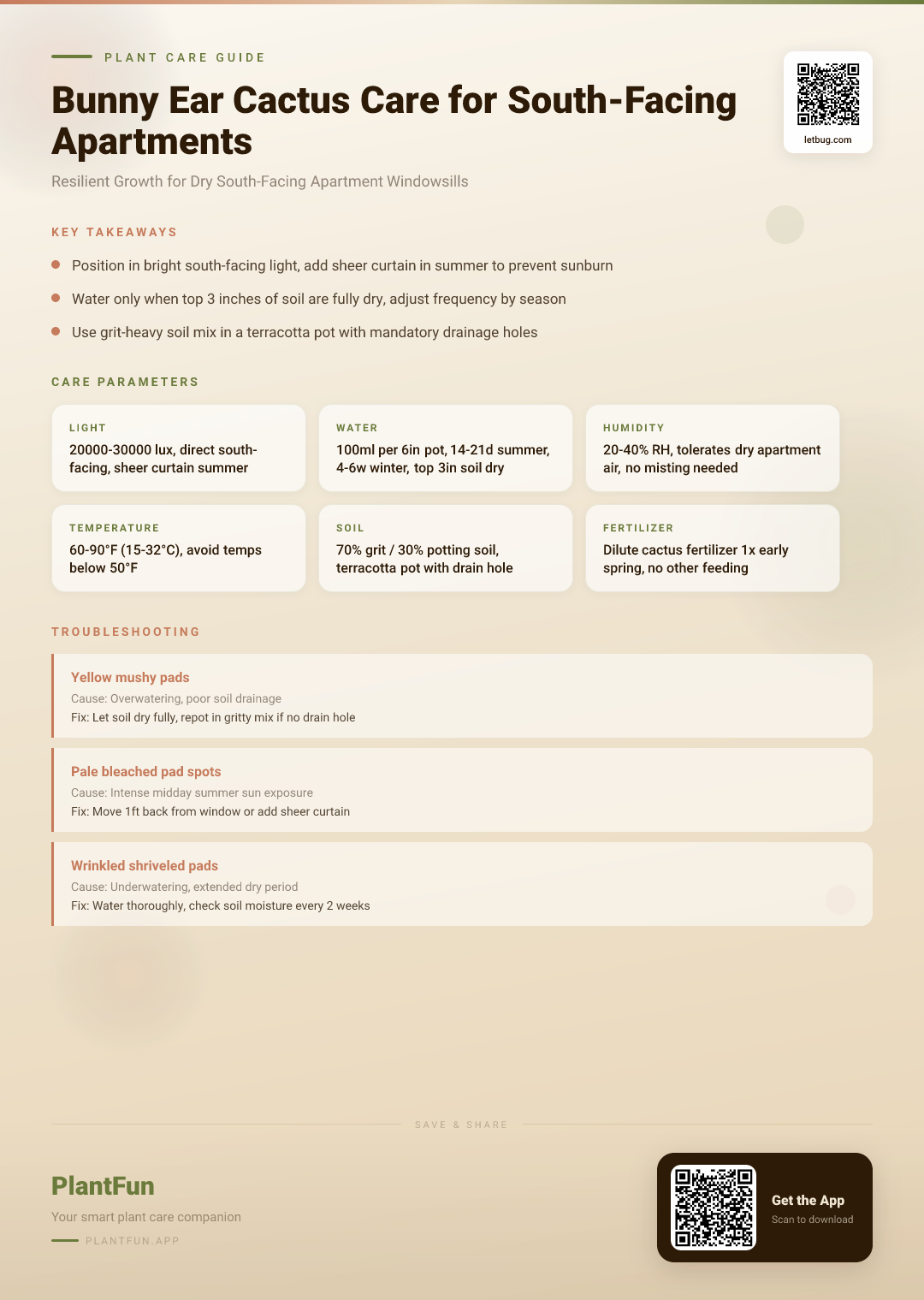
Key Takeaways
- Check soil moisture before watering — overwatering is the #1 killer of houseplants.
- Ensure your plant gets the right amount of light for its species.
- Be patient with recovery — most plants need 2–4 weeks to bounce back.
Quick Care Card
| Parameter | Exact Spec for South-Facing Apartment Windowsills |
|---|---|
| Light | 20,000-30,000 lux; sheer curtain for midday summer sun if levels exceed 35,000 lux |
| Water | 100ml per 6-inch pot, only when top 3 inches of soil are completely dry (14-21 days summer, 4-6 weeks winter) |
| Humidity | 20-40% RH |
| Temperature | 60-90°F (15-32°C) |
| Soil | 70% grit (perlite/pumice/coarse sand) / 30% organic cactus potting mix |
| Fertilizer | 50% diluted 10-10-10 cactus fertilizer, once annually in early spring |
| Toxicity | Non-toxic to cats, dogs, and humans (ASPCA, 2026), but tiny glochid spines cause skin irritation |
Introduction
South-facing apartment windowsills are both the best and riskiest spot for your bunny ear cactus (Opuntia microdasys). They deliver 6+ hours of direct daily sun that matches this desert native’s needs, but fluctuating winter heating, summer midday heat spikes, and low humidity often lead to common pain points: shriveled pads, brown spots, and zero new growth, even for experienced plant owners. This diagnosis-first guide helps you fix existing stress first, then follow a science-backed, low-effort routine tailored specifically to windowsill conditions for resilient, consistent growth.
Diagnosis First: 5 Early Stress Signs to Spot Today
Before implementing the care routine, check for these 5 easy-to-spot stress cues to address immediate issues:
- Yellowing, squishy pads: Early sign of overwatering or root rot
- Mushy, brown base: Advanced root rot from excess moisture trapped in soil
- Pale, bleached white/brown spots: Sunburn from unfiltered midday summer sun
- Stunted new pads that fall off easily: Insufficient light or nutrient deficiency
- Fine white webbing between pads: Spider mite infestation, common in dry indoor air If you spot any of these signs, address the root cause before following the regular care schedule.
Why This Routine Works
Bunny ear cacti evolved in the high-sun, low-humidity, well-draining sandy soils of the Mexican desert, where rainfall is sparse and winter temperatures drop to trigger natural dormancy (Wagner, 2007). Typical south-facing apartment conditions mirror this habitat closely, but require small adjustments: summer light levels can exceed the cactus’s tolerance threshold by 20%, winter heating drops humidity to 10-15% (well below their preferred range), and compact potting soil holds far more moisture than their native sandy substrate. This routine bridges those gaps to encourage healthy growth without extra work for busy renters.
Step 1: Light Management
Stick to these exact parameters to avoid sunburn and ensure sufficient light for growth:
- Target 20,000-30,000 lux of light daily (test with a free smartphone light meter app)
- Summer (June-August): Place the cactus 6-12 inches back from the window, and hang a sheer white curtain to filter light between 11am and 3pm if levels exceed 35,000 lux. For bunny ear cactus sunburn treatment, move the plant to slightly shadier spot; bleached spots won’t heal, but new growth will come in healthy.
- Winter (December-February): Place directly on the windowsill with no curtain, as light levels drop by 50% in cold months, and maximum sun exposure supports healthy dormancy. This is the sweet spot for opuntia microdasys apartment care, balancing sufficient light for growth and protection from scorch.
Step 2: Watering Schedule & Measurements
Overwatering is the #1 cause of bunny ear cactus death for beginners, so follow these measurable rules closely (Hammond & Lillie, 2010):
- Water quantity rule: 100ml of room-temperature filtered water per 6-inch pot, poured directly into the soil (avoid wetting pads to prevent rot)
- Water timing rule: Only water when the top 3 inches of soil are completely dry (stick your finger 3 inches down to test; no moisture = time to water)
- Bunny ear cactus summer watering: Every 14-21 days, when soil dries out faster in high heat
- Bunny ear cactus winter care (dormancy): Every 4-6 weeks, only if pads look slightly shriveled
- Drainage rule: Dump all excess water from the pot saucer within 10 minutes of watering to prevent root rot.
Step 3: Soil & Potting Requirements
The right bunny ear cactus soil mix and pot prevents rot even in high-heat windowsill conditions:
- Soil mix: 70% grit (perlite, pumice, or coarse horticultural sand) + 30% organic cactus potting mix, no added peat moss or compost that holds excess moisture
- Pot requirements: Unglazed terracotta pot 1-2 inches larger than the root ball, with a MANDATORY drainage hole. Terracotta wicks away excess moisture faster than plastic or ceramic, reducing rot risk. Repot every 2-3 years in early spring to refresh the soil and give roots room to grow.
Step 4: Humidity & Temperature Controls
Can bunny ear cactus survive dry heat? Yes, but stick to these ranges to avoid stress and pest infestations:
- Humidity: 20-40% RH. If winter heating drops humidity below 15%, mist the air around the cactus once weekly (do not mist the pads directly) to discourage spider mites
- Temperature: 60-90°F (15-32°C). If summer temps near the window exceed 95°F, move the cactus 1 foot back to avoid heat stress. Keep the cactus at least 2 feet away from drafty heating or AC vents to avoid sudden temperature swings.
Seasonal Care Calendar
Follow these month-by-month adjustments tailored to apartment environments:
- December-February (Winter Dormancy): Water every 4-6 weeks, no fertilizer, keep directly on the windowsill for maximum light, maintain temps between 55-65°F for healthy bunny ear cactus dormancy care
- March-May (Spring Growth Spurt): Increase watering to every 14-21 days, apply diluted cactus fertilizer once in late March. Bunny ear cactus new growth tips: Avoid touching soft new pads until they harden off after 2-3 months, as their glochids are extra sharp during this stage
- June-August (Summer Heat): Place 6 inches back from the window, use a sheer curtain during midday sun, check soil moisture weekly to avoid underwatering
- September-November (Fall Acclimation): Gradually reduce watering frequency to every 3-4 weeks, stop fertilizing, move the cactus back onto the windowsill as light levels drop
7 Common Mistakes to Avoid
- Mistake: Watering on a fixed schedule instead of testing soil moisture What happens: Root rot, yellow mushy pads, and eventual plant death Instead: Use the 3-inch finger test every 10 days, only water when the soil is completely dry
- Mistake: Touching cactus pads with bare hands What happens: Tiny barbed glochid spines get stuck in skin, causing irritation for days Instead: Use thick rubber gloves or tongs to move or repot the cactus, keep out of reach of small children and pets
- Mistake: Using regular potting soil for planting What happens: Soil retains too much moisture, leading to root rot even with correct watering Instead: Use the 70% grit / 30% cactus soil mix outlined earlier
- Mistake: Skipping winter dormancy by keeping the cactus warm and overwatered What happens: Stunted growth the following spring, no new pads, increased pest risk Instead: Reduce watering and keep temps between 55-65°F in winter to trigger natural dormancy
- Mistake: Leaving standing water in the pot saucer for hours after watering What happens: Roots sit in water, leading to rot even with well-draining soil Instead: Dump all excess water from the saucer within 10 minutes of watering
- Mistake: Fertilizing multiple times per year What happens: Excess salt builds up in soil, burning roots and causing brown pad tips Instead: Only fertilize once annually in early spring with 50% diluted cactus fertilizer
- Mistake: Placing the cactus near drafty vents What happens: Sudden temperature swings cause shriveled pads and stress Instead: Keep the cactus at least 2 feet away from all heating and AC vents
Voice Search FAQ
Why is my bunny ear cactus turning brown?
Brown spots are either sunburn (pale, dry bleached spots on the side facing the window) or root rot (soft, mushy brown spots near the base). For sunburn, move the cactus slightly further from the window and use a sheer curtain during midday sun. For root rot, remove the plant from the pot, cut away all mushy brown roots, repot in fresh dry cactus mix, and don’t water for 2 weeks.
Can I leave my bunny ear cactus on my windowsill in winter?
Yes, as long as the window pane doesn’t drop below 50°F and no cold drafts blow directly on the plant. Winter light levels are 50% lower than summer, so placing it directly on the windowsill gives it the maximum light it needs during dormancy.
How often do bunny ear cacti grow new pads?
Healthy cacti will grow 2-6 new pads per plant every spring, as long as they got sufficient dormancy in winter and enough light, water, and nutrients in early spring. New pads are soft and bright green, and will harden off after 2-3 months.
How to fix shriveled bunny ear cactus?
Shriveled pads are almost always a sign of underwatering or extreme low humidity. First, test the soil: if the top 3 inches are completely dry, give it 100ml of water per 6-inch pot, and it should plump back up within 24 hours. If the soil is moist, mist the air around the cactus once weekly to raise humidity slightly.
Quick Weekly & Monthly Checklists
2-Minute Weekly Check
- Check for standing water in the pot saucer, dump if present
- Scan pads for early signs of sunburn, yellowing, or pest webbing
- Ensure the cactus is not touching cold window panes in winter
5-Minute Monthly Check
- Stick your finger 3 inches into soil to test moisture, water if completely dry
- Test light levels with a phone app to confirm they stay between 20,000-30,000 lux
- Check humidity levels with a cheap hygrometer, adjust if below 20% or above 40%
- Wipe down the window pane to remove dust that blocks light
- Inspect the plant base for signs of mushy rot or pest activity
- Rotate the cactus 1/4 turn to ensure even growth on all sides
- Trim any dead or damaged pads with sterile scissors to prevent disease spread
References
- ASPCA. (2026). Toxic and Non-Toxic Plants List — ASPCA. https://www.aspca.org/pet-care/animal-poison-control/toxic-and-non-toxic-plants. Accessed 2026-03-01.
- Wagner, D. (2007). LITHOPS from seed to scanner bed. Cactus and Succulent Journal. https://doi.org/10.2985/0007-9367(2007)79[264:lfstsb]2.0.co;2. Accessed 2026-03-01.
- Hammond, P.; Lillie, S. (2010). Bunny fun!. Child Care. https://doi.org/10.12968/chca.2010.7.7.48746. Accessed 2026-03-01.
Optional Helper: Plantfun.App
Plantfun.App identifies your plants by photo, diagnoses pests and diseases with clear fixes, and creates personalised watering and light schedules that adapt to your home conditions — a handy companion for putting this guide into daily practice.
Found an error or have suggestions? We'd love your feedback.
Need help identifying this problem?
Get instant identification, personalized care schedules, and effective pest treatment plans directly on your phone.
Sponsored • We may earn a commission from app downloads
Related Guides
Bunny Ear Cactus Care for South-Facing Apartment Windowsills: 7 Tips for Resilient Growth
Stop accidentally killing your Bunny Ear Cactus on your apartment windowsill. Get 7 measurable care tips, common mistake fixes, and a seasonal watering schedule for resilient, lush growth.
Care GuideBunny Ear Cactus Apartment Care Checklist: Budget Tips for Resilient Year-Round Growth
Keep your bunny ear cactus thriving in your apartment for under $10 a year. Get exact light, water, and soil thresholds plus a printable care checklist to avoid common growing mistakes.
Care GuideBunny Ear Cactus Care Guide for Small Low-Light Apartments: Resilient Growth On A Budget
Grow a thriving bunny ear cactus in your small low-light apartment without expensive supplies. Get exact light, water, and soil specs, plus a free weekly checklist for resilient, low-fuss growth.
Pest ControlAnts on Plants: What They Mean and What to Do
Ants usually aren't eating your plant. They are farming other pests.