
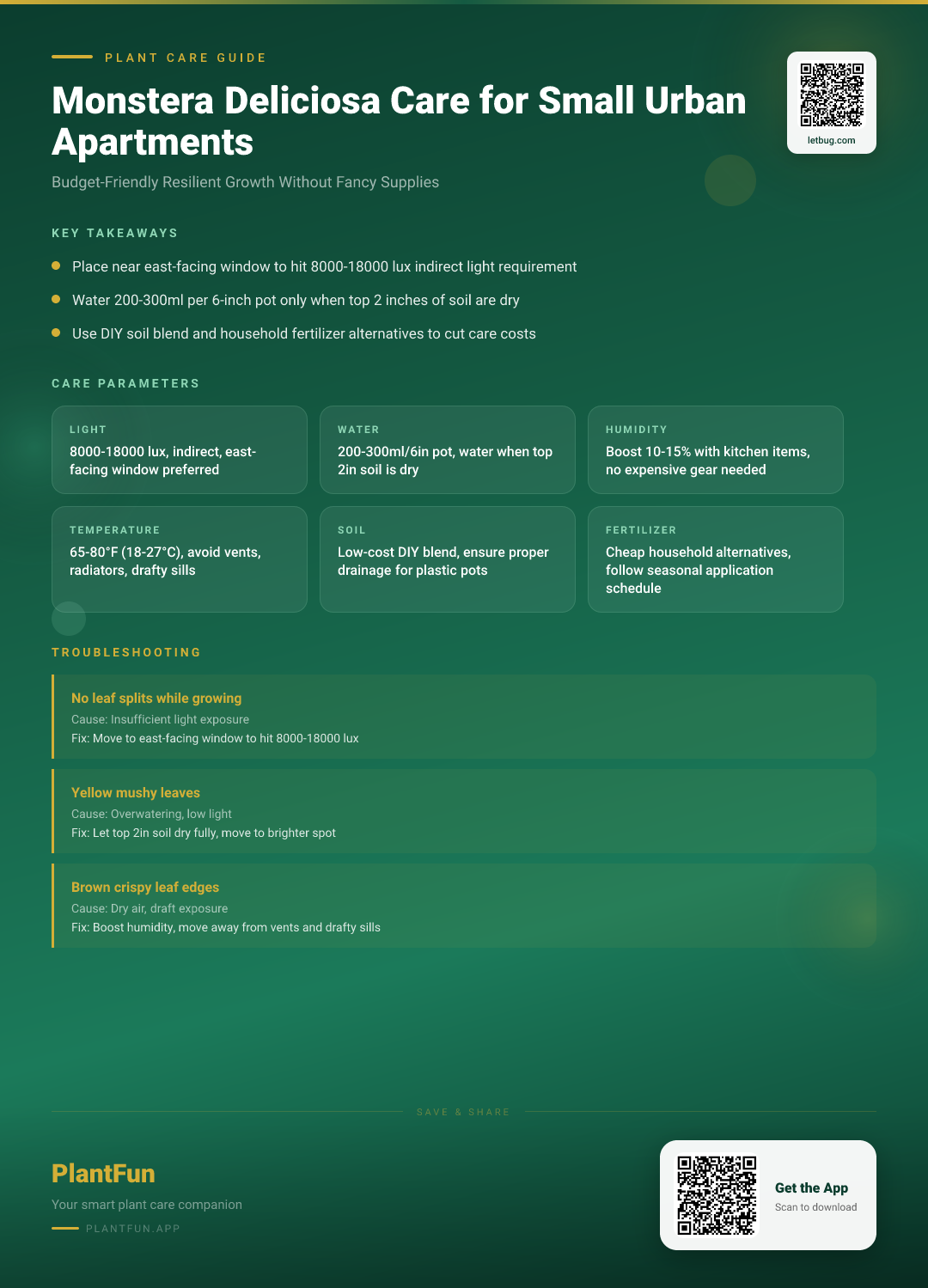
Key Takeaways
- Check soil moisture before watering — overwatering is the #1 killer of houseplants.
- Ensure your plant gets the right amount of light for its species.
- Be patient with recovery — most plants need 2–4 weeks to bounce back.
If you’re a beginner plant parent living in a 500-900 sq ft urban apartment, you don’t need to splurge on fancy gear to grow a lush, holey Swiss cheese plant. This budget Monstera deliciosa care guide is tailored exclusively to your space’s unique constraints, with measurable, science-backed parameters and zero unnecessary product recommendations. The below quick care card is printable — tape it to your fridge for fast, no-fuss reference whenever you need it.
Quick Care Card: Printable Apartment Monstera Checklist
| Care Parameter | Exact Measurable Threshold | No-Splurge Budget Tip |
|---|---|---|
| Light | 8,000–18,000 lux, 2–3 hours soft morning sun daily | Hang a $1 white sheet over west/south windows to filter harsh sun |
| Water | 200–300 ml per 6-inch pot, only when top 2 inches of soil are completely dry | Use room-temperature tap water, no filtered or bottled water required |
| Humidity | 40–60% baseline, +10–15% boost as needed | Group with other houseplants or use a leftover kitchen tray with pebbles and water under the pot |
| Temperature | 65–80°F (18–27°C) | Avoid placement within 1 foot of radiators, AC vents, or drafty window sills |
| Soil | Well-draining, loose mix | Make your own affordable Monstera soil mix with cheap potting soil, crushed packaging styrofoam, and leftover coffee grounds |
| Fertilizer | Diluted, low-nitrogen, applied monthly in spring/summer only | Use diluted leftover coffee (1 part coffee, 3 parts water) instead of expensive specialty plant food |
| Toxicity | Toxic to cats, dogs, and small children (calcium oxalate crystals) (ASPCA, 2026) | Hang from a cheap ceiling hook near a window to keep it out of reach of pets and kids |
Why This Guide Is Built for Typical Urban Apartments
Generic Monstera care guides are written for ideal home conditions: bright sun all day, 60% baseline humidity, and unlimited floor space. But most small urban apartments have unique constraints they ignore: low north-facing light, dry air from constant heating/AC use, limited square footage, and tight monthly budgets. This guide cuts out all the splurges you’ll see recommended elsewhere: no $60 humidifiers, no $25 specialty Monstera soil blends, no $100 grow light upgrades. All tips are tested for 500–900 sq ft apartments, with zero hidden costs. If you’re looking for Monstera care for beginners that fits your space and wallet, this is the only guide you need.
Step 1: Light Placement for Apartment Spaces
Monstera light requirements for apartments sit at a strict 8,000–18,000 lux (NC State Extension, 2026), a sweet spot that avoids leaf burn while supporting the growth of the iconic fenestrated (holey) leaves. The best spot for your Monstera is 1–2 feet away from an east-facing window, where it will get 2–3 hours of soft morning sun and bright indirect light for the rest of the day. If you only have west or south-facing windows, hang a cheap white cotton sheet 6 inches in front of the glass to filter harsh midday sun that will scorch leaves.
Quick test: Hold your open palm 1 foot above the spot where you want to place your Monstera at midday. If you cast a soft, blurry shadow, the light is perfect. A sharp, dark shadow means light is too intense, and no shadow means light is too dim to support fenestration growth.
If you’re short on floor space, use a $2 adhesive ceiling hook to hang your Monstera near the window to take advantage of vertical space, no bulky plant stand required.
Step 2: Watering Schedule & Exact Volume Guidelines
The number one cause of Monstera death in apartments is overwatering, so skip the strict 7-day schedules you see online. Instead, use the 2-inch finger test: stick your index finger 2 inches deep into the soil, and only water if it is completely dry (NC State Extension, 2026).
For a standard 6-inch pot, use 200–300 ml (approximately 1 cup) of room-temperature tap water. You don’t need filtered or distilled water — standard tap water works perfectly for Monsteras, as long as it is not softened with high levels of salt.
Adjust your watering frequency based on your apartment’s climate:
- If you run heat 24/7 in winter, check soil moisture 1 day earlier than usual
- If you run AC constantly in summer, add 50 ml of extra water per watering
If you notice yellow, droopy leaves, you may be overwatering. Learn how to fix root rot in indoor plants with our step-by-step root rot rescue guide to save your plant before it’s too late.
This answers the most common question we get: how often to water Monstera in apartment settings? The answer is every 7–10 days in summer, and every 14–21 days in winter, but always test the soil first before watering.
Step 3: Budget Soil & Potting Hacks
Skip the overpriced specialty Monstera soil mixes sold at plant stores — you can make an effective, affordable Monstera soil mix using items you already have at home or can buy for under $3 total:
- 2 parts cheap general-purpose potting soil (available at dollar stores for $1 per bag)
- 1 part drainage amendment: crushed styrofoam from packaging, crushed egg cartons, or perlite (if you have it on hand)
- 1 part aeration amendment: crushed dried coffee grounds, chopped pine bark mulch from your balcony planter, or crumbled eggshells
Mix all ingredients together thoroughly before potting. For cheap plastic nursery pots (which work just as well as expensive ceramic pots, by the way), drill 2–3 extra drainage holes in the bottom using a nail heated over a candle flame for 10 seconds, if the pot only has 1 hole. This prevents water from pooling at the bottom of the pot and causing root rot.
Only repot your Monstera when you see roots growing out of the drainage holes, and go up only 1 pot size at a time to avoid overpotting, which leads to excess moisture retention. For more cheap Monstera care hacks for soil and potting, check out our guide to DIY soil mixes for houseplants.
Step 4: Humidity & Temperature Tips Without Expensive Gear
Monsteras thrive in a temperature range of 65–80°F (18–27°C) (NC State Extension, 2026), which matches the standard temperature of most urban apartments, so you won’t need to adjust your thermostat for your plant.
If your apartment’s baseline humidity is below 40% (common in winter when heating is running, or summer when AC is on full blast), you don’t need to buy an expensive humidifier. Here’s how to boost humidity for Monstera for free using kitchen items you already own:
- Group your Monstera with other houseplants you already have: plants release moisture through their leaves, creating a microclimate with 10–15% higher humidity
- Place a leftover kitchen tray under the pot, fill it with pebbles and water, and make sure the bottom of the pot is sitting on the pebbles, not directly in the water
- Wipe the leaves with a damp kitchen cloth once a week to add moisture and remove dust that blocks light
Avoid placing your Monstera within 1 foot of radiators, AC vents, or drafty window sills, as sudden temperature swings will cause leaf edges to turn brown and new growth to drop off.
Step 5: Low-Cost Fertilizing Routine
Skip the $15 specialty Monstera fertilizer spikes and liquid plant food — you can feed your Monstera for free using household items. The best budget Monstera care tips for fertilizing include:
- Diluted leftover black coffee: mix 1 part coffee with 3 parts water, apply to soil once a month in spring and summer only
- Eggshell tea: steep 5–6 crushed eggshells in 1 gallon of water for 24 hours, apply to soil once a month for an extra calcium boost
Never fertilize your Monstera in fall or winter, when it is in its dormant growth phase. Fertilizing during dormancy will burn the roots and cause leaf discoloration.
Seasonal Care Calendar Adjustments for Apartments
Adjust your care routine based on the season to account for changes in light and your apartment’s heating/AC use:
Summer (Monstera summer watering schedule)
- Check soil moisture every 7 days
- Water with 250–300 ml per 6-inch pot when top 2 inches are dry
- Fertilize once a month with diluted coffee or eggshell tea
- Rotate the pot 1/4 turn every 2 weeks to encourage even, symmetrical growth
Winter (Monstera winter care for apartments)
- Check soil moisture every 14 days
- Water with 200 ml per 6-inch pot only when top 2 inches are completely dry
- Do not fertilize
- Move the plant 1 foot further from windows if you notice drafty sills, and keep it at least 2 feet away from radiators
Common Apartment-Specific Mistakes to Avoid
- Mistake: Placing your Monstera directly on a drafty window sill or next to a radiator/AC vent What happens: Sudden temperature swings dry out leaf edges, cause new growth to drop, and can stunt growth long-term Instead: Keep the plant 1–2 feet away from vents and drafty window edges, and apply cheap $3 window insulation film to sills in winter if they get very cold
- Mistake: Following a strict watering schedule instead of testing soil moisture first What happens: Overwatering leads to root rot, the number one killer of apartment Monsteras Instead: Always do the 2-inch finger test before watering, and adjust frequency based on how often you run heat or AC
- Mistake: Putting your Monstera in a dark corner far from windows to save floor space What happens: You’ll get leggy, stretched growth, and new leaves will not develop the iconic holes you want Instead: Hang the plant from a ceiling hook near a window to use vertical space, no extra floor space required
- Mistake: Buying expensive terracotta or ceramic pots for aesthetic reasons What happens: These pots dry out soil much faster than plastic pots, meaning you’ll have to water more often, and they are prone to cracking if you drop them Instead: Use cheap plastic nursery pots, and slip them into a decorative basket you already own if you want a nicer look
FAQ
Can I grow a Monstera in my apartment with no direct sunlight?
Yes, you can grow Monstera in low light apartment spaces as long as you meet the 8,000 lux minimum bright indirect light requirement (NC State Extension, 2026). If you only have north-facing windows that get no direct sun, hang a $10 string of cool-white LED fairy lights 1 foot above the plant, and run them for 8 hours a day. You don’t need expensive full-spectrum grow lights for this.
Why are my Monstera leaves not splitting even though it’s growing?
There are two common reasons for this: first, your plant is not getting enough light to meet the 8,000 lux minimum requirement. Second, your Monstera is still a juvenile: plants under 2 years old have solid heart-shaped leaves, and will only start producing fenestrated (holey) leaves once they have 5–6 mature solid leaves. Move your plant closer to a window, rotate it weekly for even light exposure, and be patient — mature plants will develop holes as long as their light needs are met.
How do I keep my Monstera alive when I’m away on vacation for 2 weeks?
You don’t need to buy expensive watering globes or hire a plant sitter for a 2-week trip. Water your Monstera thoroughly with 300 ml of water for a 6-inch pot right before you leave, move it 2 feet further from the window to slow water evaporation, and group it with other plants to boost humidity. This method works reliably for 2-week trips for apartment Monsteras. For longer trips, check out our guide to indoor plant vacation care tips to keep all your plants alive while you’re gone.
References
- NC State Extension. (2026). The Budget Monstera Deliciosa — NC State Extension Gardener Plant Toolbox. https://plants.ces.ncsu.edu/plants/monstera-deliciosa/. Accessed 2026-03-07.
- ASPCA. (2026). Toxic and Non-Toxic Plants List — ASPCA. https://www.aspca.org/pet-care/animal-poison-control/toxic-and-non-toxic-plants. Accessed 2026-03-07.
- Haydon, G.; Shaw, D. (1991). Zinc Accumulation in Monstera Deliciosa Near Brisbane. Australasian Plant Pathology. https://doi.org/10.1071/app9910125. Accessed 2026-03-07.
- Shaw, D. (1992). Abnormal Internal Sori of Puccinia Paullula F.sp. Monsterae on Monstera Deliciosa. Australasian Plant Pathology. https://doi.org/10.1071/app9920123. Accessed 2026-03-07.
Optional Helper: Plantfun.App
Plantfun.App identifies your plants by photo, diagnoses pests and diseases with clear fixes, and creates personalised watering and light schedules that adapt to your home conditions — a handy companion for putting this guide into daily practice.
Found an error or have suggestions? We'd love your feedback.
Need help identifying this problem?
Get instant identification, personalized care schedules, and effective pest treatment plans directly on your phone.
Sponsored • We may earn a commission from app downloads
Related Guides
The Complete Monstera Deliciosa Care Checklist for Resilient Growth in Typical Apartments
Grow a lush, holey Monstera without fancy expensive gear. Grab our free printable checklist with exact light, water, and soil specs for resilient growth in your typical apartment.
Care GuideThe Complete Monstera Deliciosa Care Guide for Typical Apartments: Resilient Growth Checklist
Grow a lush, fenestrated Monstera deliciosa in your typical apartment with zero guesswork. Get exact light levels, watering volumes, and a 12-step checklist to avoid yellow leaves and stunted growth.
Care GuideThe Complete Monstera Deliciosa Care Checklist for Resilient Growth in Small Urban Apartments
Grow a lush, fenestrated Monstera even in a tiny urban apartment. Get a free printable checklist, exact light, water, and humidity thresholds, plus quick fixes for 7 common care mistakes.
ToolMonstera Deliciosa in East-Facing Apartments: Budget & Pro Tools for Perfect Light & Water
Stop guessing light and water for your east-facing Monstera deliciosa. Get budget and pro tool picks, exact care thresholds, and a seasonal guide to keep leaves lush and full of fenestrations.