
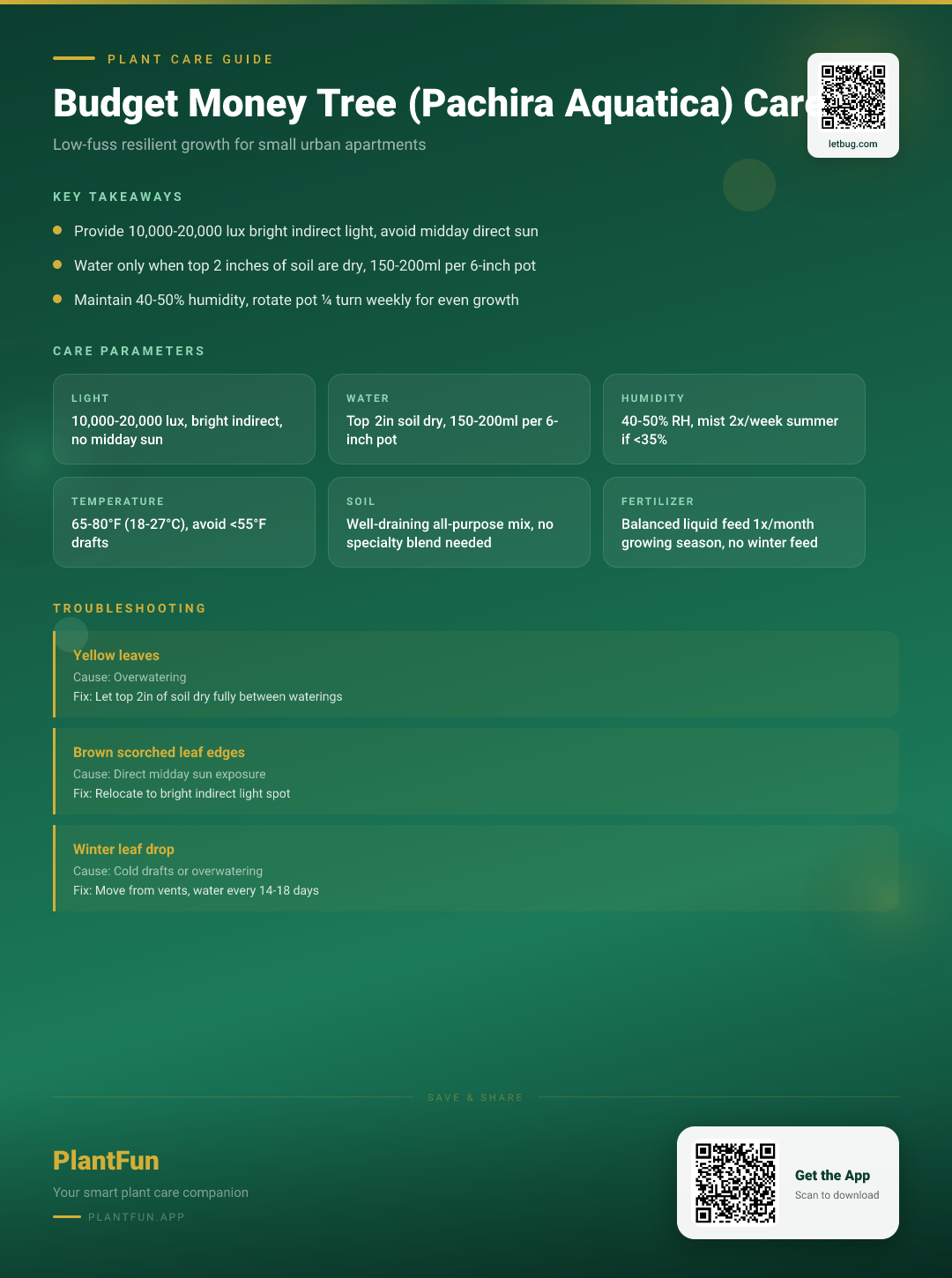
Key Takeaways
- Check soil moisture before watering — overwatering is the #1 killer of houseplants.
- Ensure your plant gets the right amount of light for its species.
- Be patient with recovery — most plants need 2–4 weeks to bounce back.
Quick Care Card
| Category | Exact Threshold for Urban Apartments |
|---|---|
| Light | 10,000-20,000 lux bright indirect light, no midday direct sun exposure (NC State Extension, 2026) |
| Water | 150-200 ml room-temperature water per 6-inch pot, only when top 2 inches of soil are fully dry |
| Humidity | 40-50% relative humidity, tolerates short-term drops to 35% |
| Temperature | 65-80°F (18-27°C), no exposure to drafts below 55°F (13°C) (Plant Disease, 1982) |
| Soil | Regular potting mix mixed with 1 part crunched paper egg cartons (for drainage, no perlite required) |
| Fertilizer | Diluted all-purpose houseplant fertilizer, 1x every 2 months only in spring and summer |
| Toxicity | Non-toxic to cats, dogs, and humans (ASPCA, 2026) |
Why Standard Money Tree Care Fails In Typical Urban Apartments
Most generic Pachira aquatica indoor care guides are written for ideal home conditions that rarely exist in small urban apartments. Native to Central American wetland forests, money trees evolved with consistent dappled light, warm stable temperatures, and moderate humidity year-round (NC State Extension, 2026). Urban apartments, by contrast, often have:
- Shared HVAC systems that dry out air and swing temperatures 10-15°F in a single day
- Limited window space that delivers either too little light or scorching direct midday sun
- Drafts from exterior doors, AC vents, and old window seals that expose plants to cold stress This mismatch is why most first-time money tree owners see leaf drop or stunted growth in their first 6 months, even when following generic advice.
Budget Care Prep
You don’t need expensive specialty tools to grow a healthy money tree. Swap costly purchases for these common household items, no extra spending required:
- Your index finger instead of a $20 soil moisture meter to test soil dryness
- Crunched paper egg cartons instead of perlite to improve soil drainage
- A clean empty spray bottle (filled with tap water) instead of a $50 humidifier to boost humidity
- A free phone light meter app instead of a professional lux meter to test light levels
- An old kitchen measuring cup to portion exact water amounts and avoid overwatering
- A plain damp paper towel instead of commercial leaf shine products to clean foliage
Weekly Care Checklist Step 1: Light Check
First, confirm your plant meets published money tree light requirements: 10,000-20,000 lux of bright indirect light, with no direct midday sun exposure (NC State Extension, 2026). To test without a light meter: hold your open palm 6 inches above the plant’s leaves at noon. If you see a sharp, dark shadow with a reddish tint, the light is too strong and will scorch leaves. Move the plant 1-2 feet back from the window, or hang a sheer curtain to filter the light. If you only see a faint, blurry shadow, the light is too low, and growth will slow significantly. For consistent light, place your money tree in an east-facing window, or 2 feet away from a south or west-facing window.
Weekly Care Checklist Step 2: Water Check
Wondering how often to water money tree plants in apartments? Ditch fixed weekly watering schedules, which are the top cause of overwatering. Instead, stick your index finger 2 inches deep into the soil. If any part of the soil feels damp or cool to the touch, skip watering for another 3-4 days. If the soil is completely dry, add exactly 150-200 ml of room-temperature tap water per 6-inch pot, pouring directly onto the soil (avoid wetting the leaves or trunk). Common money tree overwatering signs to watch for: yellow mushy leaves, soft squishy trunk, or fuzzy white mold on the soil surface.
Weekly Care Checklist Step 3: Humidity & Temperature Check
Standard money tree humidity needs fall between 40-50% relative humidity, which is easy to maintain even with dry HVAC air (NC State Extension, 2026). To test humidity without a meter: if you experience frequent static shocks, chapped lips, or dry skin in your apartment, the humidity is likely below 35% and your plant will benefit from occasional misting. Next, check for draft exposure: make sure the plant is at least 2 feet away from AC vents, heating vents, and exterior entry doors. Exposure to temperatures below 55°F (13°C) will cause sudden leaf drop and stunted growth (Plant Disease, 1982). Keep temperatures between 65-80°F (18-27°C) for fastest growth.
Weekly Care Checklist Step 4: Maintenance Check
This 2-minute step will help you learn how to make my money tree grow faster without extra fertilizer:
- Wipe both sides of all leaves with a damp paper towel to remove dust, which blocks sunlight and slows photosynthesis
- Prune any fully yellowed or browned leaves at the base with clean scissors to redirect energy to new growth
- Rotate the pot ¼ turn to ensure all sides of the plant get equal light exposure, preventing lopsided, uneven growth
Seasonal Care Calendar
Adjust your care routine twice a year to match seasonal changes in light and temperature:
Winter (Money Tree Winter Care)
When daylight drops below 8 hours per day and temperatures stay below 65°F:
- Reduce watering frequency to every 14-18 days, only when the top 3 inches of soil are fully dry
- Keep the plant at least 3 feet away from heating vents, which blow dry air that causes leaf drop
- Skip all fertilizer applications during winter dormancy
Summer (Money Tree Summer Watering)
When daylight exceeds 12 hours per day and temperatures stay above 75°F:
- Water every 7-10 days, testing soil dryness weekly to avoid overwatering
- Mist leaves 2x per week if humidity drops below 35%
- Move the plant 6 inches further back from south-facing windows to avoid midday sun scorch
5 Common Apartment Money Tree Mistakes To Avoid
- Mistake: Watering on a fixed schedule instead of testing soil moisture first What happens: Soggy soil causes root rot, the #1 cause of money tree death in apartments Instead: Test the top 2 inches of soil every 7 days, only water when it is completely dry
- Mistake: Placing the plant in direct midday sun to give it “more light” What happens: Brown, crispy scorch marks appear on leaves, which will never fully heal Instead: Place the plant 1-2 feet back from south/west windows, or use a sheer curtain to filter light
- Mistake: Exposing the plant to cold drafts from AC vents or exterior doors What happens: Sudden, unexplained leaf drop, often within 24 hours of draft exposure Instead: Keep the plant at least 2 feet away from all draft sources, and test the air temperature near the plant regularly
- Mistake: Overfertilizing to speed up growth What happens: Brown leaf tips, salt buildup in soil, and root damage that stunts growth long-term Instead: Use diluted all-purpose fertilizer only 1x every 2 months in spring and summer, no fertilizer in fall/winter
- Mistake: Repotting too often, or in a pot that is more than 1 inch larger than the current pot What happens: Excess unused soil holds extra moisture, leading to hidden root rot Instead: Repot only once every 2-3 years, when you see roots growing out of the pot’s drainage holes
FAQ
Can I keep a money tree in a windowless apartment?
Yes, but you will need to supplement with a basic LED grow light placed 1 foot above the plant for 10 hours per day. Money trees can tolerate low light conditions, but will grow very slowly (less than 2 inches per year) if they get less than 8,000 lux of light daily (NC State Extension, 2026).
Why is my money tree dropping leaves in winter?
The most common causes are dry air from heating vents, cold draft exposure, or overwatering during dormancy. First, move the plant at least 3 feet away from heat vents, then test the soil to make sure you are not watering too often. Losing 1-2 old lower leaves per month during winter is normal and not a cause for concern.
How often do I need to fertilize my apartment money tree?
Only 1x every 2 months during the spring and summer growing season, using an all-purpose houseplant fertilizer diluted to 50% of the recommended strength. Skip all fertilizer applications in fall and winter when the plant is dormant. Overfertilizing is far more harmful to money trees than underfertilizing.
How to make my money tree grow faster?
Consistent light is the biggest factor: aim for 15,000-20,000 lux of bright indirect light daily. Wipe dust off leaves weekly to boost photosynthesis, and avoid draft exposure that causes plant stress. Under ideal apartment conditions, money trees grow 1-2 feet per year (NC State Extension, 2026).
Free Printable Checklist Download
We’ve created a pocket-sized, printable version of this full money tree care checklist that you can tape to your fridge or keep near your plant for fast, no-guess reference. The printable version includes all core thresholds, seasonal adjustments, and common mistake reminders to help you keep your plant healthy year-round. Download your free copy here: [LetBug.com/printable-money-tree-checklist]
References
- NC State Extension. (2026). The Budget Money Tree — NC State Extension Gardener Plant Toolbox. https://plants.ces.ncsu.edu/plants/pachira-aquatica/. Accessed 2026-02-25.
- Plant Disease. (1982). Importance of Seedborne Viruses in Crop Germplasm; Money-Makers, Money-Losers, and Balancing the Budget; An Aspect of Awards to Be Kept in Mind. Plant Disease. https://doi.org/10.1094/pd-66-977. Accessed 2026-02-25.
- International Journal of Health Care Quality Assurance. (2001). Saving Money on Medicines: The Drugs Budget Handbook. International Journal of Health Care Quality Assurance. https://doi.org/10.1108/ijhcqa.2001.06214cae.005. Accessed 2026-02-25.
- ASPCA. (2026). Toxic and Non-Toxic Plants List — ASPCA. https://www.aspca.org/pet-care/animal-poison-control/toxic-and-non-toxic-plants. Accessed 2026-02-25.
Optional Helper: Plantfun.App
Plantfun.App identifies your plants by photo, diagnoses pests and diseases with clear fixes, and creates personalised watering and light schedules that adapt to your home conditions — a handy companion for putting this guide into daily practice.
Found an error or have suggestions? We'd love your feedback.
Need help identifying this problem?
Get instant identification, personalized care schedules, and effective pest treatment plans directly on your phone.
Sponsored • We may earn a commission from app downloads
Related Guides
The Complete Money Tree Care Checklist for Small Apartments: Resilient Growth That Lasts
Stop watching your money tree droop in your apartment. Get exact light, water, and humidity thresholds, plus a 12-point checklist for lush, resilient growth year-round.
Care GuideThe Complete Money Tree Care Checklist for Resilient Growth in Typical Apartments
Stop guessing at money tree care. Get a 12-step apartment-specific checklist, exact light, water, and humidity thresholds to grow a lush, resilient plant with zero extra effort.
Care GuideThe Complete Pachira Aquatica (Money Tree) Care Checklist for Resilient Growth in Typical Apartments
Stop guessing at money tree care. Get exact light, water, humidity thresholds and a 12-point checklist tailored to typical apartment conditions to keep your plant resilient and lush.
Pest ControlAnts on Plants: What They Mean and What to Do
Ants usually aren't eating your plant. They are farming other pests.