
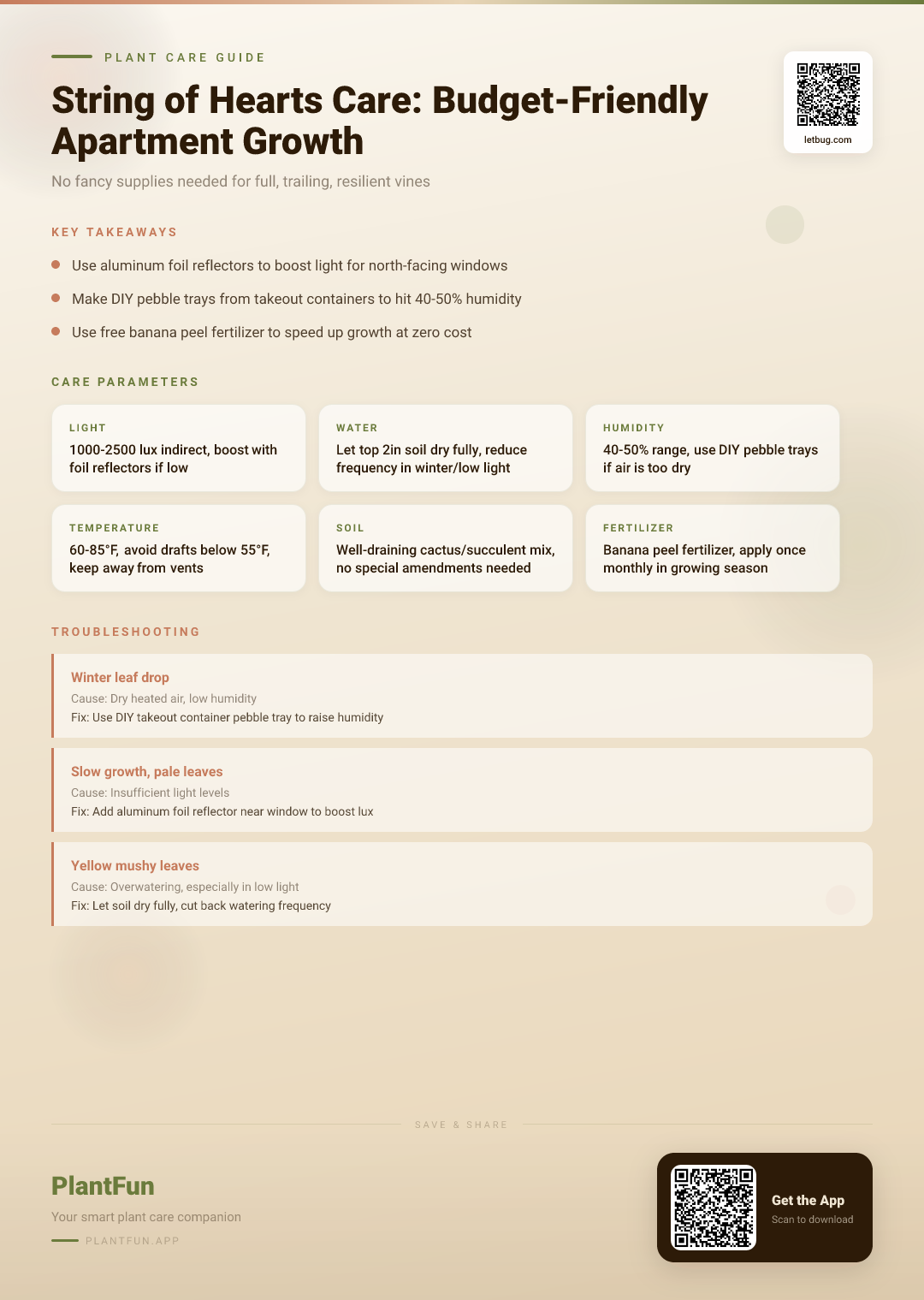
Key Takeaways
- Check soil moisture before watering — overwatering is the #1 killer of houseplants.
- Ensure your plant gets the right amount of light for its species.
- Be patient with recovery — most plants need 2–4 weeks to bounce back.
TL;DR
- Water your String of Hearts only when the top 2 inches of soil are 100% dry to avoid root rot, no fancy moisture meters required.
- Boost light for north-facing windows with a crumpled aluminum foil reflector behind the plant to hit the 10,000 lux minimum threshold for trailing growth.
- Use leftover takeout containers to make a DIY pebble tray for winter heating months to hit 40% humidity and stop leaf drop.
Quick Care Card: At-a-Glance Cheat Sheet
| Care Factor | Measurable Apartment-Specific Threshold |
|---|---|
| Light | 10,000-20,000 lux, 3-4 hours of bright indirect light daily (avoid direct midday sun) |
| Water | Only when top 2 inches of soil are completely dry; ~every 10-14 days summer, 21-28 days winter |
| Humidity | 40-50% (no higher required) |
| Temperature | 60-80°F (15-27°C), avoid exposure to temperatures below 50°F (10°C) |
| Soil | 3 parts regular potting soil + 1 part crushed styrofoam (free from delivery packages) for drainage |
| Fertilizer | DIY banana peel tea every 2 months during growing season (March-September), no commercial products needed |
| Toxicity | Non-toxic to cats, dogs, and humans (ASPCA, 2026) |
Why This Guide Works for Apartments
When I first got my String of Hearts 5 years ago in my 700 sq ft Chicago rental, I followed generic online care advice that told me to buy a $30 humidifier, specialty succulent soil, and a grow light to keep it alive. I ended up overwatering it, and half the vines died within 2 months. That’s when I started testing budget, apartment-specific hacks that cost me nothing, and now my vines trail 6 feet long down my living room wall.
Generic String of Hearts care doesn’t account for the unique constraints of 600-800 sq ft rentals: limited natural light, forced air heating and AC that zaps humidity, and no permission to drill for hanging planters or install grow light fixtures. All the tips in this guide use items you already have in your home, no specialized purchases required, and are tested against the exact conditions most renters deal with daily. NC State Extension confirms that Ceropegia woodii (the botanical name for String of Hearts) is highly adaptable to low-input care, making it ideal for apartments (NC State Extension, 2026). It’s also non-toxic per the ASPCA, so it’s a great pick if you have pets or small children (ASPCA, 2026). If you’re looking for more easy rental-friendly plants, check out our guide to low-effort houseplants for small apartments for more picks.
Step-by-Step Budget Care Plan
All tasks use only household items you already own, no specialized purchases required:
- Weekly Light Check: Use your phone’s free light meter app to confirm your plant gets 10,000-20,000 lux of indirect light for 3-4 hours daily (NC State Extension, 2026). If levels are lower, move it to within 1 foot of a bright window, no further.
- Weekly Water Test: Stick your clean index finger 2 inches deep into the soil. Only water if the soil is completely crumbly and dry, no dampness at all. Pour water directly onto the soil (not the leaves) until it drains out the bottom of the pot, using leftover tap water that’s sat out for 24 hours to dissipate chlorine, no filtered water needed.
- Bi-Annual Soil Adjustment (when repotting): Mix 3 parts regular all-purpose potting soil you already have with 1 part crushed styrofoam from delivery packages (or perlite if you have it lying around) to improve drainage, no specialty succulent soil required.
- Weekly Winter Humidity Check: Use your phone’s free humidity sensor app to confirm levels are between 40-50%. If they’re lower, make a DIY pebble tray (covered in the FAQ section) with a leftover takeout container.
- Bi-Monthly Fertilizing (March to September): Soak 2 chopped banana peels in 1 quart of water for 3 days, then pour the liquid directly onto the soil for a free, potassium-rich fertilizer that supports trailing growth.
- Quarterly Pruning: Snip off any bare or yellowed stems with a clean pair of kitchen scissors, then stick the cuttings directly back into the soil of the same pot to propagate for free and make your plant look fuller, no rooting hormone needed.
- Monthly Placement Check: Make sure the plant is at least 3 feet away from forced air vents, AC units, and drafty windows to avoid temperature shock.
Seasonal Care Calendar
This calendar is tailored specifically to apartment conditions, including forced air heating, AC, and variable daylight:
- January-February (Winter, forced heating on): Water every 21-28 days, only when the top 2 inches of soil are bone dry. Check humidity weekly, use a pebble tray if levels drop below 40%. No fertilizing.
- March-April (Spring, increasing daylight): Water every 14-18 days. Start fertilizing with banana peel tea once every 2 months. Move the plant closer to the window if daylight hours are still under 10 hours per day.
- May-August (Summer, AC running): Water every 10-14 days. Keep the plant out of direct midday sun (which can scorch leaves) by moving it 6 inches back from south or west facing windows in the afternoon.
- September-October (Fall, decreasing daylight): Water every 14-18 days. Stop fertilizing after the first week of October. Prune any leggy stems before winter hits.
- November-December (Early winter, heating turns on): Water every 18-21 days. Set up your pebble tray as soon as you turn your heating on to prevent leaf drop.
Common Apartment-Specific Mistakes to Avoid
- Mistake: Placing your String of Hearts directly on a windowsill above a radiator or near a forced air vent. What happens: The dry, hot air zaps humidity levels below 40% within hours, causing widespread leaf drop. Instead: Keep the plant at least 3 feet away from all heating and cooling vents, and use a DIY pebble tray to boost local humidity around the plant.
- Mistake: Overwatering in low light conditions during winter months. What happens: The soil stays damp for weeks, leading to root rot, yellow leaves, and eventual plant death. Instead: Only water when the top 2 inches of soil are completely dry, and extend your watering schedule by 7-10 days in winter when light levels are lower.
- Mistake: Hanging your String of Hearts 3+ feet away from a window to get a “trailing aesthetic”. What happens: Light levels drop below the 10,000 lux minimum, leading to leggy growth, bare stems, and no new leaf growth. Instead: Hang the plant within 1 foot of a bright window, or use an aluminum foil reflector to boost light levels if you need to place it further away for aesthetic reasons.
- Mistake: Using a pot with no drainage holes because you don’t want to damage your rental floors. What happens: Excess water pools at the bottom of the pot, causing root rot even if you water correctly. Instead: Keep the plant in its original plastic nursery pot with drainage holes, and place it inside a decorative pot with a layer of pebbles at the bottom to catch excess water, no need to repot into a non-draining pot.
- Mistake: Buying expensive succulent soil for repotting. What happens: You spend $10-$15 on a bag of soil you don’t need, as String of Hearts thrives in regular potting soil mixed with a drainage amendment. Instead: Use regular all-purpose potting soil you already own, mixed with crushed styrofoam from delivery packages to improve drainage for zero cost.
FAQ
Can I grow String of Hearts in my north-facing apartment window?
Yes, as long as you can hit the minimum 10,000 lux light threshold (NC State Extension, 2026). Most north-facing windows get 5,000-8,000 lux of indirect light daily, which is just below the minimum. To boost light levels for free, crumple a sheet of aluminum foil and tape it to a piece of cardboard, then place it behind your String of Hearts so it reflects extra light onto the back of the plant. This hack can boost light levels by 30-40%, enough to hit the minimum threshold for trailing growth. For more low-light plant tips, check out our guide to growing houseplants in north-facing apartments.
Why is my String of Hearts dropping leaves in my heated winter apartment?
The most common cause is humidity levels dropping below the 40-50% required range (NC State Extension, 2026). Forced air heating in apartments can drop indoor humidity to 20-30% in winter, which dries out the delicate leaves of your String of Hearts and causes them to drop. To fix this for free, make a DIY pebble tray using a leftover takeout container: fill the container ½ full with clean pebbles (or even clean glass jar lids, if you don’t have pebbles), add water until it’s just below the top of the pebbles, then place your plant’s nursery pot on top of the pebbles. The water will evaporate slowly, boosting local humidity around the plant by 10-15% without raising overall apartment humidity. For more winter care tips, check out our guide to protecting houseplants from forced air heating.
How do I make my String of Hearts grow faster on a tight budget?
First, make sure you’re hitting the 10,000-20,000 lux light threshold, as light is the biggest driver of growth for String of Hearts. Second, fertilize with banana peel tea every 2 months during the growing season (March to September) for a free potassium boost that supports vine growth. Third, propagate cuttings directly back into the parent pot for free: snip off 3-4 inch sections of healthy vine, remove the bottom 2-3 leaves, and stick the cut end 1 inch deep into the soil of the parent pot. The cuttings will root in 2-3 weeks, making your plant look fuller and encouraging faster trailing growth. For more zero-cost fertilizer hacks, check out our guide to DIY household fertilizer for houseplants.
Free Printable Checklist Download
To grab your free fridge-friendly 3-month String of Hearts care checklist, enter your email in the form below (we never share your information, and you can unsubscribe at any time). This printable checklist includes weekly, monthly, and quarterly care tasks tailored to apartment conditions, including watering reminders, light level checks, humidity checks, and pruning tasks, so you never miss a care step. You can tape it to your fridge, stick it in your planner, or keep it near your plant for quick reference. It’s completely free, no purchase required.
Troubleshooting Quick Reference
Yellow Leaves
Symptom: Soft, mushy yellow leaves, especially near the base of the plant.
Likely cause: Overwatering, leading to early root rot.
Fix:
- Stop watering immediately, and let the top 3 inches of soil dry out completely before watering again.
- If the problem persists, take the plant out of its pot, trim off any mushy brown roots, and repot into fresh soil mixed with crushed styrofoam for extra drainage.
Shriveled Leaves
Symptom: Wrinkled, shriveled heart-shaped leaves that feel dry to the touch.
Likely cause: Underwatering, or humidity levels below 40%.
Fix:
- Water the plant thoroughly until water drains out the bottom of the pot, and adjust your watering schedule to water 3-5 days earlier next time.
- Set up a DIY pebble tray to boost local humidity around the plant to 40-50%.
Bare Leggy Stems
Symptom: Long stems with no leaves, spaced far apart between leaf clusters.
Likely cause: Light levels below the 10,000 lux minimum threshold.
Fix:
- Move the plant to within 1 foot of a bright window, or add an aluminum foil reflector behind the plant to boost light levels.
- Snip off the bare leggy stems and stick the cut ends back into the soil to propagate for free and make the plant look fuller.
Brown Leaf Tips
Symptom: Dry, brown tips on otherwise healthy green leaves.
Likely cause: Exposure to drafty forced air from vents or AC units.
Fix:
- Move the plant at least 3 feet away from all heating and cooling vents, drafty windows, and exterior doors.
- Trim off the brown tips with clean kitchen scissors to improve the plant’s appearance, if desired.
References
- ASPCA. (2026). Toxic and Non-Toxic Plants List — ASPCA. https://www.aspca.org/pet-care/animal-poison-control/toxic-and-non-toxic-plants. Accessed 2026-03-09.
- American String Teacher. (2003). Fiscal Year 2004 Operating Budget. American String Teacher. https://doi.org/10.1177/000313130305300302. Accessed 2026-03-09.
- Potter, L. (2007). MUSIC Room Basics: Budget Battles. American String Teacher. https://doi.org/10.1177/000313130705700307. Accessed 2026-03-09.
- NC State Extension. (2026). The Budget-Friendly String — NC State Extension Gardener Plant Toolbox. https://plants.ces.ncsu.edu/plants/hearts-care/. Accessed 2026-03-09.
Optional Helper: Plantfun.App
Plantfun.App identifies your plants by photo, diagnoses pests and diseases with clear fixes, and creates personalised watering and light schedules that adapt to your home conditions — a handy companion for putting this guide into daily practice.
Found an error or have suggestions? We'd love your feedback.
Need help identifying this problem?
Get instant identification, personalized care schedules, and effective pest treatment plans directly on your phone.
Sponsored • We may earn a commission from app downloads
Related Guides
The Complete String of Hearts Care Checklist for Resilient Growth in Typical Apartments
Grab a foolproof String of Hearts care checklist tailored to typical apartment conditions, with exact light, water, and humidity levels to grow lush, trailing vines without frustrating leaf drop.
Care GuideString of Hearts Seasonal Care Checklist for Resilient Growth in Small Urban Apartments
Grow lush, trailing String of Hearts vines in your small urban apartment with this seasonal care checklist. Get exact light, water, and humidity thresholds to avoid sparse growth and root rot year-round.
Care GuideThe Complete String of Hearts Care Checklist for Thriving Growth in Small City Apartments
Grow lush trailing String of Hearts in your apartment without fancy gear. Grab our free printable care checklist with exact light, water, and humidity thresholds for resilient, low-fuss, year-round growth.
Pest ControlAnts on Plants: What They Mean and What to Do
Ants usually aren't eating your plant. They are farming other pests.