
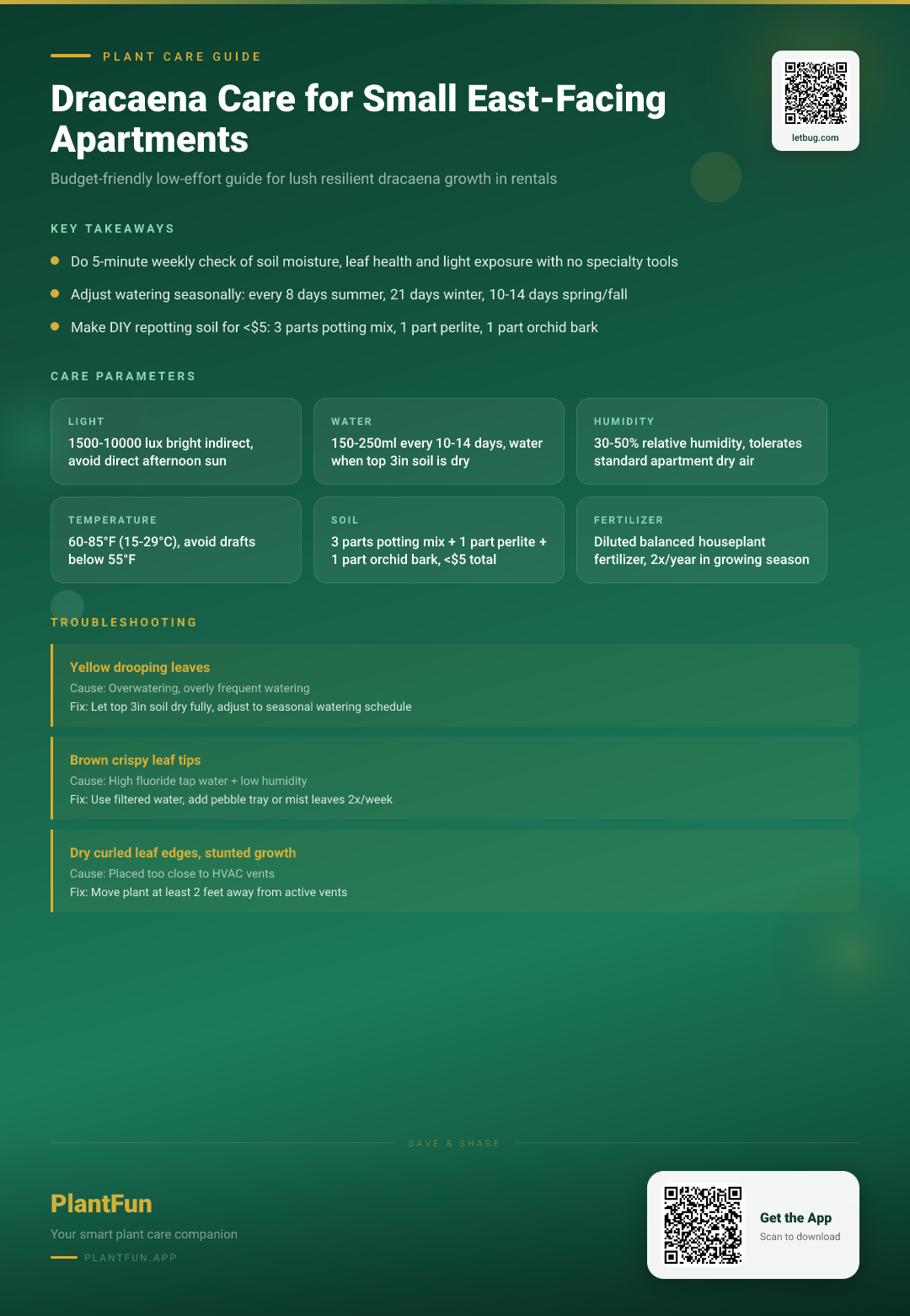
Key Takeaways
- Check soil moisture before watering — overwatering is the #1 killer of houseplants.
- Ensure your plant gets the right amount of light for its species.
- Be patient with recovery — most plants need 2–4 weeks to bounce back.
If you’re a beginner renter in a small east-facing apartment, dracaenas are the perfect low-effort, resilient plant to add greenery to your space without breaking the bank. This dracaena care checklist skips overpriced plant products and gives you measurable, actionable steps tailored exactly to the unique light, humidity, and temperature conditions of your rental unit.
Quick Care Card
| Parameter | Threshold (East-Facing Small Apartments) |
|---|---|
| Light | 1500-10,000 lux bright indirect morning light, no direct sun after 10AM |
| Water | 150-250ml every 10-14 days, only when top 3 inches of soil are fully dry |
| Humidity | 30-50% relative humidity, tolerates down to 20% for short periods |
| Temperature | 60-85°F (15-29°C), avoid drops below 55°F (13°C) |
| Soil | Well-draining mix, no specialty dracaena soil required |
| Fertilizer | Twice yearly max, diluted to half strength |
| Toxicity | Toxic to cats and dogs (ASPCA, 2026) |
Why This Checklist Works for Small East-Facing Apartments
East-facing apartments get 2-4 hours of soft, non-burning morning sun, then low to bright indirect light for the rest of the day, plus central HVAC usually keeps humidity between 20-35% year round. Dracaenas are native to tropical understories, so they are evolutionarily adapted to low, filtered light and infrequent rainfall (Gilman, 2007), making them a perfect match for this layout.
Myth: You need expensive specialty products to grow a healthy dracaena. Reality: Dracaenas are one of the most resilient low-cost houseplants, and thrive in standard east-facing apartment conditions with zero extra purchases (NC State Extension, 2026). This guide focuses on low-cost dracaena care with no fancy tools required, so you don’t have to blow your budget on meters, specialty fertilizers, or humidifiers. If you’re looking for more plants that fit this space, check out our complete guide to east-facing apartment plants for more budget-friendly picks.
Budget-Friendly 5-Minute Weekly Dracaena Checkup Routine
This zero-cost routine takes less than 5 minutes per week, no fancy supplies needed:
- Soil check (1 min): Poke your index finger 3 inches deep into the soil. If it is completely dry from top to tip of your finger, it’s time to water. If any part feels damp, hold off. Learn more about no-tool soil moisture testing in our beginner’s guide to checking houseplant soil.
- Leaf check (2 mins): Inspect all leaves for brown tips, yellowing, or crispy edges. Note any changes from your last check to catch issues early.
- Placement check (1 min): Confirm the plant is at least 2 feet away from heating/cooling vents, and no leaves are touching cold window panes.
- Rotate (30 secs): Turn the plant 90 degrees to encourage even, symmetrical growth so it doesn’t lean toward the window.
Exact Measurable Care Thresholds for Dracaenas in This Scenario
All thresholds are tailored to east-facing apartment conditions, backed by horticultural research:
- Light: 1500-10,000 lux bright indirect light. This is the typical light level 2 to 5 feet back from an unobstructed east-facing window. Dracaenas can tolerate light as low as 1000 lux, but growth will be slower (Gilman, 2007). Avoid direct sun after 10AM, which can scorch leaves.
- Humidity: 30-50% relative humidity, which matches the average humidity of apartments with central HVAC. Unlike tropical finicky plants, dracaenas tolerate humidity as low as 20% for weeks at a time without damage (NC State Extension, 2026).
- Temperature: 60-85°F (15-29°C). Avoid placing your dracaena near drafty windows or exterior doors where temperatures can drop below 55°F (13°C) in winter.
- Water: 150-250ml every 10-14 days, only when the top 3 inches of soil are fully dry. Dracaenas store water in their thick stems and roots, so they are extremely drought tolerant (Aslam et al, 2013). If you’re still unsure how often to water dracaena, stick to the finger test over a strict schedule to avoid overwatering.
Seasonal Care Calendar for Urban Apartment Dracaenas
Adjust your care routine based on seasonal changes in your apartment:
- Winter (December-February): Reduce watering to every 21 days, as light levels are lower and soil takes longer to dry. Move the plant 1 foot away from cold window panes to avoid leaf damage from cold drafts, a key part of dracaena winter care. Skip fertilizing entirely during these months.
- Spring (March-May): Gradually increase watering to every 10 days as light levels rise. You can add a single round of fertilizer at the start of spring if you want to boost growth.
- Summer (June-August): Dracaena summer watering should be every 8 days, as higher temperatures speed up soil drying. Watch for direct afternoon sun bouncing off adjacent building facades, which can burn leaves even in east-facing units. Move the plant a foot further back from the window if you notice brown scorch marks on leaves.
- Fall (September-November): Reduce watering back to every 14 days as light levels drop. Stop fertilizing to let the plant enter its dormant period for winter.
DIY Budget Soil Mix for Dracaena Repotting
You don’t need expensive specialty dracaena soil to repot your plant. This DIY dracaena soil mix costs under $5 total, using easy to find, low-cost ingredients:
- 3 parts regular all-purpose potting mix (the cheap $1 bags from dollar stores or grocery stores work perfectly)
- 1 part perlite (to improve drainage)
- 1 part orchid bark (to prevent soil compaction)
Mix all ingredients together thoroughly before repotting. This mix drains quickly to prevent root rot, and provides enough air flow to the roots for healthy growth. For more low-cost soil recipes, check out our budget-friendly houseplant care guide.
3 Most Common Mistakes Apartment Dwellers Make With Dracaenas
Avoid these easy to fix errors to keep your dracaena thriving:
- Mistake: Overwatering. What happens: Yellowing leaves, mushy stems, and root rot, which is the #1 cause of dracaena death in apartments. Instead: Only water when the top 3 inches of soil are completely dry, and use no more than 250ml of water per watering session.
- Mistake: Placing too close to heating or cooling vents. What happens: Rapid water loss from leaves leads to crispy, brown edges and stunted growth. Instead: Keep your dracaena at least 2 feet away from all HVAC vents at all times.
- Mistake: Using high-fluoride tap water. What happens: Brown leaf tips even when you water on a consistent schedule, due to dracaena’s sensitivity to fluoride and chlorine in tap water (NC State Extension, 2026). Instead: Leave tap water out in an open jar overnight to let fluoride and chlorine evaporate before watering, or use collected rainwater for free.
Frequently Asked Questions
Why is my dracaena getting brown leaf tips even when I water it regularly?
The two most common causes are fluoride sensitivity and dry indoor air (NC State Extension, 2026). To fix brown dracaena leaves, first switch to using rainwater or tap water left out overnight to reduce fluoride exposure. Second, group your dracaena with other houseplants to create a natural microclimate with higher humidity around the plant, no expensive humidifier required.
Can I keep my dracaena in the dark corner of my east-facing apartment?
Yes, dracaenas can grow in low light apartments as low as 1000 lux, which is the typical light level of most bright apartment corners (Gilman, 2007). Growth will be slower than if it’s placed closer to the window, but it will stay healthy. Rotate the plant 90 degrees every week to encourage even growth, and move it to the east-facing window for 2 hours every other weekend to give it a light boost if you notice sparse, leggy growth.
How often do I need to fertilize my dracaena if I’m on a tight budget?
Dracaenas are very light feeders, so you only need to fertilize them twice a year maximum, once in early spring and once in early summer (Aslam et al, 2013). For a zero-cost option, steep leftover fruit and vegetable scraps in a jar of water for 3 days to make homemade compost tea, then pour half a cup onto the soil. For a low-cost option, a $3 general all-purpose houseplant fertilizer diluted to half strength works perfectly, no specialty dracaena fertilizer needed.
Zero-Cost Upgrades for Lusher Dracaena Growth
These no-cost adjustments will help your dracaena grow lusher and more resilient without spending any money:
- Free propagation: Cut a 4-6 inch section of the top stem, let the cut end callous over for 2 days, then place it in a jar of water to root. You’ll get a brand new dracaena plant for free to keep or give to friends.
- Optimize light for free: Move any furniture or decor blocking your east-facing window to let more indirect light reach your dracaena, no grow lights required.
- Natural humidity boost: Group your dracaena with other houseplants to create a microclimate with 10-15% higher humidity around the plants, which reduces brown leaf tips without buying a humidifier.
- Dust leaves regularly: Wipe leaves with a damp cloth once a month to remove dust, which helps the plant absorb more light for faster growth.
References
- NC State Extension. (2026). The Budget-Friendly Dracaena — NC State Extension Gardener Plant Toolbox. https://plants.ces.ncsu.edu/plants/dracaena-care/. Accessed 2026-02-24.
- Gilman, E. (2007). Dracaena fragrans ‘Massangeana’ Corn Plant, Fragrant Dracaena. EDIS. https://doi.org/10.32473/edis-fp184-1999. Accessed 2026-02-24.
- Aslam, J.; Mujib, A.; Sharma, M. (2013). In vitro micropropagation of Dracaena sanderiana Sander ex Mast: An important indoor ornamental plant. Saudi Journal of Biological Sciences. https://doi.org/10.1016/j.sjbs.2012.11.005. Accessed 2026-02-24.
- ASPCA. (2026). Toxic and Non-Toxic Plants List — ASPCA. https://www.aspca.org/pet-care/animal-poison-control/toxic-and-non-toxic-plants. Accessed 2026-02-24.
Optional Helper: Plantfun.App
Plantfun.App identifies your plants by photo, diagnoses pests and diseases with clear fixes, and creates personalised watering and light schedules that adapt to your home conditions — a handy companion for putting this guide into daily practice.
Found an error or have suggestions? We'd love your feedback.
Need help identifying this problem?
Get instant identification, personalized care schedules, and effective pest treatment plans directly on your phone.
Sponsored • We may earn a commission from app downloads
Related Guides
The Complete Dracaena Care Checklist for East-Facing Apartments: Seasonal Tips for Resilient Growth
Keep your Dracaena thriving in small east-facing apartments with this science-backed seasonal checklist, complete with exact light, water, and humidity thresholds for year-round resilient growth, no fancy equipment required.
Care GuideThe Complete Dracaena Care Checklist for Resilient Growth in Typical Budget Apartments
Get a free printable Dracaena care checklist with exact light, water, and soil parameters to keep your plant thriving in a typical apartment without spending extra on fancy care supplies.
Care GuideThe Complete Dracaena Care Checklist for Resilient Growth in Low-Light Urban Apartments
Grow lush, brown-tip-free Dracaena in your low-light apartment. Get exact light lux targets, watering volumes, and a 4-season care routine to keep your plant thriving year-round.
Care GuideThe Complete Dracaena Care Checklist for Resilient Growth in Typical Low-Light Apartments
Grow a lush, low-fuss Dracaena even in your dark, dry apartment. Get exact light, water, and humidity thresholds plus a seasonal checklist to keep leaves vibrant and growth steady all year.