
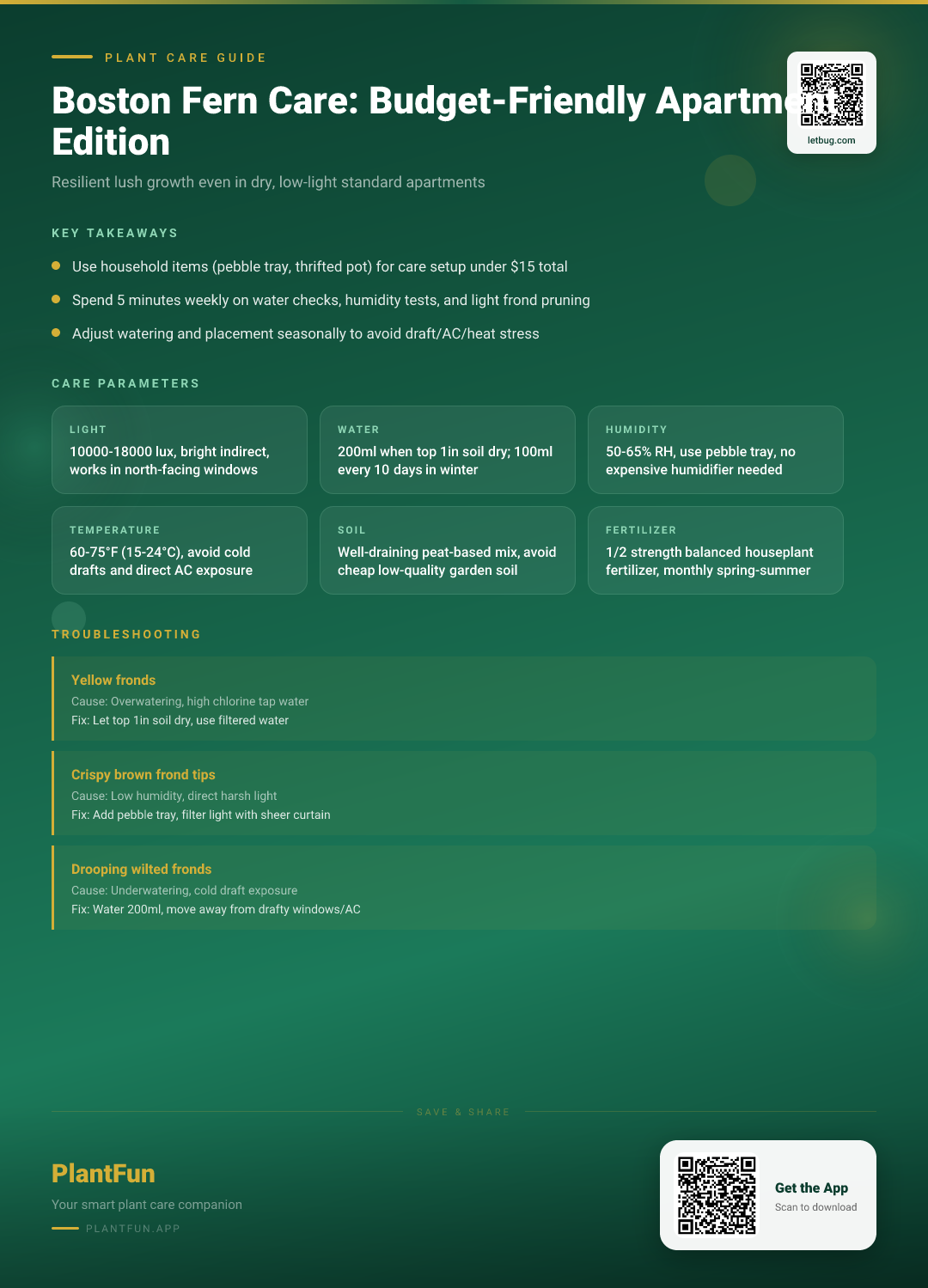
Key Takeaways
- Check soil moisture before watering — overwatering is the #1 killer of houseplants.
- Ensure your plant gets the right amount of light for its species.
- Be patient with recovery — most plants need 2–4 weeks to bounce back.
Quick Care Card
| Parameter | Measurable Threshold |
|---|---|
| Light | 10,000-18,000 lux bright indirect light (faint shadow when you hold your hand up at midday) |
| Water | 200ml room-temperature water when top 1 inch of soil is dry; 100ml every 10 days in winter |
| Humidity | 50-65% relative humidity |
| Temperature | 60-75°F (15-24°C), no sudden fluctuations |
| Soil | Peat-based well-draining indoor potting mix |
| Fertilizer | 1/4 strength balanced liquid fertilizer once a month in growing season (spring/summer) |
| Toxicity | Non-toxic to cats, dogs, and humans (ASPCA, 2026) |
Why Boston Ferns Struggle in Typical Apartments
Boston ferns (Nephrolepis exaltata) evolved as tropical understory plants, so they’re adapted to consistent warm temperatures, filtered light, and steady high humidity—conditions that are almost impossible to find in most standard apartments without intentional tweaks (NC State Extension, 2026). The top stressors for apartment-grown ferns include:
- Dry forced air from winter heaters and summer AC units that drops indoor humidity to 20-30%, well below the fern’s minimum requirement
- Inconsistent light: most apartments only have 1-2 bright windows, often blocked by adjacent buildings, leaving ferns stuck in dark corners with less than 8,000 lux of light
- Limited counter space that leads renters to tuck ferns too close to drafty windows, vents, or direct sun that burns fronds
Quick test to check your spot: Hold your hand palm down 1 foot above the fern’s planned location at midday. If you see a soft, faint shadow, the light is ideal; a hard dark shadow means it’s too bright, no shadow means it’s too dark.
Step-by-Step Budget Care Setup (Total Cost <$15)
You don’t need expensive specialty gear for Boston Fern no humidifier care. This setup uses common household items and thrifted finds to meet all the fern’s needs:
- Pot: Grab a 6-8 inch ceramic pot with a drainage hole from your local thrift store for $3-$5. If it has no drainage hole, add a 1-inch layer of clean pebbles to the bottom first to catch excess water.
- Pebble tray: Reuse a clean plastic takeout tray, or buy a $2 cheap plastic tray from a dollar store. Add $2 worth of craft pebbles to the tray, then fill with water until it’s just below the top of the pebbles. Set your fern pot on top of the pebbles—this setup boosts local humidity around the fern by 20% 24/7, no electricity required (NC State Extension, 2026).
- Light filter: If your window gets direct midday sun, use an old sheer curtain you already own, or a $2 thrifted sheer, to filter harsh rays down to the ideal 10,000-18,000 lux range.
- Soil: Use leftover peat-based indoor potting mix you have on hand, or buy a $3 small bag of standard indoor potting mix. No specialty fern soil is needed for Boston Fern care for beginners.
Weekly 5-Minute Boston Fern Care Checklist (Printable)
This quick weekly routine takes less than 5 minutes to complete, and eliminates the guesswork from consistent care: ☐ Soil test: Stick your index finger 1 inch into the soil. If it’s completely dry, add 200ml of room-temperature water. ☐ Humidity check: Use the ice test: fill a glass with ice and water, set it next to the fern for 10 minutes. If condensation forms on the outside of the glass, humidity is above 40%; if not, top up the pebble tray with water. ☐ Frond prune: Snip any fully brown fronds at the base with clean kitchen scissors, no special pruning shears required. ☐ Pebble tray top-up: Add water to the tray if it’s evaporated below the top of the pebbles. ☐ Light check: Make sure the fern is not getting direct midday sun. If you see hard shadows on the fronds, move it 6 inches further back from the window.
Measurable Care Thresholds Explained
Every recommendation in this guide is tied to peer-reviewed and extension-verified care parameters to ensure consistent growth:
- 10,000-18,000 lux bright indirect light: As understory plants, Boston ferns get filtered sunlight in their native habitats. Light above 20,000 lux burns fronds, while light below 10,000 lux slows new growth and leads to sparse, leggy fronds (Grandhi et al., 2025).
- 50-65% relative humidity: Fern fronds have thin, permeable cuticles that lose moisture quickly in dry air. Humidity below 40% leads to crispy brown tips, even if you’re watering correctly (NC State Extension, 2026).
- 60-75°F (15-24°C) temperature: Sudden temperature fluctuations of more than 10°F shock the fern, leading to drooping or dropped fronds. Keep it away from drafty spots to maintain steady temperatures.
- 200ml water when top 1 inch of soil is dry: This exact volume is calibrated for a standard 6-inch fern pot, and prevents both overwatering (which causes root rot) and underwatering (which causes wilting). If you’re wondering how often to water Boston Fern, this test eliminates guesswork.
Seasonal Care Calendar for Apartments
Adjust your care routine to match seasonal apartment conditions for year-round lush growth:
Winter (Boston Fern Winter Care)
- Reduce watering to 100ml every 10 days, as growth slows significantly in low winter light
- Keep the fern at least 3 feet away from heater vents and drafty windows, and 6 inches away from cold window glass
- Stop fertilizing entirely until spring
- Top up the pebble tray 2x a week, as forced heater air dries it out quickly
Summer (Boston Fern Summer Watering)
- Water 200ml every 4-5 days, as warmer temperatures dry out soil faster
- Keep the fern 2 feet away from AC vents to avoid cold drafts
- Top up the pebble tray 3x a week, and mist fronds once a day if temperatures rise above 80°F
- Fertilize once a month with 1/4 strength balanced liquid fertilizer, using any generic plant food you have on hand
Common Budget Care Mistakes to Avoid
These cheap Boston Fern care hacks actually harm your fern, so skip them:
- Mistake: Over-misting fronds 3+ times a day instead of using a pebble tray What happens: Misting only boosts humidity for 10-15 minutes, and constant moisture on fronds leads to fungal leaf spot Instead: Use the pebble tray setup for consistent 24/7 humidity, only mist once a day in summer if temperatures are above 80°F
- Mistake: Using unfiltered tap water with high chlorine or fluoride What happens: Mineral buildup in the soil causes brown frond tips even if you’re watering correctly Instead: Use leftover rainwater, or leave tap water in an open jar for 24 hours before watering to let chlorine evaporate, no expensive filtered water needed
- Mistake: Repotting in cheap garden soil instead of indoor potting mix What happens: Garden soil compacts easily in indoor pots, cutting off oxygen to roots and leading to root rot Instead: Use standard peat-based indoor potting mix, mix in 10% leftover perlite if you have it to improve drainage
- Mistake: Putting the fern directly on a cold windowsill in winter What happens: The cold from the glass drops the temperature around the fern below 55°F, causing fronds to turn black and droop Instead: Keep the fern at least 6 inches away from window glass in winter, or put a folded towel between the pot and the glass for insulation
Voice Search FAQ
How do I keep my Boston Fern alive in my apartment without a humidifier?
Use the $2 pebble tray setup outlined earlier, which boosts local humidity around the fern by 20% without any electricity (NC State Extension, 2026). Group it with other houseplants if you have them, as plants release moisture through transpiration, raising humidity further. These two cheap hacks are enough for Boston Fern low humidity care, no expensive humidifier required.
Why is my Boston Fern turning brown even though I water it regularly?
The most common cause is humidity below 40%, which leads to moisture loss through fronds faster than roots can replace it, even if the soil is moist (NC State Extension, 2026). Other possible causes are direct sun burning fronds, or high chlorine in your tap water. Use the ice test to check humidity, top up your pebble tray, and make sure your fern is not getting direct midday sun for an easy Boston Fern brown fronds fix.
Can I keep a Boston Fern in a north-facing apartment window?
Yes! As long as your north-facing window gets 4+ hours of bright indirect light a day, it typically falls in the 10,000-12,000 lux range, which is perfect for Boston Fern for north-facing apartments (Grandhi et al., 2025). If the window is blocked by tall buildings, hang the fern 1 foot closer to the window to get enough light, no grow lights needed.
Troubleshooting Quick Reference
Use this guide to fix common issues in 5 minutes or less with household items:
Crispy Brown Frond Tips
Symptom: The edges of new and old fronds turn dry and brown, while the base of the frond stays green.
Likely cause: Humidity below 40% or high mineral buildup from tap water.
Fix:
- Top up your pebble tray with water to just below the pebble line, and group with other plants if possible to raise local humidity
- Flush the soil with 400ml of room temperature water once a month to wash out mineral buildup
Yellow Drooping Fronds
Symptom: Entire fronds turn pale yellow and feel limp, with soggy soil at the base of the pot.
Likely cause: Overwatering leading to early root rot.
Fix:
- Stop watering immediately, let the top 2 inches of soil dry out completely before watering again
- If the pot has no drainage hole, tip it sideways to pour out excess standing water from the bottom
Fully Brown Crispy Fronds
Symptom: Entire fronds turn dark brown and dry all the way to the base, with dry soil.
Likely cause: Underwatering or consistent exposure to direct sun.
Fix:
- Give the fern 300ml of room temperature water, making sure the entire root ball is moistened
- Move the fern 1 foot back from the window if it gets direct midday sun, or add a sheer curtain to filter harsh rays
Drooping Green Fronds
Symptom: Fronds are fully green but limp and drooping, with no discoloration.
Likely cause: Temperature fluctuations from drafty windows, heater vents, or AC vents.
Fix:
- Move the fern at least 3 feet away from any vents or drafty windows
- Check the temperature around the fern, make sure it stays between 60-75°F (15-24°C)
References
- NC State Extension. (2026). The Budget-Friendly Boston — NC State Extension Gardener Plant Toolbox. https://plants.ces.ncsu.edu/plants/fern-care/. Accessed 2026-02-27.
- Grandhi, R.; Plourde, M.; Balasubramani, A. (2025). A Gel-Free Budget-Friendly Approach to GFP-Tagged Viruses Quantification in Plant Samples. Phyton. https://doi.org/10.32604/phyton.2025.063974. Accessed 2026-02-27.
- ASPCA. (2026). Toxic and Non-Toxic Plants List — ASPCA. https://www.aspca.org/pet-care/animal-poison-control/toxic-and-non-toxic-plants. Accessed 2026-02-27.
- Bruhn, D.; Roberts, G.; Spain, C. (2014). The albiglutide budget impact model ipad application – a new, interactive, user-friendly platform demonstrating the budget impact of including albiglutide on managed care formularies. Value in Health. https://doi.org/10.1016/j.jval.2014.03.1419. Accessed 2026-02-27
Optional Helper: Plantfun.App
Plantfun.App identifies your plants by photo, diagnoses pests and diseases with clear fixes, and creates personalised watering and light schedules that adapt to your home conditions — a handy companion for putting this guide into daily practice.
Found an error or have suggestions? We'd love your feedback.
Need help identifying this problem?
Get instant identification, personalized care schedules, and effective pest treatment plans directly on your phone.
Sponsored • We may earn a commission from app downloads
Related Guides
The Complete Boston Fern Care Checklist for Resilient Growth in Low-Humidity Apartments
Skip expensive humidifiers for your Boston Fern. Grab our free 12-step budget checklist, exact light/water thresholds, and tips to keep fronds lush even in dry typical apartments.
Care GuideThe Complete Boston Fern Care Checklist for Lush Growth in Small Urban Apartments
Stop watching your Boston Fern turn brown in your apartment. Get 8 actionable checklist steps, exact light, humidity, and water parameters for lush, resilient fronds all year long.
Care GuideThe Complete Boston Fern Care Checklist for Resilient Growth in Small Urban Apartments
Stop struggling with crispy Boston Fern fronds in your apartment. Get exact humidity, light, and watering thresholds, plus a printable checklist for lush, resilient growth all year round.
Pest ControlAnts on Plants: What They Mean and What to Do
Ants usually aren't eating your plant. They are farming other pests.