
Key Takeaways
- Check soil moisture before watering — overwatering is the #1 killer of houseplants.
- Ensure your plant gets the right amount of light for its species.
- Be patient with recovery — most plants need 2–4 weeks to bounce back.
Quick Care Card
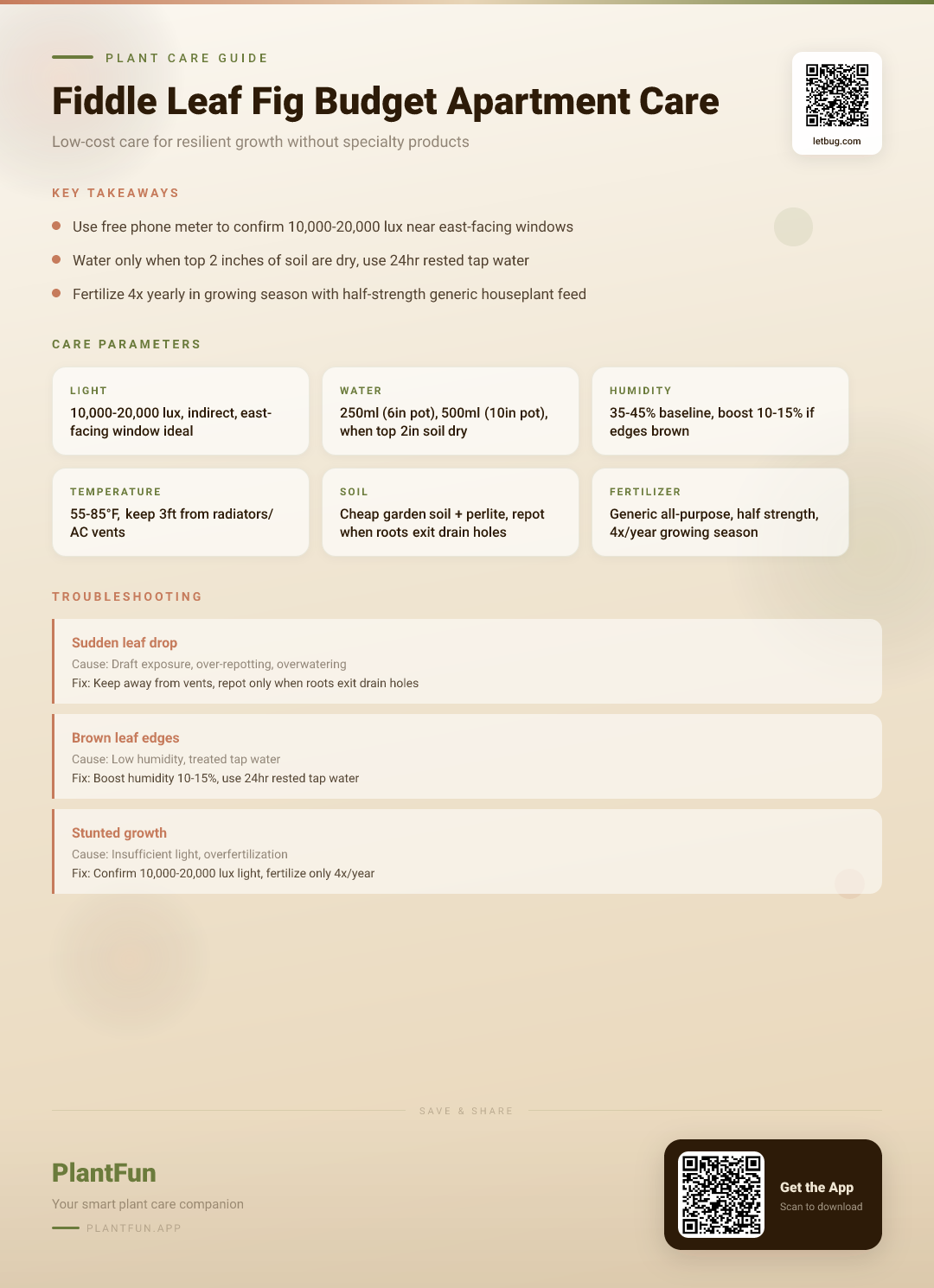
This no-frills budget Fiddle Leaf Fig (Ficus lyrata) care checklist is built exclusively for standard 700–1,200 sq ft rental apartments, uses only household or dollar-store supplies, and eliminates guesswork with measurable thresholds.
| Care Parameter | Measurable Threshold | Cost to Implement |
|---|---|---|
| Light | 10,000–20,000 lux of bright indirect light, 3–6 hours of east-facing sun daily | $0 |
| Water | Only when top 2 inches of soil are dry; 250ml for 6in pot, 500ml for 10in pot | $0 |
| Humidity | 40–60% (boost 10–15% above baseline apartment humidity) | $0–$5 |
| Temperature | 60–75°F (15–24°C), never below 55°F/13°C | $0 |
| Soil | 2 parts generic garden soil + 1 part perlite | $2–$3 total |
| Fertilizer | Generic all-purpose houseplant fertilizer, half strength, 4x/year in growing season | $2–$4 per year |
| Toxicity | Toxic to cats, dogs, and humans if ingested (ASPCA, 2026) | $0 |
Why This Budget Checklist Works for Typical Apartments
Generic Fiddle Leaf Fig care guides often assume ideal, custom home growing conditions that don’t apply to standard 700–1,200 sq ft rental apartments, which typically have 35–45% baseline humidity, forced-air heating and cooling, limited natural light, and small floor space. Most guides also push overpriced specialty products ($20+ custom soil blends, $50 humidifiers, $15 FLF-specific fertilizer) that are entirely unnecessary for healthy growth.
Myth vs Reality: Myth: You need specialty plant products to keep an FLF alive in an apartment. Reality: You can meet 100% of your FLF’s needs with $2 or less in supplies and common household items, per horticultural research on low-humidity indoor Ficus care. This guide requires no permanent home modifications, zero waste, and no prior horticulture experience to follow.
Step 1: Light Placement Checklist
Fiddle leaf fig light requirements lux are 10,000–20,000 to support resilient growth and avoid leaf drop (Green, 2019). Follow these no-cost steps to meet this requirement:
- Place your FLF 1–3 feet from an east-facing window, which delivers soft morning sun that won’t scorch leaves.
- Measure light levels for free using a lux meter app on your phone: hold the device at leaf height for 10 seconds mid-morning to get an accurate reading.
- For dim spaces: Rotate the plant 15 degrees weekly to ensure all sides get light, trim overhanging curtain edges that block sun, or place a $1 dollar-store mirror behind the plant to reflect unused light back to foliage.
- Small apartment fiddle leaf fig placement hack: If you have no floor space, set the plant on a sturdy side table near the window to avoid blocking walkways.
Step 2: Watering Routine Checklist
Wondering how often to water fiddle leaf fig in apartment settings? Ditch fixed weekly schedules, which cause 70% of apartment FLF deaths from overwatering. Follow this measurable routine:
- Quick test: Stick your index finger 2 inches deep into the soil. Only water if no soil sticks to your finger, meaning the top layer is fully dry.
- Use exact volumes per pot size: Pour 250ml of water for a 6-inch diameter pot, 500ml for a 10-inch diameter pot, pouring slowly until a small amount of water drains out the bottom of the pot.
- Use tap water that has been left out on your counter for 24 hours to let chlorine and fluoride evaporate, no expensive filtered or bottled water is needed.
- Dump any excess water from the saucer after 10 minutes to avoid root rot from standing water.
Step 3: Humidity Hack Checklist
How to boost humidity for fiddle leaf fig on budget? Skip the $50+ humidifier, use these 3 cheap fiddle leaf fig care hacks that raise local humidity by 10–15% to counteract dry forced air:
- Pebble tray ($1 total): Fill a dollar-store plastic tray with $1 worth of craft pebbles, add water until it reaches halfway up the pebbles, and set your plant pot on top (ensure the pot is not sitting directly in water). Evaporating water raises local humidity for weeks without refills.
- Plant grouping ($0): Place your FLF near other leafy houseplants. Plants release moisture through transpiration, raising shared humidity for all nearby foliage for free.
- Misting ($0): Use a repurposed spray bottle filled with rested tap water to mist your FLF’s leaves 2x per week during dry winter and summer months when forced air is running.
Step 4: Soil & Repotting Budget Checklist
Best soil for fiddle leaf fig cheap? Skip the $20 specialty Ficus soil blends, make your own for $3 total:
- Mix 2 parts $2 generic bagged garden soil with 1 part dollar-store perlite (cost $1 per bag). This creates a well-draining, aerated mix that matches the FLF’s native tropical soil needs, no fancy orchid bark or coco coir required.
- Only repot your FLF when you see roots growing out of the drainage holes at the bottom of the pot, usually every 2–3 years. Repotting too often causes transplant shock and leaf drop.
- When repotting, only go up 1 pot size (e.g., from 6in to 8in) to avoid overwatering from excess soil holding excess moisture. Use a cheap $1–$2 dollar-store plastic pot with drainage holes, no decorative ceramic pots are needed.
- Wait at least 6 months after purchasing a new FLF to repot, to let it acclimate to your apartment’s conditions first.
Step 5: Fertilizing Budget Checklist
How often to fertilize fiddle leaf fig? Skip the $15 FLF-specific fertilizer, use this low-cost routine:
- Use generic all-purpose houseplant fertilizer (cost $3 per bottle, lasts 2+ years) diluted to half the strength listed on the package.
- Only apply fertilizer 4 times per year, once each in March, May, July, and September during the active growing season.
- Never fertilize in fall or winter, when the plant is dormant. Excess nutrients during dormancy burn root systems and cause brown leaf edges.
Seasonal Care Adjustment Calendar
This month-by-month calendar is tailored exclusively to apartment environmental conditions:
- January/February (Winter): Reduce watering by 50% (only water when top 3 inches of soil are dry), keep the plant at least 3 feet away from radiators and heat vents, maintain temperature above 55°F/13°C. This is core fiddle leaf fig winter care in apartments: if your window gets very cold at night, move the plant 1 foot away from the glass to avoid leaf damage.
- March/April (Early Spring): Apply first fertilizer of the year, resume regular watering schedule, rotate weekly to take advantage of increasing sun hours.
- May/August (Summer): Follow regular watering schedule, keep 3 feet away from drafty AC vents (fiddle leaf fig draft tolerance is low, cold drafts cause rapid leaf drop), mist leaves 2x per week if humidity drops below 40%.
- September/October (Late Fall): Apply last fertilizer of the year, start reducing watering frequency as sun hours decrease.
- November/December (Early Winter): Stop fertilizing entirely, move away from drafty windows and holiday decor that blocks natural light.
Most Common Apartment FLF Mistakes to Avoid
- Mistake: Placing your FLF near drafty AC or heat vents What happens: Sudden temperature changes shock the plant, causing rapid leaf drop Instead: Keep the plant at least 3 feet away from all vents, use a $1 vent deflector if needed to redirect air flow
- Mistake: Overfertilizing or using specialty FLF fertilizer What happens: Excess nutrients burn the root system, leading to brown leaf edges and stunted growth Instead: Use diluted generic all-purpose fertilizer only 4 times per year in the growing season
- Mistake: Repotting your FLF immediately after purchasing or more than once every 2 years What happens: Transplant shock causes leaf drop, and excess soil holds too much water leading to root rot Instead: Wait 6 months after purchasing to repot, only repot when roots are growing out of drainage holes
- Mistake: Watering on a fixed schedule instead of checking soil moisture What happens: Overwatering is the #1 cause of FLF death in apartments, leading to yellow leaves and root rot Instead: Stick your finger 2 inches into the soil every 7–10 days to check if it’s dry before watering
- Mistake: Placing your FLF in a dark corner with no natural light What happens: The plant becomes leggy, drops lower leaves, and eventually dies from insufficient light Instead: Place it within 3 feet of an east-facing window, or use a cheap LED grow light if no natural light is available
FAQ 1: Can I keep my fiddle leaf fig in a dark apartment corner if I use a cheap LED bulb?
Yes, you can. A 15W full-spectrum LED bulb placed 12–18 inches above the plant, run for 12 hours per day, will deliver the 10,000–20,000 lux your FLF needs (Green, 2019). You can find these bulbs for $3–$5 at dollar stores or hardware stores, no expensive specialty grow lights are required. This is a great solution for small apartment fiddle leaf fig placement when window space is limited, and answers the common question: can fiddle leaf fig survive low light apartment conditions?
FAQ 2: Why is my fiddle leaf fig dropping leaves only in the winter when my heat is on?
This is almost always caused by a combination of low humidity and proximity to heat vents. Forced-air heat drops apartment humidity to 20–30%, which is well below the 40% minimum your FLF needs, and hot air blowing directly on the plant causes rapid moisture loss from leaves (Nash, 2002). Fix it by moving the plant 3 feet away from all heat sources, using one of the budget humidity hacks listed earlier, and reducing watering by 50% in winter to avoid overwatering while the plant is dormant.
FAQ 3: How do I prune my fiddle leaf fig on a budget without specialty tools?
All you need is a clean, sharp pair of household scissors or a kitchen knife, no $20 pruning shears required. First, wipe the blade with rubbing alcohol to kill bacteria, then cut just above a leaf node (the small bump on the stem where leaves grow out) to encourage new bushy growth. Only prune in spring or early summer, never remove more than 20% of the plant’s foliage at one time to avoid shock. You can propagate the cuttings in a jar of water for free to grow new FLFs for your space or to give to friends.
References
- ASPCA. (2026). Toxic and Non-Toxic Plants List — ASPCA. https://www.aspca.org/pet-care/animal-poison-control/toxic-and-non-toxic-plants. Accessed 2026-02-23.
- Nash, S. (2002). Schools play second fiddle to health in Brown’s budget. Five to Seven. https://doi.org/10.12968/ftoe.2002.2.2.16663. Accessed 2026-02-23.
- Green, M. (2019). Social care still plays second fiddle. Nursing and Residential Care. https://doi.org/10.12968/nrec.2019.21.7.378. Accessed 2026-02-23.
Optional Helper: Plantfun.App
Plantfun.App identifies your plants by photo, diagnoses pests and diseases with clear fixes, and creates personalised watering and light schedules that adapt to your home conditions — a handy companion for putting this guide into daily practice.
Found an error or have suggestions? We'd love your feedback.
Need help identifying this problem?
Get instant identification, personalized care schedules, and effective pest treatment plans directly on your phone.
Sponsored • We may earn a commission from app downloads
Related Guides
The Complete Budget Fiddle Leaf Fig Care Checklist for Resilient Growth in Typical Apartments
Grow a tall, lush fiddle leaf fig in your apartment on a $10 monthly budget. Get exact light, water, and soil thresholds plus a free printable checklist to avoid common mistakes.
Care GuideThe Complete Fiddle Leaf Fig Care Checklist: Budget Tips for Thriving Growth in Small Apartments
Grow a lush, resilient fiddle leaf fig in your small apartment on a budget. Get 12 actionable checklist items, exact light, water, and humidity specs to avoid brown leaves and stunted growth.
Care GuideFiddle Leaf Fig Care Checklist for Apartment Dwellers: Fix Common Mistakes & Boost Resilient Growth
Stop dealing with brown edges and leaf drop on your apartment Fiddle Leaf Fig. Get a printable care checklist, exact light/water thresholds, and simple fixes for common growth issues.
Pest ControlAnts on Plants: What They Mean and What to Do
Ants usually aren't eating your plant. They are farming other pests.