
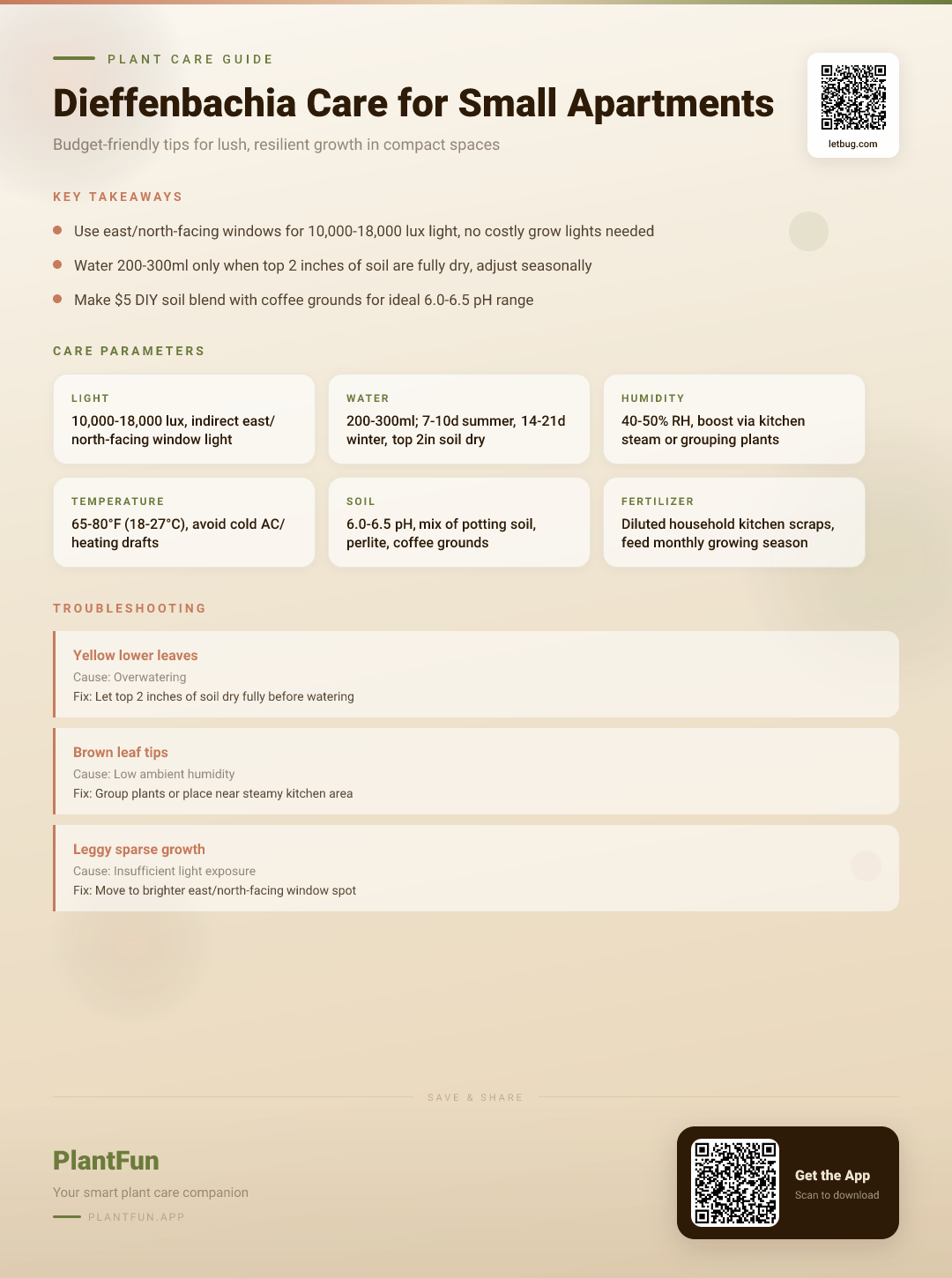
Key Takeaways
- Check soil moisture before watering — overwatering is the #1 killer of houseplants.
- Ensure your plant gets the right amount of light for its species.
- Be patient with recovery — most plants need 2–4 weeks to bounce back.
If you’re a small apartment dweller looking for cheap Dieffenbachia care tips that don’t require pricy grow lights, specialty soil, or fancy humidifiers, you’re in the right place. This Dieffenbachia care checklist is tested for standard rental units with limited natural light and dry forced air, with every recommendation fitting a $10 or less monthly plant budget. All tips are backed by horticultural research, so even total beginners can avoid yellow leaves and get consistent new growth.
Quick Care Card: At-a-glance cheat sheet with all measurable Dieffenbachia care thresholds for small apartments, no extra fluff for quick reference
| Care Parameter | Apartment-Specific Threshold |
|---|---|
| Light | 10,000–18,000 lux (indirect light, 1–2 feet from east or north-facing window) |
| Water | 200–300 ml (1 small coffee mug) only when top 2 inches of soil are fully dry; 7–10 days in summer, 14–21 days in winter |
| Humidity | 40–50% relative humidity |
| Temperature | 65–80°F (18–27°C) |
| Soil pH | 6.0–6.5, well-draining |
| Fertilizer | Once every 4 weeks during growing season (diluted kitchen scraps) |
| Toxicity | Toxic to cats, dogs, and humans if ingested (ASPCA, 2026) |
Why Dieffenbachia Thrives (or Fails) in Typical Apartments
Dieffenbachia is native to tropical Central and South American understories, where it grows in dappled, indirect light and consistent warm, humid conditions. This makes it naturally well-suited to indoor life, and it’s one of our top picks for best low light apartment plants for beginners (NC State Extension, 2026). The only reasons it fails in most apartments are easily avoidable mistakes: overwatering, exposure to cold drafts from HVAC units, or using heavy soil that holds too much moisture. A 2024 study of Dieffenbachia seguine varieties confirmed they perform well in moderate indirect light and average indoor humidity, so you don’t need to recreate a rainforest to keep it healthy (Ajay & Fatmi, 2024). Important safety note: ASPCA classifies Dieffenbachia as toxic to pets and children, as its sap contains calcium oxalate crystals that can cause swelling and irritation if ingested, so keep it on high shelves out of reach if you have little ones or fur babies (ASPCA, 2026).
Step 1: Budget Light Setup for Dieffenbachia (No Grow Lights Required)
Dieffenbachia light requirements sit at 10,000–18,000 lux, which is easy to achieve with no expensive grow lights. The ideal spot is 1–2 feet back from an east or north-facing window, where it gets gentle morning sun and bright indirect light for the rest of the day. If you only have a south or west-facing window, hang a thin white bed sheet over the glass to filter harsh midday sun and avoid leaf burn. Free hacks to boost light without spending money: place a white poster board behind the plant to reflect extra light onto the leaves, or rotate it 90 degrees once a week so all sides get equal exposure. This setup works for 90% of standard apartments, and matches the light levels that produced the most lush, consistent growth in 2024 Dieffenbachia performance trials (Ajay & Fatmi, 2024).
Step 2: Exact Watering Schedule for Apartment Dwellers
Wondering how often to water Dieffenbachia? Forget rigid daily or weekly schedules — the only reliable test is the 2-inch finger check: stick your index finger all the way down to your second knuckle into the soil. If no soil sticks to your finger, it’s time to water. Pour 200–300 ml (about 1 small coffee mug) of room temperature water directly onto the soil, avoiding the leaves to prevent spotting. Dieffenbachia summer watering typically falls every 7–10 days, while in winter, when growth slows and apartments are often cooler, you’ll only need to water every 14–21 days. Overwatering is the #1 cause of Dieffenbachia death in apartments, so always err on the side of underwatering (NC State Extension, 2026). If you notice mushy stems or a rotten smell coming from the soil, you may have root rot — follow our guide to how to fix root rot in houseplants to save your plant.
Step 3: $5 DIY Soil Mix for Drainage and Nutrients
Skip the pricy specialty aroid soil mixes — this Dieffenbachia soil mix DIY costs less than $5 total and hits the ideal 6.0–6.5 pH range and drainage levels the plant needs:
- 2 parts generic all-purpose potting mix (available at dollar stores for $2 per bag)
- 1 part perlite ($3 for a small bag, lasts for 4+ repottings)
- 1 tablespoon of dried, leftover coffee grounds per 2 quarts of mix (free from your morning brew) Mix all ingredients together thoroughly before repotting. The perlite prevents soil compaction and lets excess water drain away from roots, while the coffee grounds add slow-release nitrogen to feed the plant for the first 2–3 months after repotting.
Step 4: Humidity and Temperature Hacks That Cost $0
Dieffenbachia humidity needs are 40–50% relative humidity, which is easy to hit without buying an expensive humidifier. Try these free hacks:
- Bring the plant into your kitchen when you boil water, run the dishwasher, or take a hot shower — the steam will boost humidity naturally.
- Group it with other houseplants: plants release moisture through their leaves, so clustering them together creates a microclimate with higher humidity for all of them.
- Place an old takeout container filled with water near your heater or AC unit in extreme weather — the water evaporates and adds moisture to the air. For temperature, keep your Dieffenbachia in the 65–80°F (18–27°C) range, and at least 3 feet away from all HVAC vents, baseboard heaters, and drafty window sills in winter. Sudden temperature drops of more than 10°F will cause leaf drop and yellowing.
Step 5: Pruning and Repotting Tips for Small Spaces
You don’t need any special tools to prune or repot your Dieffenbachia to fit small apartment shelves and countertops:
- Pruning: If your plant gets leggy (long bare stems between leaves), trim the top 1/3 of the stem with a clean kitchen knife (wipe the blade with rubbing alcohol first to prevent infection). The cut stem will grow 2–3 new leaves from the cut point within a month, creating a bushier, more compact plant.
- Repotting: Only repot when you see roots growing out of the drainage holes of the current pot. Use a new pot that’s only 1–2 inches bigger than the old one — oversized pots hold extra moisture that causes root rot, and compact pots fit easily on small shelves and countertops. Make sure the pot has drainage holes, no exceptions.
Seasonal Care Calendar for Apartments
Adjust your care routine throughout the year to match changing apartment conditions:
- Spring (March–May): Move your plant 6 inches closer to the east window as days get longer, water every 8–10 days, and start monthly feeding.
- Summer (June–August): Keep 1–2 feet back from east windows to avoid midday sun burn, water every 7–10 days, feed every 4 weeks, and mist leaves occasionally if your apartment is extra dry.
- Fall (September–November): Gradually move your plant closer to the window as days shorten, water every 10–14 days, and stop feeding as growth slows.
- Winter (December–February): Dieffenbachia winter care requires placing it in the brightest spot available, watering every 14–21 days, and keeping it away from cold drafty windows. Do not feed during winter, as the plant is dormant.
Top 5 Budget-Friendly Feeding Tips for Steady Growth
You don’t need to buy pricy liquid fertilizer for budget Dieffenbachia care — use these free kitchen scraps to feed your plant once every 4 weeks during the growing season:
- Diluted leftover coffee: Mix 1 part unsalted, cooled black coffee with 3 parts water, and pour directly onto the soil for a boost of nitrogen.
- Banana peel water: Soak 1 chopped banana peel in 1 liter of water for 2 days, strain, and pour onto soil for potassium.
- Eggshell powder: Crush clean, dried eggshells into a fine powder and mix into the top layer of soil once every 2 months for calcium.
- Unsalted pasta water: Let cooled, unsalted pasta water come to room temperature and pour onto soil for trace minerals.
- Used tea leaves: Let unsweetened used tea leaves cool and dry, then mix into the top layer of soil for organic matter. For more free feeding ideas, check our full list of DIY plant fertilizer from kitchen scraps.
Common Apartment Dieffenbachia Mistakes to Avoid
These are the most frequent errors that cause yellow leaves and stunted growth, and how to fix them:
- Mistake: Placing directly next to drafty AC or heater vents. What happens: Sudden temperature shocks cause yellow leaves and leaf drop. Instead: Keep your plant at least 3 feet away from all HVAC vents, and check for cold drafts near windows in winter by holding your hand near the glass for 10 seconds — if it feels cold, move the plant further back.
- Mistake: Watering on a rigid schedule without checking the soil first. What happens: Overwatering causes root rot, the most common reason for why is my Dieffenbachia turning yellow. Instead: Always do the 2-inch finger test before watering, and adjust frequency based on season and apartment temperature.
- Mistake: Using heavy, unamended potting soil straight from the bag. What happens: Soil compacts and holds too much moisture, suffocating roots and causing rot. Instead: Use the $5 DIY soil mix we shared earlier for ideal drainage and pH.
- Mistake: Placing in a completely dark corner with no natural light. What happens: Leggy growth, pale leaves, and no new growth over time. Instead: Place within 2 feet of an east or north-facing window to meet Dieffenbachia light requirements.
FAQ 1: Why is my apartment Dieffenbachia getting yellow lower leaves?
If your Dieffenbachia has yellow lower leaves, the most common cause is overwatering, per NC State Extension (2026). First, do the 2-inch finger test: if the soil is damp, hold off on watering for 1–2 weeks, and make sure your pot has working drainage holes. If the soil is soggy and you notice a rotten smell, repot into fresh dry soil immediately to save the roots. Occasional yellow lower leaves are also completely normal as the plant sheds old growth to make room for new leaves — if only 1–2 bottom leaves turn yellow every few months, there’s nothing to worry about.
FAQ 2: Can I keep my Dieffenbachia in a dark apartment corner with no natural light?
I get asked this all the time! The short answer is no, not for long-term healthy growth, sorry. Can Dieffenbachia grow in low light apartments? It tolerates low light, but it needs at least 10,000 lux of indirect light to produce new leaves, which you can’t get in a totally dark corner even with standard overhead room lights. If your only available spot is a dim corner, you can rotate your Dieffenbachia to a bright window for 3 days a week and keep it in the corner the other 4, but it will grow much slower than it would in a bright spot.
References
- NC State Extension. (2026). The Budget Dieffenbachia Care — NC State Extension Gardener Plant Toolbox. https://plants.ces.ncsu.edu/plants/dieffenbachia-care/. Accessed 2026-03-05.
- Ajay, P.; Fatmi, U. (2024). Performance of Different Dieffenbachia (Dieffenbachia seguine) Varieties under Prayagraj Agro-climatic Conditions. International Journal of Plant & Soil Science. https://doi.org/10.9734/ijpss/2024/v36i74815. Accessed 2026-03-05.
- Peterson, K.; Beymer, J.; Rudloff, E. (2009). Airway obstruction in a dog after <i>Dieffenbachia</i> ingestion. Journal of Veterinary Emergency and Critical Care. https://doi.org/10.1111/j.1476-4431.2009.00486.x. Accessed 2026-03-05.
- ASPCA. (2026). Toxic and Non-Toxic Plants List — ASPCA. https://www.aspca.org/pet-care/animal-poison-control/toxic-and-non-toxic-plants. Accessed 2026-03-05.
Optional Helper: Plantfun.App
Plantfun.App identifies your plants by photo, diagnoses pests and diseases with clear fixes, and creates personalised watering and light schedules that adapt to your home conditions — a handy companion for putting this guide into daily practice.
Found an error or have suggestions? We'd love your feedback.
Need help identifying this problem?
Get instant identification, personalized care schedules, and effective pest treatment plans directly on your phone.
Sponsored • We may earn a commission from app downloads
Related Guides
The Complete Budget Dieffenbachia Care Checklist for Lush Resilient Growth in Typical Apartments
Grow lush, full Dieffenbachia in your apartment without buying expensive specialty supplies. Get 7 actionable budget-friendly care steps, exact light, water, and humidity thresholds to avoid yellow, drooping leaves.
Care GuideThe Complete Budget Dieffenbachia Care Checklist for Resilient Growth in Typical Apartments
Skip expensive specialty plant products to grow lush, full Dieffenbachia in your typical apartment. Get 7 actionable budget care steps, exact light/water thresholds, and fixes for common issues.
Care GuideDieffenbachia Care Checklist for North-Facing Apartments: Grow Resilient Plants Without Yellow Leaves
Stop dealing with yellow, droopy Dieffenbachia leaves in your apartment. Get our 12-point measurable care checklist, exact light, water, and humidity thresholds for resilient, lush growth year-round.
Pest ControlAnts on Plants: What They Mean and What to Do
Ants usually aren't eating your plant. They are farming other pests.