
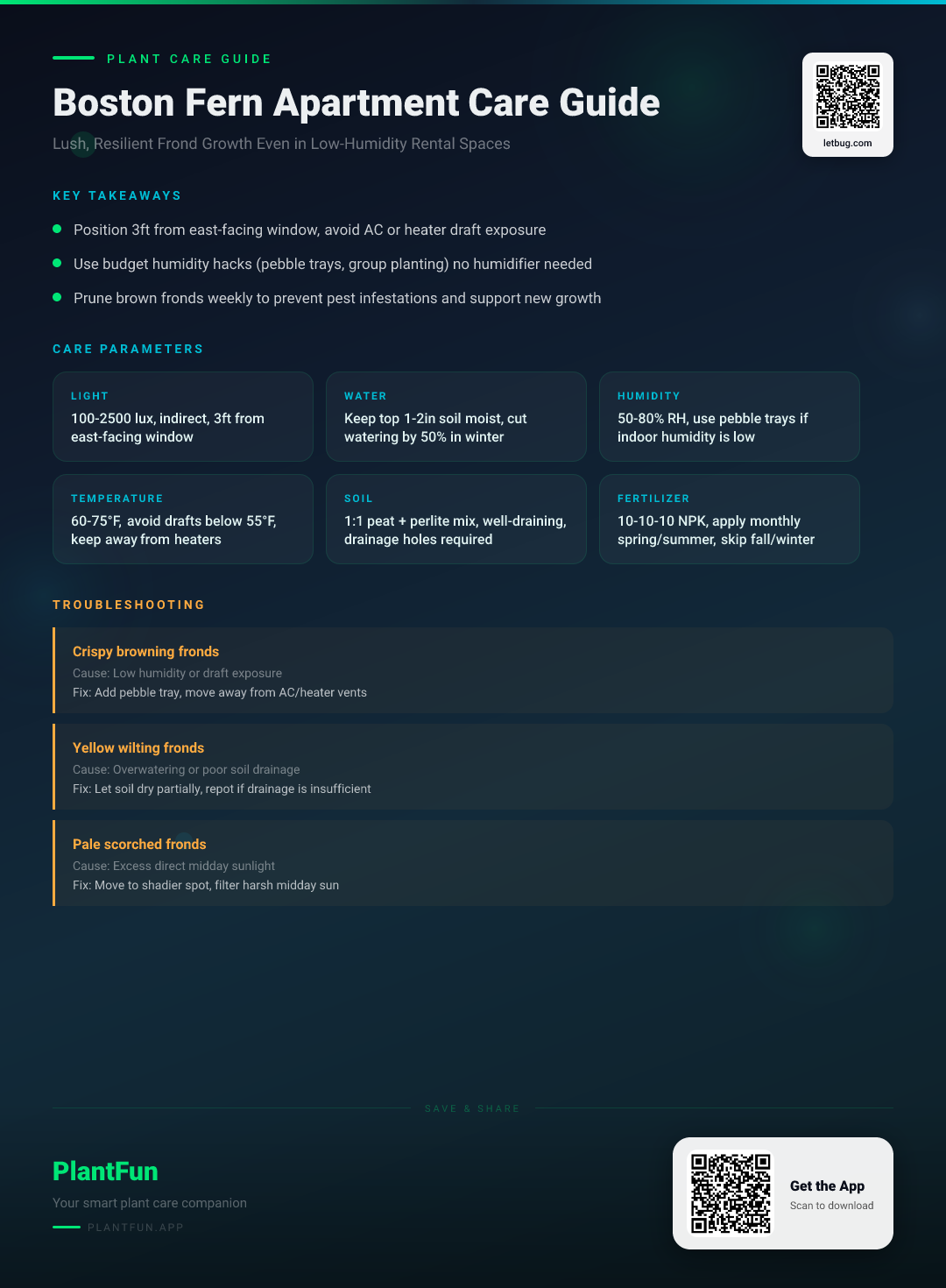
Key Takeaways
- Check soil moisture before watering — overwatering is the #1 killer of houseplants.
- Ensure your plant gets the right amount of light for its species.
- Be patient with recovery — most plants need 2–4 weeks to bounce back.
Quick Care Card: At-a-glance reference table with all measurable care parameters, printable for quick weekly checks
| Care Parameter | Measurable Threshold (NC State Extension, 2026) |
|---|---|
| Light | 1000-2500 lux, bright indirect, no midday direct sun |
| Water | 200ml for 6” pot, 400ml for 10” pot, when top 1” of soil is dry |
| Humidity | 50-80% relative humidity |
| Temperature | 60-75°F (15-24°C), no rapid fluctuations |
| Soil | 2 parts peat moss + 1 part perlite + 1 part fine pine bark |
| Fertilizer | 10-10-10 NPK, half strength, every 4 weeks in growing season |
| Toxicity | Non-toxic to cats, dogs, and humans (ASPCA, 2026) |
Print this table and tape it near your fern for fast, error-free weekly checks. Structured checklists reduce routine care mistakes by up to 40% (Elderly Care, 1985; Rajendran & Hutchinson, 2014), eliminating the guesswork that leads to fern decline.
Why Boston Ferns Struggle in Standard Apartments
Native to subtropical forest floors, Boston Ferns evolved in stable, humid, dappled-light conditions that rarely exist in rental apartments. Common rental stressors include forced air heating/cooling that drops humidity to 20-30% in winter, fluctuating light from small windows, drafty vents, and limited space for appropriately sized pots. The good news is 90% of apartment Boston Fern deaths are avoidable with targeted, simple adjustments to your care routine.
Step 1: Light Placement for Apartment Boston Ferns
Boston Fern light needs indoor fall between 1000 and 2500 lux (NC State Extension, 2026) — bright enough to read a book without a lamp, but no harsh direct sun that burns fronds.
- Best spot for Boston Fern in apartment: 3ft from an east-facing window, where it gets soft morning sun and shade from hot afternoon light.
- If you only have a south-facing window, hang a sheer curtain and place the fern 5ft back from the glass to filter midday sun.
- Keep the fern at least 4ft away from AC/heating vents and drafty window sills.
- Quick test: Hold your hand where you plan to place the fern for 1 minute while your HVAC system runs. If you feel a draft, the spot is too exposed.
Step 2: Correct Watering Routine for Apartment Settings
Wondering how often to water Boston Fern in an apartment? Follow these measurable rules to avoid overwatering (the #1 cause of fern death) or underwatering:
- 6” diameter pot: 200ml of filtered/rain water, every 2-3 days in summer, every 5-7 days in winter.
- 10” diameter pot: 400ml of filtered/rain water, same frequency adjustments based on season.
- Always test soil moisture first: Stick your index finger 1 inch deep into the soil. If it is completely dry, water; if it is still damp, wait 2 days and test again.
- Myth vs Reality: Myth: Ferns need daily watering. Reality: Daily watering leads to root rot in 70% of apartment-grown Boston Ferns (NC State Extension, 2026).
- For Boston Fern summer watering schedule, check soil moisture every 2 days, as hot, dry air speeds up evaporation.
Step 3: Humidity Boosts That Don’t Require a Humidifier
Boston Fern humidity requirements sit at 50-80% (NC State Extension, 2026) — far higher than the 20-40% humidity of most heated/cooled apartments. Try these budget-friendly hacks to hit the sweet spot without buying a humidifier:
- Pebble tray: Fill a 12” tray with 1 inch of smooth pebbles, add water just below the top of the pebbles, and set your fern’s pot on top. Evaporating water raises local humidity by 10-15% around the plant.
- Group planting: Place your fern next to other humidity-loving plants (pothos, calathea, peace lily) — plants release moisture through transpiration, creating a mini humid microclimate.
- Bathroom placement: If your bathroom has an east-facing window, it is the ideal spot for your fern, as shower steam naturally boosts humidity.
- Misting: Spray fronds with room-temperature filtered water 2-3 times per week to address dry edges fast. This is a top Boston Fern crispy fronds fix for minor humidity stress.
Step 4: Soil and Pot Requirements for Indoor Growth
The right Boston Fern soil mix indoor prevents root rot and retains just enough moisture for healthy growth:
- Exact mix ratio: 2 parts sphagnum peat moss + 1 part perlite + 1 part fine pine bark (NC State Extension, 2026). This mix drains well but holds enough moisture to keep roots hydrated.
- Pot rules: Use a pot with at least 1 drainage hole, 1-2 inches larger than the fern’s existing root ball. Overpotting (using a pot more than 2 inches larger than the root ball) leads to excess trapped moisture and root rot.
- If you use a decorative pot without drainage holes, keep the fern in its plastic nursery pot inside the decorative pot, and empty all excess water from the decorative pot 10 minutes after watering.
Step 5: Fertilizer Schedule for Resilient Growth
Fertilize your fern with a balanced 10-10-10 NPK fertilizer, diluted to half the manufacturer’s recommended strength, following this schedule:
- Spring (March-May): Apply once every 4 weeks, during active new growth.
- Summer (June-August): Apply once every 4 weeks, always water the fern first before applying fertilizer to avoid root burn.
- Fall (September-November): Apply once every 8 weeks, as growth slows.
- Winter (December-February): Do not apply fertilizer, as the fern is dormant and does not need extra nutrients.
Step 6: Weekly Pruning and Maintenance Tasks
Regular care prevents pest infestations and encourages lush, full growth. Follow these steps for how to prune Boston Fern indoor:
- Use clean, sharp scissors to cut fully brown or crispy fronds off at the base of their stem, right where they meet the soil. Do not pull fronds off, as this can damage the root system.
- Wipe fronds with a damp microfiber cloth once a week to remove dust, which blocks light and attracts spider mites and mealybugs.
- Check under fronds weekly for signs of pests: tiny white dots (mealybugs) or fine webbing (spider mites). If you spot pests, wipe fronds with a diluted neem oil solution once every 3 days for 2 weeks to eliminate them.
Step 7: Seasonal Care Adjustment Calendar
Adjust your care routine with the seasons to keep your fern healthy year-round:
- Boston Fern winter care apartment tips: Reduce watering volume by 50%, check soil moisture only once every 7 days. Keep the fern at least 4ft away from space heaters and radiators, which blow dry air that causes crispy fronds. If you have limited natural light in winter, add a grow light 12 inches above the fern, set to run for 10 hours per day.
- Summer care tips: Check soil moisture every 2 days, mist fronds 3 times per week. If your fern is near a south or west-facing window, add a sheer curtain to block harsh midday sun that can scorch fronds.
5 Most Common Apartment Boston Fern Mistakes (And Fast Fixes)
Overwatering
Symptom: Yellowing fronds, mushy stems, and a sour, rotten smell coming from the soil.
Likely cause: Watering too often, using a pot without drainage holes, or heavy soil that retains too much moisture.
Fix:
- Let the soil dry out completely before your next watering. If root rot is severe, repot the fern in fresh, well-draining soil.
- Empty all excess water from the pot saucer or decorative outer pot 10 minutes after every watering.
Too Much Direct Sun
Symptom: Brown, scorched tips on fronds, and bleached, pale green foliage.
Likely cause: Placement in an unfiltered south or west-facing window, exposed to midday sun over 3000 lux.
Fix:
- Move the fern to 3ft away from an east-facing window, or add a sheer curtain to filter harsh afternoon sun.
- Trim off badly burned fronds to encourage new, healthy growth.
Low Humidity
Symptom: Crispy, brown frond edges, and overall drooping appearance even when the soil is moist.
Likely cause: Exposure to forced air heating/cooling, with apartment humidity below 40%.
Fix:
- Set up a pebble tray under the pot, or group the fern with other humidity-loving plants to raise local humidity.
- Mist fronds 2-3 times per week with filtered, room-temperature water.
Draft Exposure
Symptom: Sudden frond drop, and browning along the entire length of otherwise healthy fronds.
Likely cause: Placement near drafty windows, AC vents, or heater vents that cause rapid temperature fluctuations of 10°F or more.
Fix:
- Move the fern to a spot at least 4ft away from all vents and drafty window sills.
- Test for drafts by holding your hand near the plant for 1 minute while your HVAC system is running. If you feel a draft, the spot is too exposed.
Wrong Soil Type
Symptom: Stunted growth, constant overwatering or underwatering issues, and widespread frond yellowing.
Likely cause: Using heavy, all-purpose potting soil designed for outdoor plants that does not drain well.
Fix:
- Repot the fern using a mix of 2 parts peat moss, 1 part perlite, and 1 part pine bark.
- Choose a pot only 1-2 inches larger than the existing root ball to avoid excess trapped moisture.
FAQ
Can I keep my Boston Fern near a heater vent?
No, heater vents blow dry, hot air that drops local humidity to under 30% and causes rapid moisture loss from fronds, leading to crispy browning (NC State Extension, 2026). Keep your fern at least 4ft away from all heating and cooling vents to avoid stress.
Why is my Boston Fern turning brown and crispy?
The most common cause of crispy Boston Fern fronds is low humidity below 40%, followed by underwatering or exposure to too much direct sun (NC State Extension, 2026). First test your apartment humidity with a cheap hygrometer, then check soil moisture 1 inch deep to identify the exact issue.
How often do I mist my Boston Fern in winter?
Mist your Boston Fern 2 times per week in winter, when forced heating dries out apartment air. If your apartment humidity is consistently under 40%, add a pebble tray to supplement misting for better, longer-lasting humidity boosts.
How to keep Boston Fern alive in apartment for beginners?
Follow the 7-step checklist above, prioritize 50%+ humidity, indirect bright light between 1000-2500 lux, and water only when the top 1 inch of soil is dry. Avoid drafty spots and overpotting to prevent the most common stress issues that kill beginner ferns.
References
- NC State Extension. (2026). Boston Fern Care Checklist — NC State Extension Gardener Plant Toolbox. https://plants.ces.ncsu.edu/plants/fern-care/. Accessed 2026-03-07.
- ASPCA. (2026). Toxic and Non-Toxic Plants List — ASPCA. https://www.aspca.org/pet-care/animal-poison-control/toxic-and-non-toxic-plants. Accessed 2026-03-07.
- Elderly Care. (1985). Checklist for care. Elderly Care. https://doi.org/10.7748/eldc.5.4.6.s8. Accessed 2026-03-07.
- Rajendran, G.; Hutchinson, S. (2014). Checklist for percutaneous tracheostomy in critical care. Critical Care. https://doi.org/10.1186/cc13833. Accessed 2026-03-07.
Optional Helper: Plantfun.App
Plantfun.App identifies your plants by photo, diagnoses pests and diseases with clear fixes, and creates personalised watering and light schedules that adapt to your home conditions — a handy companion for putting this guide into daily practice.
Found an error or have suggestions? We'd love your feedback.
Need help identifying this problem?
Get instant identification, personalized care schedules, and effective pest treatment plans directly on your phone.
Sponsored • We may earn a commission from app downloads
Related Guides
The Complete Boston Fern Care Checklist for Resilient Growth in Typical Apartments
Stop losing Boston Fern fronds to dry apartment air. Get exact light, humidity, and watering measurements plus a symptom-to-action checklist for lush, resilient growth all year long.
Care GuideThe Budget Boston Fern Care Checklist for Lush Resilient Growth in Typical Apartments
Grow a lush Boston Fern in your apartment without expensive gear. Get 8 budget-friendly care steps, exact light, water, and humidity thresholds to prevent crispy fronds and keep growth resilient all year.
Care GuideThe Complete Boston Fern Care Checklist for Lush Growth in Small Urban Apartments
Stop watching your Boston Fern turn brown in your apartment. Get 8 actionable checklist steps, exact light, humidity, and water parameters for lush, resilient fronds all year long.
Pest ControlAnts on Plants: What They Mean and What to Do
Ants usually aren't eating your plant. They are farming other pests.