
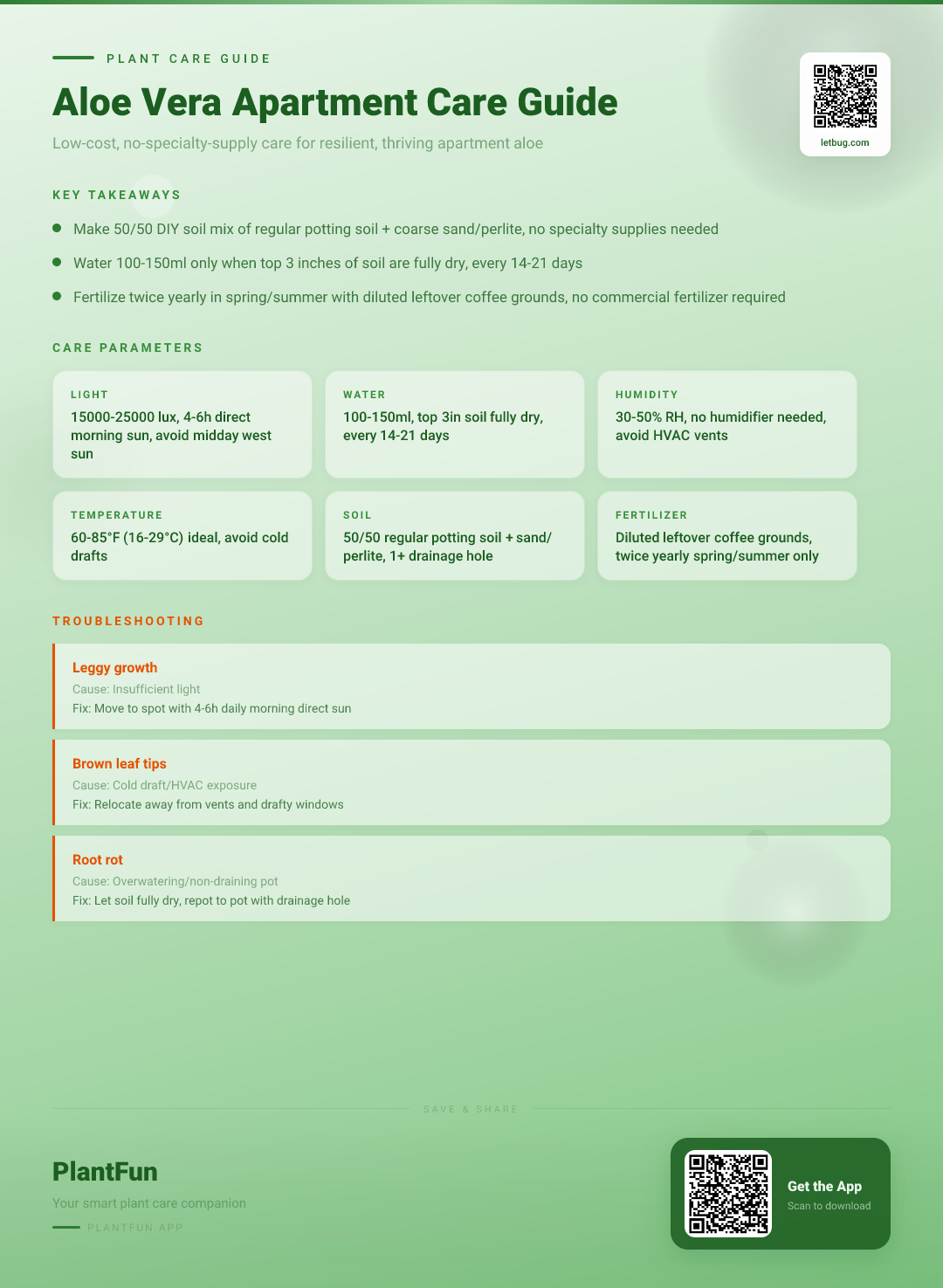
Key Takeaways
- Check soil moisture before watering — overwatering is the #1 killer of houseplants.
- Ensure your plant gets the right amount of light for its species.
- Be patient with recovery — most plants need 2–4 weeks to bounce back.
Quick Care Card
| Parameter | Exact Apartment-Friendly Threshold |
|---|---|
| Light | 15,000-25,000 lux, 4-6 hours direct morning sun |
| Water | 100-150ml per 6-inch pot, only when top 3 inches of soil are dry |
| Humidity | 30-50% RH, no humidifier required |
| Temperature | 60-85°F (16-29°C), avoid cold drafts and HVAC vents |
| Soil | 50/50 mix of regular potting soil and coarse sand/perlite |
| Fertilizer | Diluted leftover coffee grounds twice yearly (spring/summer) |
| Toxicity | Toxic to dogs and cats (ASPCA, 2026) |
Grab our free printable 1-page aloe vera care checklist to stick on your fridge for quick, no-guess reference whenever you need it.
Why Apartment Aloe Vera Care Is Unique
Generic aloe care advice is often designed for homeowners with outdoor space, consistent natural light, and no rental modification restrictions. Standard apartment environments present unique stressors for aloe vera: dry forced air from HVAC systems, variable window light (often blocked by adjacent buildings), and rules that prevent drilling for grow lights or installing permanent plant shelves. This guide cuts through one-size-fits-all advice to deliver budget-friendly solutions tailored explicitly to these conditions, perfect for aloe vera care for beginners.
Myth vs Reality: Many new owners assume aloe needs high humidity and frequent watering to thrive. In reality, this hardy succulent is perfectly adapted to the dry, variable conditions of most apartments, with no fancy products required to keep it healthy.
Zero-Cost Pre-Care Supply List
You don’t need to buy any specialty succulent products to care for your aloe. Grab these household items you already own:
- A chopstick or wooden pencil to test soil moisture depth
- Clean, leftover coarse sand from old craft projects or playground sand (rinsed to remove dust)
- Any unused regular potting soil you have on hand
- A disposable plastic cup to measure exact water amounts
- Used, rinsed coffee grounds for fertilizer
- Aluminum foil to boost light levels if needed
- A 1-inch layer of clean pebbles (from old planters or outdoor gravel) for pots without drainage holes
Step 1: Light Requirements
Aloe needs 15,000-25,000 lux of light, equal to 4-6 hours of direct morning sun from an east-facing window, to grow thick, compact leaves (Plant Science Archives, 2019). Avoid midday west-facing window exposure, which can scorch leaves with intense 20,000+ lux light.
No-cost light adjustment hacks:
- If you only have west-facing windows, hang a plain white bedsheet between the window and your aloe to filter harsh midday sun
- If you’re wondering can aloe vera survive in low light apartments, the short answer is only temporarily: tape aluminum foil to the wall opposite your brightest window to reflect 30% more light onto your plant and prevent stretching
- Rotate your aloe 90 degrees every 2 weeks to ensure even growth on all sides
For persistent low-light spaces, consider pairing your aloe with other plants from our list of best low-light houseplants for apartments that require less sun to thrive.
Step 2: Watering Schedule
Overwatering is the #1 cause of aloe death in apartments. Follow this measurable guidance to avoid mistakes: give your aloe 100-150ml of water only when the top 3 inches of soil are fully dry, typically every 14-21 days in standard apartment conditions.
Quick test: Stick a chopstick 3 inches deep into the soil. If no soil sticks to the chopstick when you pull it out, it’s time to water. If you’re still unsure how often to water aloe vera in apartment with dry forced air, test the soil every 10 days to adjust for your specific heating/cooling setup.
Step 3: Soil & Potting Rules
Make your own aloe vera soil mix DIY with 50% regular potting soil and 50% rinsed coarse sand or perlite (Derbe, 2015). This well-draining mix mimics the rocky, sandy soil aloe grows in naturally.
Potting rules:
- Use a pot with at least 1 drainage hole if possible. If you need aloe vera no drainage pot care, add a 1-inch layer of clean pebbles at the bottom of the pot before adding soil to catch excess water, and reduce your water amount by 20% to avoid standing moisture
- Never overpot your aloe: the new pot should be no more than 1 inch wider than the root ball. Extra soil holds excess water that causes root rot
Learn more about succulent soil recipes in our guide to DIY soil mixes for succulents.
Step 4: Temperature & Humidity Guidelines
Aloe thrives in standard apartment temperatures between 60-85°F (16-29°C). Avoid placing your aloe within 2 feet of HVAC vents, space heaters, or cold window sills in winter, as sudden temperature swings damage leaves.
The dry 30-50% relative humidity of most apartments is perfect for aloe. You do not need to buy a humidifier or mist your aloe leaves to keep it healthy.
Step 5: No-Cost Fertilizing Hack
You don’t need to buy commercial succulent fertilizer to learn how to fertilize aloe vera on budget or how to make aloe vera grow faster. Use diluted leftover coffee grounds twice per year, once in early spring and once in mid-summer.
How to apply:
- Mix 1 tablespoon of rinsed, used coffee grounds into 1 quart of room-temperature water
- Let the mixture sit for 24 hours to allow nutrients to leach into the water
- Pour the mixture over your aloe’s soil during a regular watering session
Aloe is a light feeder, so do not apply this fertilizer more than twice per year, as excess nutrients cause brown leaf tips.
Seasonal Care Calendar
Adjust your care routine for seasonal changes to keep your aloe healthy year-round:
- Summer (June-August): Follow the aloe vera summer watering schedule, checking soil moisture every 10-14 days, and apply your coffee ground fertilizer once in June and once in August. Move aloe away from west-facing windows if midday sun is too intense.
- Winter (December-February): Follow aloe vera winter care for apartments guidance by reducing watering by 50% (water only every 28-42 days), do not apply any fertilizer from October through February, and keep aloe away from cold window sills where temperatures drop below 55°F.
Common Apartment-Specific Mistakes to Avoid
- Mistake: Keeping your aloe in a low-light spot far from windows What happens: Stretched, leggy growth (the most common aloe vera leggy growth fix requires moving the plant to brighter light immediately) Instead: Move the aloe to an east-facing window, add an aluminum foil reflector to boost light levels, and prune stretched stems at the base once new compact growth appears.
- Mistake: Watering your aloe on a fixed schedule without testing soil moisture What happens: Brown leaf tips (the top answer to why is my aloe vera turning brown) or mushy root rot from overwatering Instead: Test the top 3 inches of soil every 2 weeks, and only water when the soil is completely dry.
- Mistake: Using a decorative pot with no drainage hole and no pebble layer What happens: Standing water at the bottom of the pot rots the root system, causing mushy leaves at the base of the plant Instead: Add a 1-inch layer of pebbles at the bottom of the pot before adding soil, reduce water amounts by 20%, or drill a small drainage hole if your lease allows small modifications.
If you notice signs of root rot, follow our step-by-step guide to fixing root rot in houseplants to save your aloe.
Voice Search FAQ
Can I keep my aloe vera on my apartment fire escape?
Only if temperatures stay consistently between 60-85°F, the spot gets 4-6 hours of morning sun, and it is protected from heavy rain that can saturate soil. Bring your aloe inside if temperatures drop below 55°F or if midday sun is intense enough to scorch leaves.
Why is my apartment aloe turning mushy at the base?
This is almost always root rot from overwatering or poor drainage. Tip the pot to pour out any excess standing water, let the soil dry completely for 2-3 weeks, and if the mushy growth spreads, repot in fresh 50/50 soil mix, trimming any rotted roots before replanting.
How often should I water my aloe in a dry apartment?
Every 14-21 days in spring and summer, and every 28-42 days in winter, but always test the top 3 inches of soil first before watering. Dry air dries out the top layer of soil faster, but the lower soil where roots grow may still be moist, so avoid watering based on surface soil appearance alone.
Note: Aloe vera is toxic to dogs and cats if ingested, so keep plants on high shelves or window sills out of reach of curious pets (ASPCA, 2026).
Understanding the Science
A 2019 study from Plant Science Archives confirms that aloe vera’s photosynthetic rate peaks at 15,000-25,000 lux, matching the light parameters we recommend for apartment growth (Plant Science Archives, 2019). A 2015 analysis of aloe growth conditions found that well-draining, sandy soil with low nutrient density produces the healthiest root systems, supporting our DIY 50/50 soil mix guidance (Derbe, 2015). The ASPCA classifies aloe vera as toxic to dogs and cats, so keep plants out of reach of pets to avoid accidental ingestion (ASPCA, 2026).
References
- Plant Science Archives. (2019). Aloe vera plant products as antimicrobial agents. https://doi.org/10.33680/plsa.2019.016. Accessed 2026-03-01.
- Derbe, T. (2015). Spectroscopic Investigation of Metal Level in Aloe Vera Plant, and the Soil Where the Aloe Vera Grows: Arba Minch, Southern Ethiopia. Modern Chemistry. https://doi.org/10.11648/j.mc.20150301.11. Accessed 2026-03-01.
- American Society for the Prevention of Cruelty to Animals. (2026). Toxic and Non-Toxic Plants List — ASPCA. https://www.aspca.org/pet-care/animal-poison-control/toxic-and-non-toxic-plants. Accessed 2026-03-01.
Optional Helper: Plantfun.App
Plantfun.App identifies your plants by photo, diagnoses pests and diseases with clear fixes, and creates personalised watering and light schedules that adapt to your home conditions — a handy companion for putting this guide into daily practice.
Found an error or have suggestions? We'd love your feedback.
Need help identifying this problem?
Get instant identification, personalized care schedules, and effective pest treatment plans directly on your phone.
Sponsored • We may earn a commission from app downloads
Related Guides
The Complete Aloe Vera Care Guide for Typical Apartments: Tips for Resilient Lush Growth
Grow plump, resilient Aloe Vera in your apartment with exact light levels, watering amounts, and a free 5-point weekly checklist that prevents common issues like mushy leaves and brown tips.
Care GuideThe Complete Aloe Vera Care Checklist for Typical Apartments: Grow Resilient Plump Plants Year-Round
Stop growing floppy, brown-tipped aloe in your apartment. Get exact light levels, watering amounts, and a seasonal checklist for plump, resilient aloe growth all year.
Care GuideAloe Vera in Typical 1-Bedroom Apartments: The Only Care Checklist You Need
Grow plump, healthy aloe vera even in a cramped 1-bed apartment. Get our 11-point care checklist, measurable light/water thresholds, and fixes for common brown tips or root rot.
Pest ControlAnts on Plants: What They Mean and What to Do
Ants usually aren't eating your plant. They are farming other pests.