
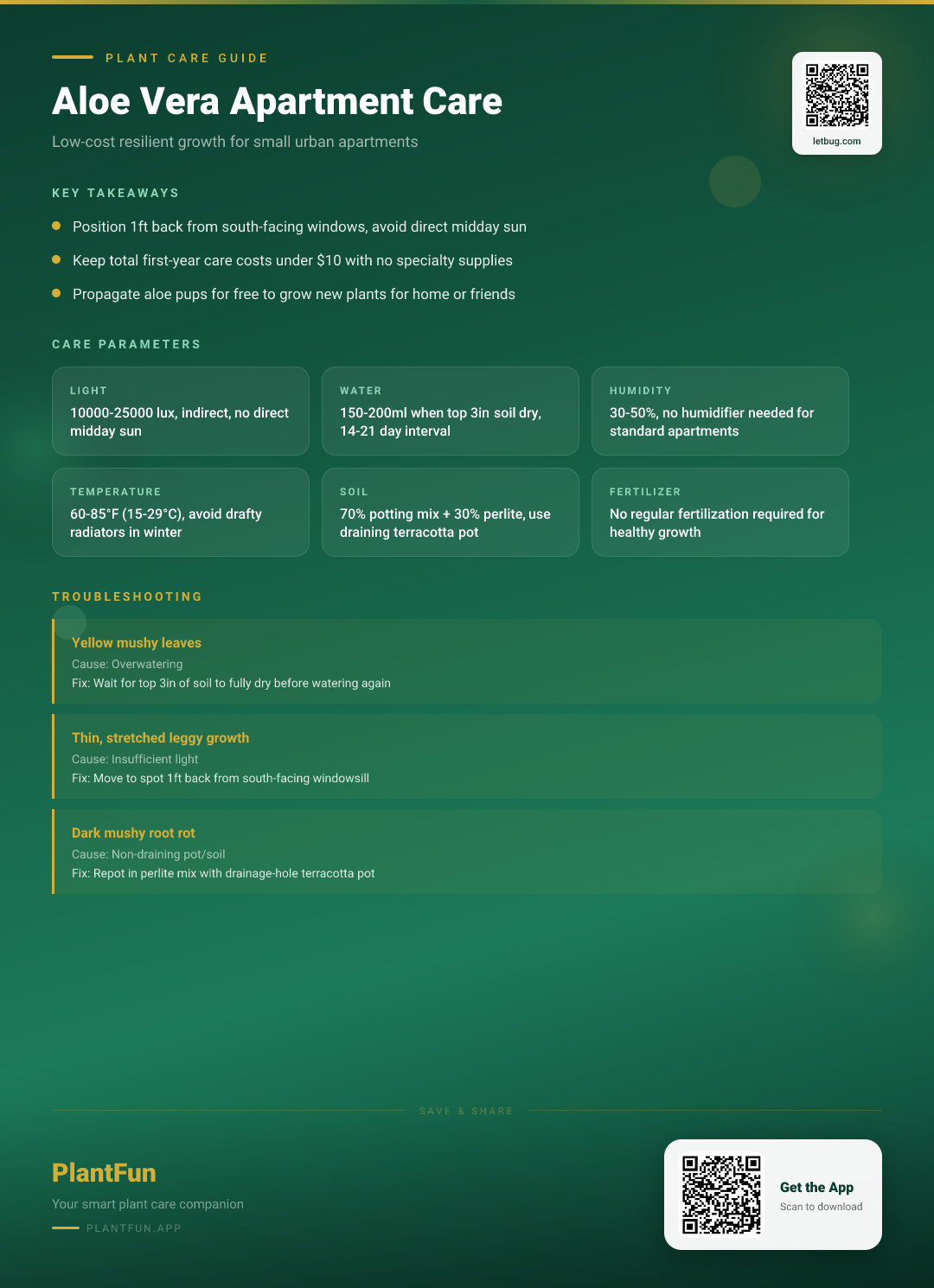
Key Takeaways
- Check soil moisture before watering — overwatering is the #1 killer of houseplants.
- Ensure your plant gets the right amount of light for its species.
- Be patient with recovery — most plants need 2–4 weeks to bounce back.
Quick Care Card
| Parameter | Exact Measurable Threshold |
|---|---|
| Light | 10,000–25,000 lux, no direct midday sun |
| Water | 150–200ml only when top 3 inches of soil are fully dry (14–21 days average) |
| Humidity | 30–50%, no humidifier required |
| Temperature | 60–85°F (15–29°C) |
| Soil | 70% regular potting mix + 30% perlite |
| Fertilizer | No fertilizer needed first 2 years; dilute cactus feed 1x/year max after that |
| Toxicity | Mildly toxic to cats, dogs, and small children if ingested (ASPCA, 2026) |
Why Your Apartment Aloe Is Struggling
Urban apartments come with unique stressors that often trip up even well-meaning plant parents. Drafty old window frames, low light blocked by adjacent high-rises, fluctuating temperatures from radiators or window AC units, and overwatering from fixed schedule routines are the top causes of sad, brown, or mushy aloe plants (NC State Extension, 2026). If you’ve ever wondered “why is my Aloe Vera turning brown in apartment?”, these stressors are almost always the root cause, not a lack of expensive specialty supplies. For tips on identifying overwatering signs early, read our guide to rescuing overwatered succulents.
Budget Care Plan Intro
This budget Aloe Vera care plan skips the $30 grow lights, $20 specialty cactus soil, and $40 humidifiers other guides push, keeping your total first-year aloe care costs under $10. All supplies are readily available at local hardware stores, and the entire setup fits on even the smallest windowsill, making it perfect for cramped urban spaces and Aloe Vera care for beginners.
Step 1: Light Placement Checklist
Aloe Vera light requirements indoors sit at exactly 10,000–25,000 lux for optimal growth and gel production (NC State Extension, 2026). Follow these rules for your apartment:
- Place on a south-facing windowsill 1ft back from the glass to avoid midday sun burn, or directly on an east-facing windowsill for gentle morning sun
- If you only have north-facing windows, place the plant directly on the sill with no obstructions; note that growth will be slower in lower light
- Rotate the pot 1/4 turn every 2 weeks to prevent lopsided growth
Quick test: Hold your hand 6 inches above the plant spot at midday. A soft, clear shadow means you’re in the 10,000–25,000 lux range; a sharp, dark shadow means light is too intense, so move the plant further back. For more accurate lux testing tips, check out our guide to testing indoor light levels for houseplants. This answers the common question “can I grow Aloe Vera in a low light apartment?” — yes, as long as you follow these placement rules.
Step 2: Watering Schedule Checklist
Wondering how often to water Aloe Vera in apartments? Follow this exact, guess-free routine:
- Water 150–200ml only when the top 3 inches of soil are completely dry (this works out to every 14–21 days in standard 70°F apartments) (Plant Science Archives, 2019)
- Quick test: Stick your index finger 3 inches into the soil; if it’s dry up to your second knuckle, it’s time to water
- Pour water directly into the soil, not over the leaves, to prevent rot
- Empty any excess water that drains into the saucer within 15 minutes of watering
Myth vs reality: You do not need to mist aloe leaves. Misting increases the risk of leaf rot and provides no benefit to this drought-tolerant succulent.
Step 3: Temperature & Humidity Checklist
Aloe thrives in standard apartment conditions, no specialty equipment needed:
- Maintain a 60–85°F (15–29°C) temperature range (Derbe, 2015)
- Humidity of 30–50% is perfect, so no humidifier is required for typical apartments
- Avoid placing the plant within 1ft of drafty windows, radiators, or AC vents that blast extreme temperature air directly on the foliage
- Temperatures below 50°F will cause permanent leaf damage, so move the plant away from uninsulated windows in winter
Step 4: Budget Potting & Soil Checklist
Skip the overpriced specialty succulent mixes with this cheap Aloe Vera soil mix and pot setup:
- Soil blend: 70% regular all-purpose potting mix + 30% perlite (costs ~$5 total for enough mix for 2 aloe plants) (Derbe, 2015)
- Best pot for Aloe Vera in apartments: $5 unglazed terracotta pot with a drainage hole. Terracotta wicks away excess moisture to prevent overwatering, which is the top cause of aloe death indoors
- Do not use decorative pots without drainage holes, as they trap stagnant water at the bottom of the pot and cause root rot
Seasonal Care Calendar
Adjust your routine with the seasons to keep your aloe thriving year-round:
- Summer adjustment (Aloe Vera summer watering schedule): Increase watering to every 10 days if indoor temperatures stay above 80°F consistently. Check soil moisture more often, as warmer air dries soil faster
- Winter adjustment (Aloe Vera winter care for apartments): Cut watering to every 30 days, as aloe goes semi-dormant in low winter light. Move the plant 2ft away from drafty radiators and uninsulated window panes to avoid temperature shock. Do not fertilize in winter
3 Most Common Apartment Aloe Mistakes
- Mistake: Overwatering on a fixed schedule without checking soil moisture What happens: Mushy, translucent leaves, root rot, and plant death. This is the top answer for “how to fix mushy Aloe Vera leaves” Instead: Follow the 3-inch dry soil rule, and only water 150–200ml at a time
- Mistake: Placing aloe in low light under 8,000 lux for long periods What happens: Leggy, stretched growth, pale leaves, and no gel production Instead: Move to a spot with 10,000–25,000 lux, and rotate the pot every 2 weeks for even growth
- Mistake: Using a non-draining decorative pot What happens: Stagnant water at the bottom of the pot, root rot, and brown leaf tips Instead: Use an unglazed terracotta pot with a drainage hole, and skip the cache pot unless you empty it immediately after watering
Voice Search Optimized FAQ
Can I grow Aloe Vera in a low light apartment?
Yes, but you will need to place it directly on a north-facing windowsill with no obstructions from furniture or other plants. Expect slower growth, and reduce watering frequency by 25% since the plant will use less moisture in low light. If growth becomes leggy, move it to a brighter spot.
How do I harvest Aloe Vera gel at home?
Snip a mature outer leaf at the base with clean, sharp scissors. Slice the leaf open lengthwise, and scrape the clear gel out with a clean spoon. Only harvest 1–2 leaves per plant at a time to avoid stressing the plant (Plant Science Archives, 2019). Avoid using any yellow sap near the leaf skin, as it can cause skin irritation.
Is Aloe Vera safe for my cat and dog?
No, Aloe Vera is mildly toxic to cats, dogs, and small children if ingested, causing vomiting, diarrhea, and lethargy (ASPCA, 2026). Place the plant on a high windowsill out of reach of pets and kids, or see our list of pet-safe apartment houseplants for non-toxic alternatives.
How often should I repot my apartment Aloe Vera?
Repot every 2–3 years, only when you see roots growing out of the drainage hole of the current pot. Size up only 1 inch in pot diameter to avoid excess soil holding unused moisture, and use the same 70/30 potting mix and perlite blend.
No-Cost Pup Propagation Tip
Aloe plants grow small offshoots called pups that you can separate for free new plants, perfect for gifting to friends or placing in other spots around your apartment. This Aloe Vera pup care for apartment dwellers requires no special supplies:
- Wait until the pup is at least 3 inches tall and has developed its own small root system (this takes 6–12 months after the pup first appears)
- Gently tip the entire mother plant out of its pot, and brush away excess soil to expose the connection between the pup and mother plant
- Use a clean, sharp knife to cut the pup away from the mother, keeping all of the pup’s roots intact
- Let the cut end of the pup dry out for 24 hours to prevent rot
- Plant the pup in a small terracotta pot with the 70/30 soil mix, water once with 50ml of water, then wait 2 weeks before returning to the regular watering schedule
References
- NC State Extension. (2026). Aloe Vera — NC State Extension Gardener Plant Toolbox. https://plants.ces.ncsu.edu/plants/vera-care/. Accessed 2026-03-01.
- Plant Science Archives. (2019). Aloe vera plant products as antimicrobial agents. Plant Science Archives. https://doi.org/10.33680/plsa.2019.016. Accessed 2026-03-01.
- Derbe, T. (2015). Spectroscopic Investigation of Metal Level in Aloe Vera Plant, and the Soil Where the Aloe Vera Grows: Arba Minch, Southern Ethiopia. Modern Chemistry. https://doi.org/10.11648/j.mc.20150301.11. Accessed 2026-03-01.
- ASPCA. (2026). Toxic and Non-Toxic Plants List — ASPCA. https://www.aspca.org/pet-care/animal-poison-control/toxic-and-non-toxic-plants. Accessed 2026-03-01.
Optional Helper: Plantfun.App
Plantfun.App identifies your plants by photo, diagnoses pests and diseases with clear fixes, and creates personalised watering and light schedules that adapt to your home conditions — a handy companion for putting this guide into daily practice.
Found an error or have suggestions? We'd love your feedback.
Need help identifying this problem?
Get instant identification, personalized care schedules, and effective pest treatment plans directly on your phone.
Sponsored • We may earn a commission from app downloads
Related Guides
Aloe Vera in Standard Apartments: The Budget Care Checklist for Resilient, Pup-Producing Growth
Stop wasting money on fancy aloe care products. Grab our free budget checklist, exact lux levels, and simple watering schedule for thriving, pup-producing aloe in your apartment.
Care GuideAloe Vera in Typical Low-Light Apartments: The Only Care Checklist You Need for Resilient Growth
Grow plump, healthy aloe vera even in a dim apartment. Get our science-backed 8-point care checklist, exact light/water thresholds, and easy fixes for common symptoms.
Care GuideAloe Vera in Typical Apartments: The Budget Care Checklist for Resilient, Thriving Growth
Grow tough, thriving aloe vera in your apartment without spending on specialty supplies. Get exact light, water, soil parameters plus a 6-step budget checklist to avoid common mistakes.
Pest ControlAnts on Plants: What They Mean and What to Do
Ants usually aren't eating your plant. They are farming other pests.