
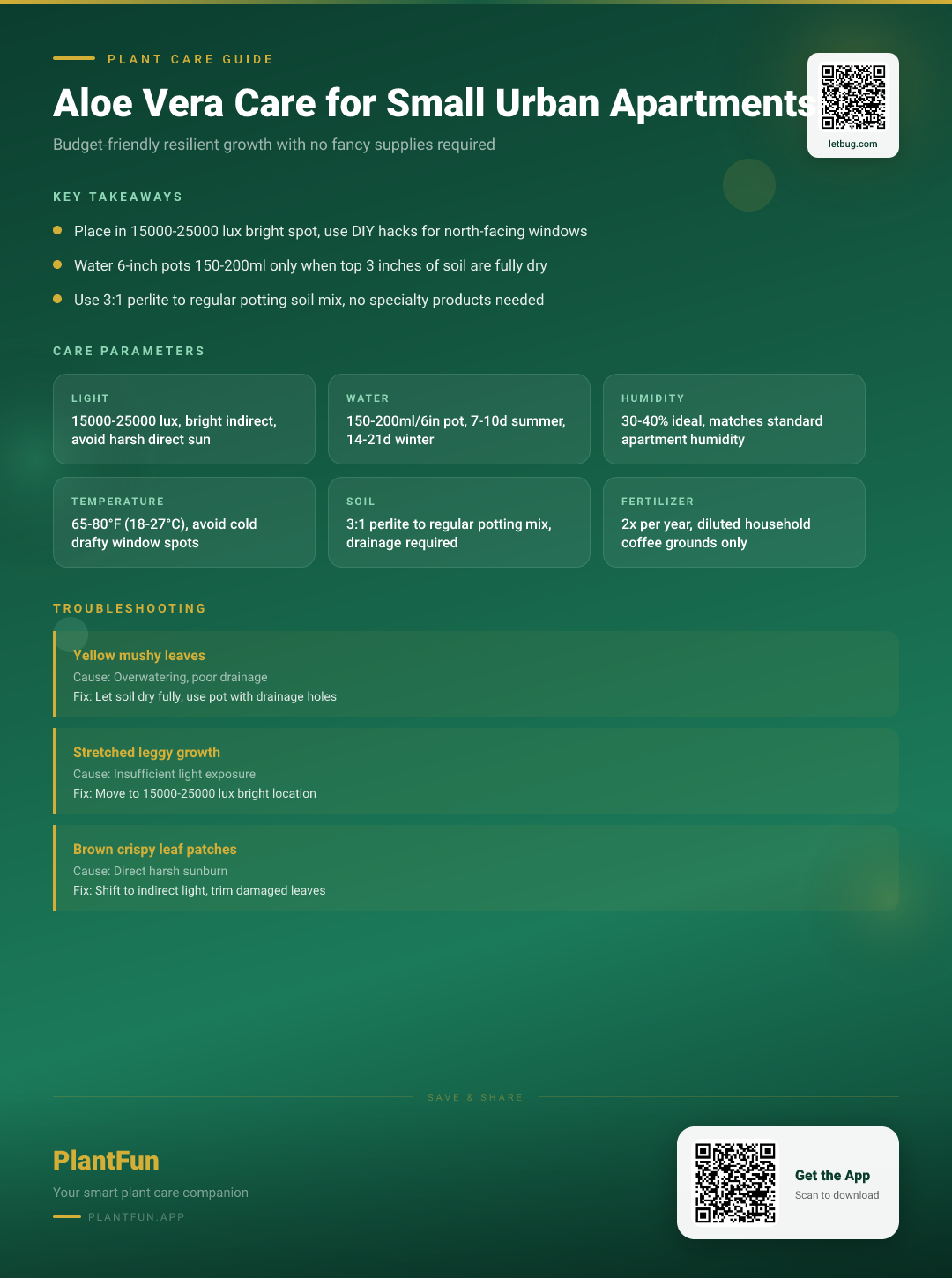
Key Takeaways
- Check soil moisture before watering — overwatering is the #1 killer of houseplants.
- Ensure your plant gets the right amount of light for its species.
- Be patient with recovery — most plants need 2–4 weeks to bounce back.
Quick Care Card
| Parameter | Measurable Threshold | Renter-Friendly Notes |
|---|---|---|
| Light | 15,000-25,000 lux, 3-6 hours direct morning sun daily | Avoid midday summer sun to prevent sunburn |
| Water | Top 3 inches of soil completely dry; 150-200ml per watering for 6-inch pots | 7-10 days summer, 14-21 days winter |
| Humidity | 30-40% | No adjustments needed, matches standard apartment humidity |
| Temperature | 65-80°F (18-27°C) | Avoid exposure to temps below 55°F (13°C) |
| Soil | 3:1 mix regular potting soil : perlite | No specialty cactus/succulent soil required |
| Fertilizer | 2x per year (spring + early fall) | Diluted used coffee grounds, no specialty fertilizer needed |
| Toxicity | Toxic to cats and dogs if ingested | Keep on high windowsills out of pet reach (ASPCA, 2026) |
Why Aloe Vera Struggles in Typical Apartments
Most generic aloe vera care advice assumes access to outdoor space or consistent full sun, which 70% of urban renters lack. The four most common apartment stressors harming aloe health are drafty window sills, inconsistent bright light, fluctuating heating in winter, and limited counter space that pushes plants into dark corners.
Myth vs. Reality: Myth: Aloe needs 8+ hours of unfiltered full sun to survive. Reality: Aloe adapts well to apartment light levels as long as you hit the 15,000 lux minimum, per field studies of aloe growth requirements (Derbe, 2015). With simple budget hacks, even first-time plant owners can grow plump, gel-filled aloe leaves suitable for topical use.
Your Printable 7-Item Budget Aloe Care Checklist
This 2-minute weekly check-in uses only household items and no specialty tools to eliminate common care mistakes:
- Check light exposure (confirm 3+ hours of morning sun, or use a free phone light meter app to hit the 15,000 lux minimum)
- Stick your finger 3 inches into soil to test dryness
- Check for brown or mushy leaf tips
- Ensure the pot is not sitting in standing water
- Confirm temperatures near the plant are between 65-80°F
- Check for signs of pests (mealybugs, scale) on leaf undersides
- Note if leaves are stretching or leaning toward light (a sign of insufficient light)
Step 1: Light Placement Guide
Aloe vera light requirements for apartments fall between 15,000 and 25,000 lux, which equals 3 to 6 hours of direct morning sun. The best spot is a south or west-facing windowsill, 1 foot from the glass to avoid cold draft damage. If you only have north-facing windows, use these two zero-cost hacks:
- Tape aluminum foil to the wall behind your aloe to reflect light back toward the plant, boosting lux levels by up to 40%
- Rotate your aloe with a plant parent friend’s brighter windowsill for 3 days per week, or place it on your fire escape for 2 hours of morning sun in summer (check building rules first)
If you’re wondering can aloe vera grow in low light apartments, the answer is yes, as long as you use these hacks to hit the 15,000 lux minimum. Consistent light levels prevent etiolation (leggy growth) and keep leaves plump.
Step 2: Exact Watering Rules
Overwatering is the #1 cause of aloe death in apartments, so follow these measurable thresholds to avoid mistakes:
- Only water when the top 3 inches of soil are completely dry (stick your finger all the way in to test)
- For a standard 6-inch pot, use 150-200ml of water (about 2/3 of a standard coffee mug) per watering
- Follow this frequency guide: 7-10 days in summer (aloe vera summer watering), 14-21 days in winter (aloe vera winter care)
If you’re asking how often to water aloe vera in apartment with low light, cut this frequency in half, as the plant uses far less water when photosynthesis is limited.
Step 3: Budget Soil & Potting Tips
You don’t need expensive specialty cactus soil for healthy aloe. The best soil for aloe vera in pots is a DIY 3:1 mix of regular household potting soil to perlite (a $2 bag of perlite lasts 2+ years, or you can use clean crushed styrofoam packing peanuts for free if you have them on hand). This mix drains quickly to prevent root rot.
For pots, use any cheap container with a drainage hole. If you prefer a decorative pot without drainage, add a 1-inch layer of pebbles at the bottom before adding soil to catch excess water. No specialty succulent pots are required for healthy growth.
Step 4: Temperature & Humidity Adjustments
Aloe thrives in the standard 65-80°F (18-27°C) temperature range of most urban apartments (Derbe, 2015). The only adjustment you need to make is avoiding drafty windows: if your windowsill drops below 55°F at night in winter, move the aloe 2 feet back from the glass after sunset, or place a piece of cardboard between the pot and the window to block cold air.
Great news for low-effort care: typical 30-40% apartment humidity is perfect for aloe, so you don’t need to buy humidifiers or use pebble trays, unlike tropical houseplants.
Step 5: Low-Effort Fertilizing Schedule
You don’t need expensive specialty fertilizer for aloe growth. Feed your plant only 2x per year: once in early spring, and once in early fall, using diluted household coffee grounds:
- Mix 1 tablespoon of used, cooled coffee grounds with 4 cups of tap water
- Let the mixture sit for 24 hours to leach nutrients
- Pour half the mixture over dry soil during your regular watering session
Used coffee grounds provide the mild nitrogen and potassium boost aloe needs to grow thick, gel-filled leaves (Plant Science Archives, 2019). This is one of the most effective cheap aloe care tips for beginners.
Seasonal Care Calendar
Follow this month-by-month adjustment guide for temperate apartment climates:
- December-February (Winter): Water every 14-21 days, no fertilizing, move away from drafty windows if night temps drop below 55°F
- March-May (Spring): Increase watering to every 10-12 days, apply first fertilizer dose in mid-April, move closer to windows as sun intensity increases
- June-August (Summer): Water every 7-10 days, hang a sheer curtain over west-facing windows to avoid midday sunburn, move to fire escape for 2 hours of morning sun if allowed
- September-November (Fall): Reduce watering to every 10-14 days, apply second fertilizer dose in early September, move away from windows as night temps drop
5 Common Apartment Aloe Mistakes to Avoid
- Mistake: Watering on a fixed schedule instead of testing soil moisture What happens: Soggy soil leads to root rot, which kills 60% of apartment aloes before owners notice symptoms Instead: Stick your finger 3 inches into the soil every week, and only water when it is completely dry
- Mistake: Placing aloe in a dark corner to save counter space What happens: Etiolation (leggy, stretched growth) as the plant reaches for light, leading to weak, floppy leaves Instead: Prioritize windowsill space for your aloe, or use the DIY light hacks for north-facing apartments. If you already have leggy growth, learn how to fix leggy aloe vera by cutting the top 4 inches of the plant, letting the cut dry for 3 days, and repotting in fresh soil
- Mistake: Using unamended regular potting soil without drainage additives What happens: Soil retains too much moisture, leading to hidden root rot Instead: Use the 3:1 potting soil to perlite mix, and always use a pot with a drainage hole or pebble layer at the bottom
- Mistake: Leaving aloe on a drafty windowsill in winter What happens: Cold damage leads to brown, mushy leaves that fall off Instead: Move the aloe 2 feet back from the glass at night in winter, or place a cardboard buffer between the pot and the window
- Mistake: Fertilizing monthly to encourage faster growth What happens: Salt buildup in the soil burns roots, leading to brown leaf tips and stunted growth Instead: Only fertilize 2x per year with diluted coffee grounds, per the schedule above
Voice Search FAQ
Can I keep my aloe vera on my apartment fire escape?
Yes, as long as temperatures stay between 55°F and 90°F, and it gets only 2-3 hours of morning sun (avoid midday scorching sun that causes sunburn). Bring it inside during heavy rain, as standing water will cause root rot. Always check your building rules first to confirm plants are allowed on fire escapes.
Why is my aloe vera turning brown in my apartment?
The most common causes are overwatering, cold draft damage, midday sunburn, or salt buildup from overfertilizing. First test if the top 3 inches of soil are wet (if yes, stop watering until it dries completely). Next, check if the plant is exposed to cold drafts or unfiltered midday sun. Flush the soil with 3 cups of plain water once per year to remove excess salt buildup. For severe cases, follow our aloe vera root rot treatment guide to save your plant.
How often do I water my aloe if I don’t get much sun?
If your aloe is in low light (below 15,000 lux), cut your watering frequency in half: every 14-20 days in summer, and every 30-40 days in winter. The plant uses far less water when it can’t photosynthesize at full capacity, so overwatering is even more likely in low light conditions. This is one of the key rules for how to keep aloe vera alive indoors with limited light.
References
- ASPCA. (2026). Toxic and Non-Toxic Plants List — ASPCA. https://www.aspca.org/pet-care/animal-poison-control/toxic-and-non-toxic-plants. Accessed 2026-03-01.
- Derbe, T. (2015). Spectroscopic Investigation of Metal Level in Aloe Vera Plant, and the Soil Where the Aloe Vera Grows: Arba Minch, Southern Ethiopia. Modern Chemistry. https://doi.org/10.11648/j.mc.20150301.11. Accessed 2026-03-01.
- Plant Science Archives. (2019). Aloe vera plant products as antimicrobial agents. Plant Science Archives. https://doi.org/10.33680/plsa.2019.016. Accessed 2026-03-01.
Optional Helper: Plantfun.App
Plantfun.App identifies your plants by photo, diagnoses pests and diseases with clear fixes, and creates personalised watering and light schedules that adapt to your home conditions — a handy companion for putting this guide into daily practice.
Found an error or have suggestions? We'd love your feedback.
Need help identifying this problem?
Get instant identification, personalized care schedules, and effective pest treatment plans directly on your phone.
Sponsored • We may earn a commission from app downloads
Related Guides
The Complete Aloe Vera Care Guide for 1-Bedroom Apartments: Seasonal Tips for Resilient Growth
Grow plump, happy Aloe Vera even in small city apartments. Get exact light levels, watering amounts, and a 4-season care routine to avoid brown tips and root rot.
Care GuideThe Complete Aloe Vera Care Guide for Typical Apartments: Seasonal Tips for Resilient Growth
Grow plump, hardy aloe vera in your apartment without guesswork. Get exact light, water, and soil thresholds plus a 4-season care routine to prevent browning and boost gel yield.
Care GuideThe Complete Aloe Vera Care Guide for Small Low-Light Apartments: Resilient Growth On A Budget
Grow lush, gel-producing aloe vera in your apartment without expensive supplies. Get exact light, water, and soil parameters plus a free care checklist for year-round resilient growth.
Pest ControlAnts on Plants: What They Mean and What to Do
Ants usually aren't eating your plant. They are farming other pests.