
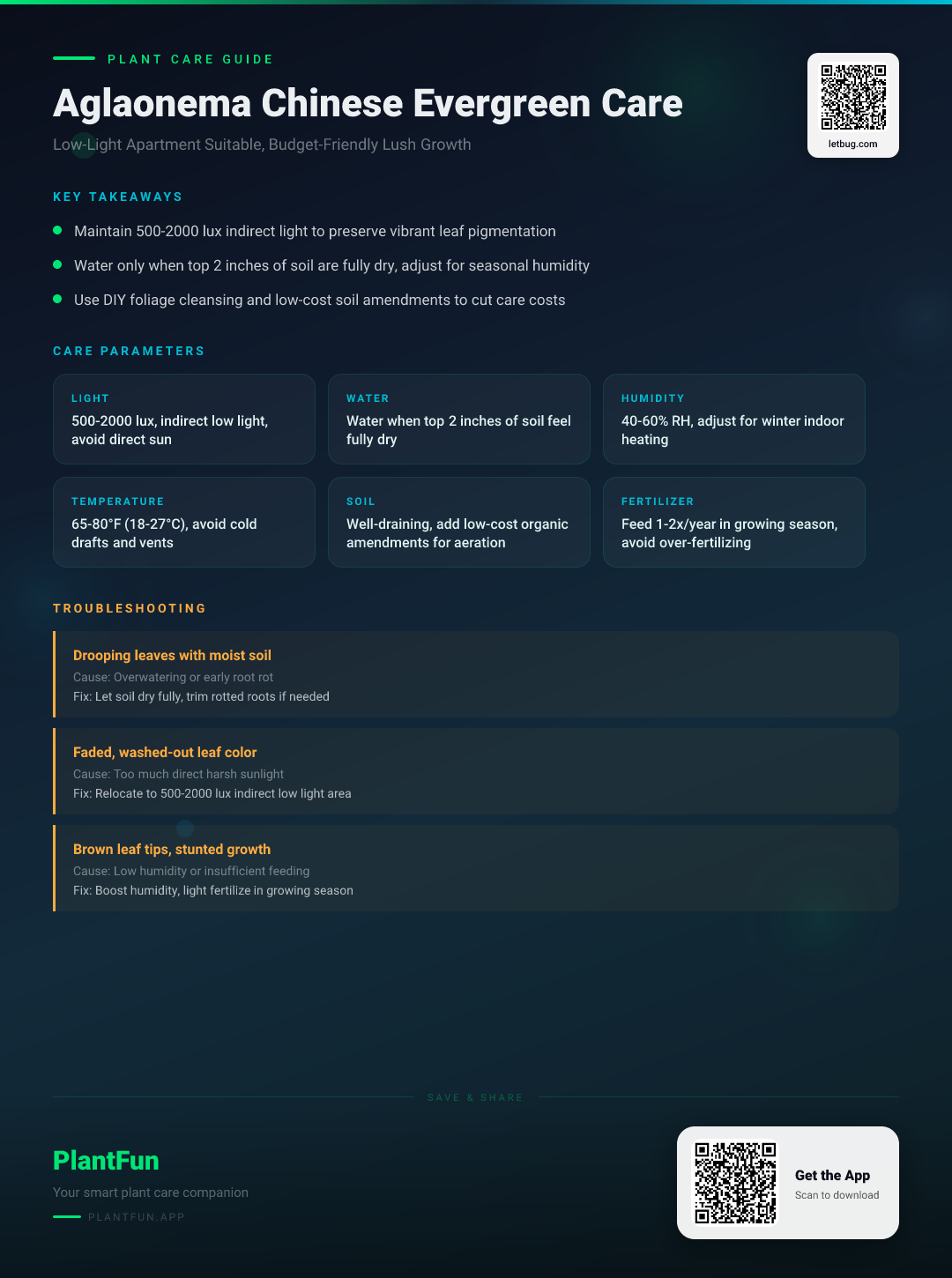
Key Takeaways
- Check soil moisture before watering — overwatering is the #1 killer of houseplants.
- Ensure your plant gets the right amount of light for its species.
- Be patient with recovery — most plants need 2–4 weeks to bounce back.
Quick Care Card: Essential Thresholds for Aglaonema Success
| Feature | Requirement |
|---|---|
| Light | 500–2,000 Lux (Low to Medium indirect) |
| Water | When top 2 inches of soil are dry |
| Humidity | 40–60% (Average home humidity) |
| Temperature | 65–80°F (18–27°C) |
| Soil | Well-draining, peat-based mix |
| Fertilizer | Diluted balanced liquid (10-10-10) in summer only |
| Toxicity | Toxic to cats and dogs (ASPCA, 2026) |
TL;DR: The Reality of Keeping Chinese Evergreens in Low-Light Apartments
Aglaonemas are the ultimate apartment survivors. They thrive in 500–2,000 lux (NC State Extension, 2026), meaning they can handle the corners of your studio where sunlight barely reaches. The secret to success is not buying fancy gear; it is avoiding overwatering. Water only when the top 2 inches of soil feel dry. Keep them away from heater vents, and your Chinese Evergreen will reward you with steady growth even in dim light.
Why Your Apartment Scenario Needs a Tailored Approach
When I first got my Aglaonema, I tucked it into a dark corner, thinking it would act like a plastic plant—invincible and static. I made the mistake of watering it on a weekly schedule regardless of the season, which led to yellowing leaves. In a small apartment, the air circulation is often poorer than in a house, and heating/AC vents can cause localized temperature spikes. My experience taught me that in tight living quarters, you must treat your plant as a sensor for your environment. If the air feels dry, the plant feels it. If your window is drafty, your plant will slow down. You don’t need grow lights; you need consistency.
Decoding Light: 500-2,000 Lux Environments and Leaf Pigmentation
Light for an Aglaonema is about contrast. If you have a variegated variety, it will turn solid green in extreme low light to maximize chlorophyll production (NC State Extension, 2026).
- 500 Lux: Think of this as the back of a room or a window-less office space. It keeps the plant alive but slow-growing.
- 2,000 Lux: This is your sweet spot, usually found 2-3 feet away from a North or East-facing window.
If you want to master indoor lighting techniques, remember that light intensity is not about seeing the sun; it is about the plant seeing the sky.
Watering by Soil Moisture: The 2-Inch Rule vs. Seasonal Humidity Needs
My foolproof method is the “finger test.” Dig your index finger 2 inches into the soil. If it feels cool and moist, walk away. If it is dry and crumbly, it is time to water. This prevents the primary killer of Aglaonemas: root rot. According to guidance from the NC State Extension (2026), excessive moisture in the soil is the leading cause of decline for this genus.
Step-by-Step Budget Maintenance: Soil Amendments and DIY Foliage Cleansing
- Soil Amendment: Mix 20% perlite into your standard potting soil. It costs under $5 and ensures water doesn’t pool around the roots.
- Foliage Cleansing: Apartment dust blocks photosynthesis. Use a damp microfiber cloth to wipe leaves monthly. It’s free, and it keeps the plant respiring efficiently.
- Humidity Hack: Group your plants together. This creates a microclimate, raising localized humidity without the need for an expensive humidifier.
The 65-80°F (18-27°C) Rule: Navigating Apartment Drafts and Vents
Aglaonemas hate temperature swings. If your apartment has a radiator that blasts dry heat, keep the plant at least 4 feet away. Consistent room temperatures prevent leaf stress (Gilman, et al., 2018).
FAQ: Voice-Search Optimized Help
Can I keep my Chinese Evergreen in a windowless bathroom? Technically, no. While they are low-light tolerant, they need ambient light to photosynthesize. Unless you keep a light on for 8+ hours a day, they will slowly decline.
Why is my Aglaonema drooping despite moist soil? This is a classic sign of root rot. When roots die, they cannot absorb water, causing the plant to wilt even if the soil is wet. Check your root health immediately.
Common Mistakes: Avoiding the Over-Fertilization Trap in Low Light
- Mistake: Fertilizing year-round. What happens: Fertilizer salts build up because the plant isn’t growing fast enough to use them. Instead: Only fertilize once in early summer.
- Mistake: Using tap water with heavy chlorine. What happens: Leaf tip burn. Instead: Let water sit in an open container for 24 hours.
Seasonal Calendar: Adjusting for Winter Heating Cycles
- Spring/Summer: Monitor for 2-inch dryness. Increase light if possible.
- Fall/Winter: Allow the soil to dry slightly deeper (3 inches). Heating systems dry out the air; learn how to monitor indoor humidity to keep your Chinese Evergreen happy during dry months.
References and Botanical Resources
- Gilman, E., Klein, R., & Hansen, G. (2018). Aglaonema modestum Chinese Evergreen. EDIS. https://doi.org/10.32473/edis-fp025-1999. Accessed 2026-03-13.
- Oge, R. (2019). Chinese evergreen plant (Aglaonema) poisoning in a child presenting to an urban hospital in Papua New Guinea. Emergency Medicine Australasia. https://doi.org/10.1111/1742-6723.13279. Accessed 2026-03-13.
- ASPCA. (2026). Toxic and Non-Toxic Plants List — ASPCA. https://www.aspca.org/pet-care/animal-poison-control/toxic-and-non-toxic-plants. Accessed 2026-03-13.
- NC State Extension. (2026). Aglaonema Chinese Evergreen — NC State Extension Gardener Plant Toolbox. https://plants.ces.ncsu.edu/plants/aglaonema-care/. Accessed 2026-03-13.
Optional Helper: Plantfun.App
Plantfun.App identifies your plants by photo, diagnoses pests and diseases with clear fixes, and creates personalised watering and light schedules that adapt to your home conditions — a handy companion for putting this guide into daily practice.
Found an error or have suggestions? We'd love your feedback.
Need help identifying this problem?
Get instant identification, personalized care schedules, and effective pest treatment plans directly on your phone.
Sponsored • We may earn a commission from app downloads
Related Guides
Aglaonema in Low-Light Apartments: The Essential Care Guide for Resilient, Lush Growth
Transform your dim apartment into a lush sanctuary. Master Aglaonema care with exact light metrics, seasonal watering schedules, and 3 steps for steady growth.
Care GuideThe Complete Aglaonema Care Checklist for Resilient Growth in Small Apartments
Grow lush, low-fuss Aglaonema even in cramped city apartments with this science-backed checklist, including exact light, water, and soil parameters for resilient, pest-free growth.
Care GuideThe Complete Aglaonema Care Guide for 1-Bedroom Apartments: Seasonal Tips for Resilient Growth
Grow a lush, hardy Aglaonema even in a small, low-light apartment. Get exact light, water, and humidity thresholds plus a 4-season care checklist to avoid yellow leaves and stunted growth.
Pest ControlAnts on Plants: What They Mean and What to Do
Ants usually aren't eating your plant. They are farming other pests.